Untitled
Unknown
8th–early 9th century · Bronze · Asian Art
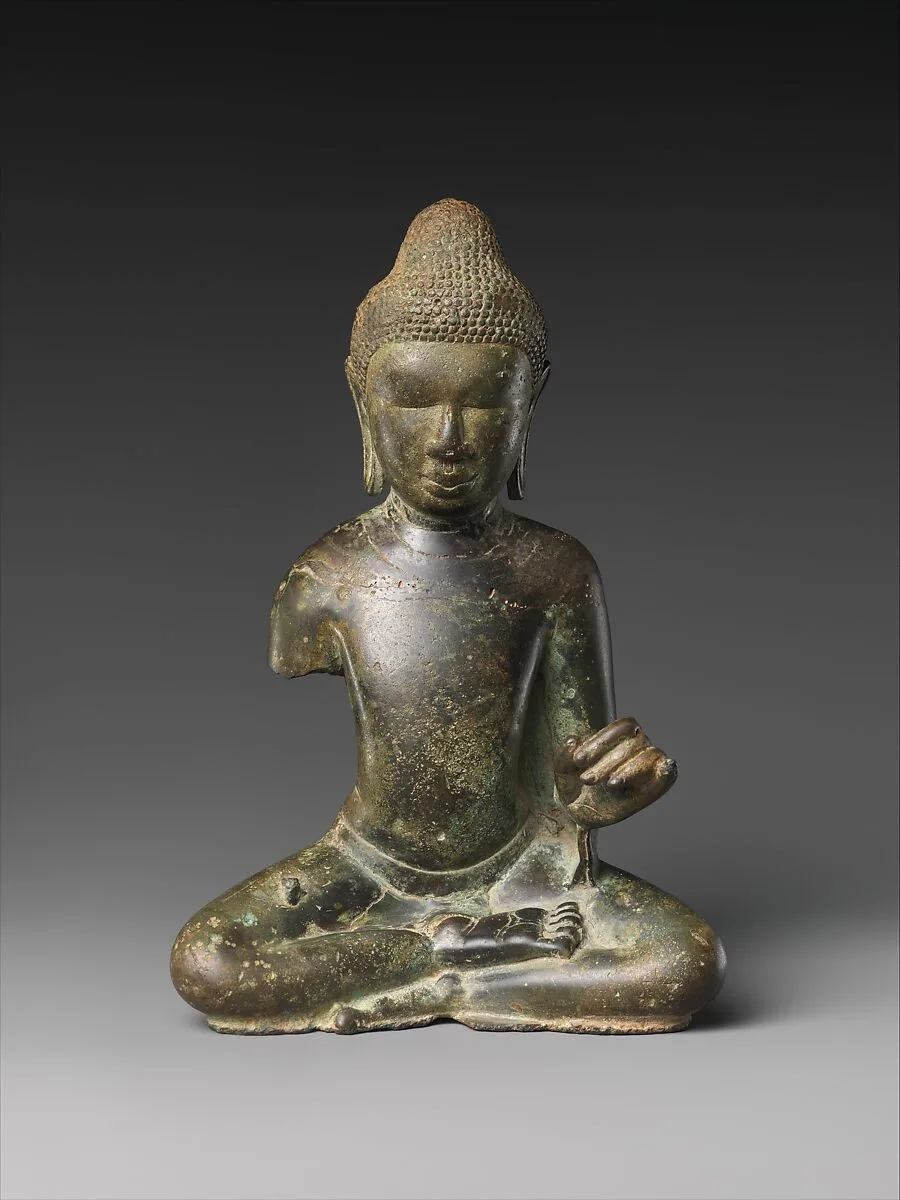
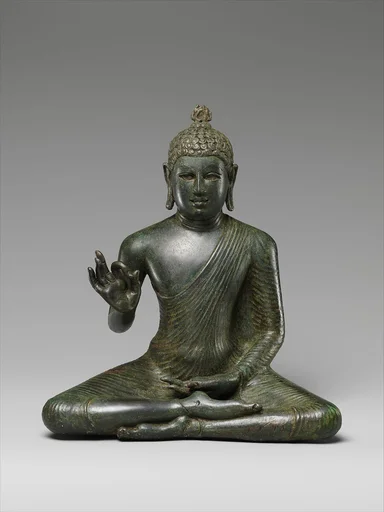
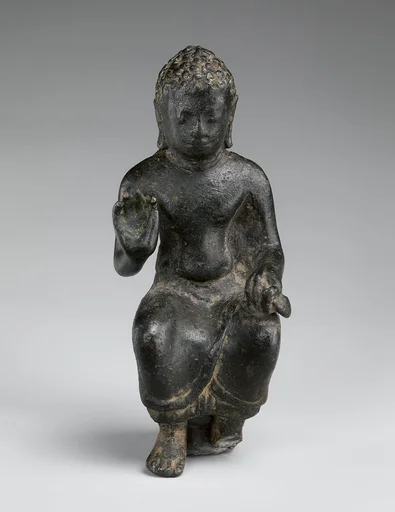
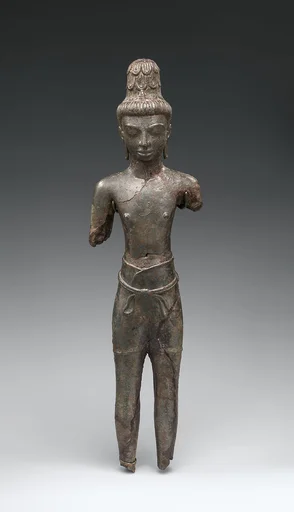
The Pyu kingdom flourished in central and northern Burma from the early years B.C. to about 832, when Halin, the capital, was sacked by forces of the southern Chinese Nanchao kingdom. The sculpture displays a fluidity of modeling, with an emphasis on soft, flowing volumes rather than a linear development of form, that is seen in early Southeast Asian sculpture. This seated Buddha originally held both of his hands in the teaching gesture (vitarkamudra). The pose is associated with Mon-Dvaravati-period sculpture and is not found in India.
- Artist
- Unknown
- Date
- 8th–early 9th century
- Medium
- Bronze
- Culture
- Burma
- Department
- Asian Art
- Credit line
- Lindemann Fund, 2006