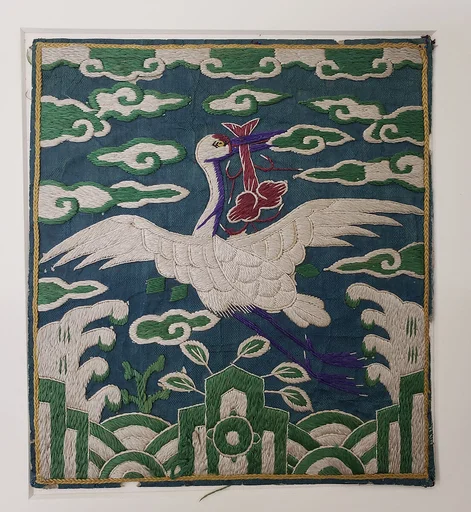
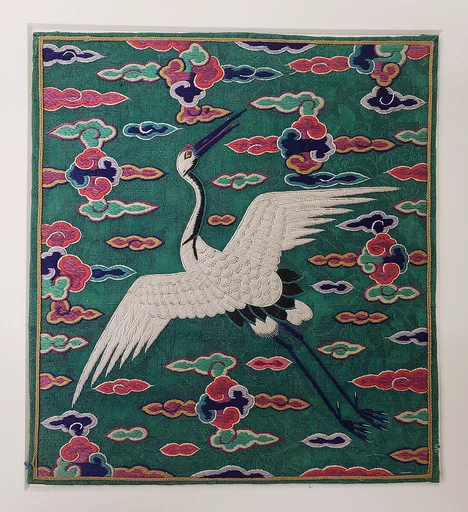
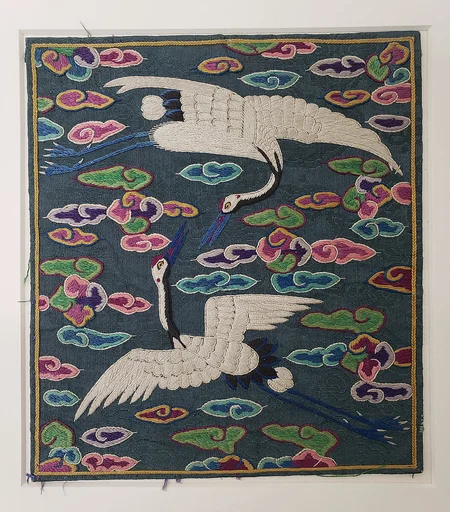
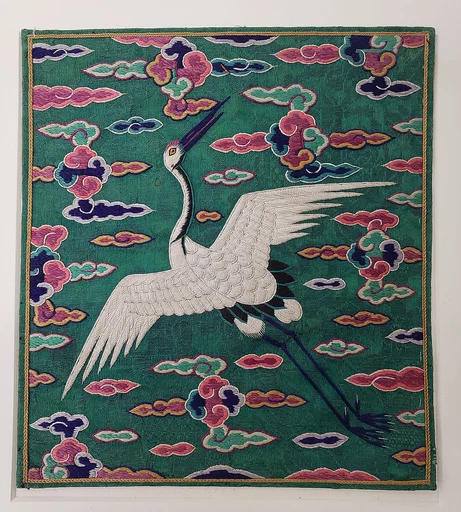
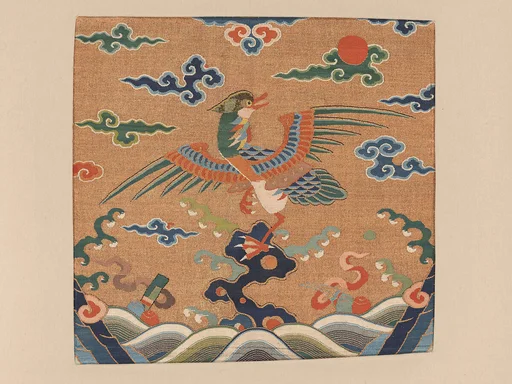
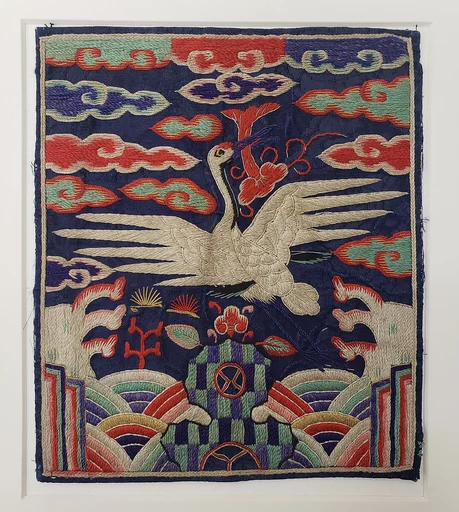
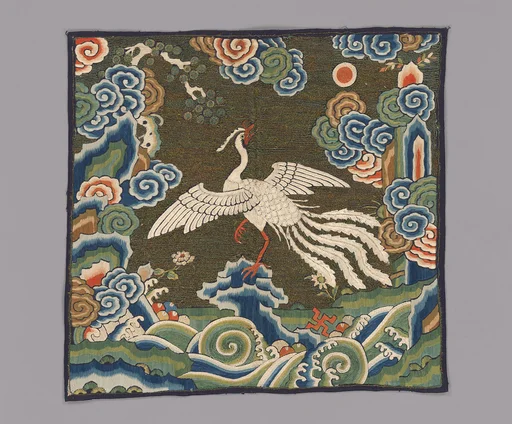
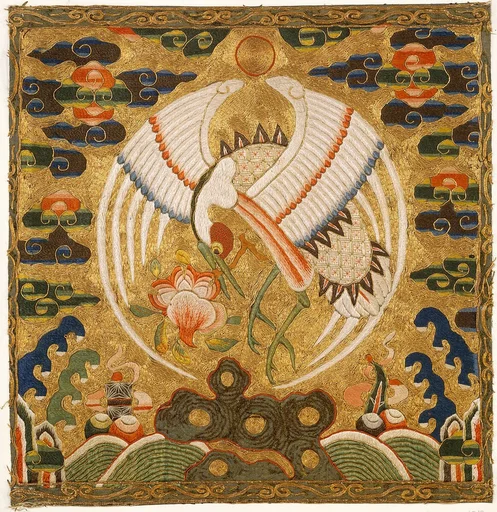
흉배 조선 |胸背 朝鮮|Civil-Official Hyungbae (Rank Badge)
Unknown
late 19th century · Silk embroidery on silk damask · Asian Art
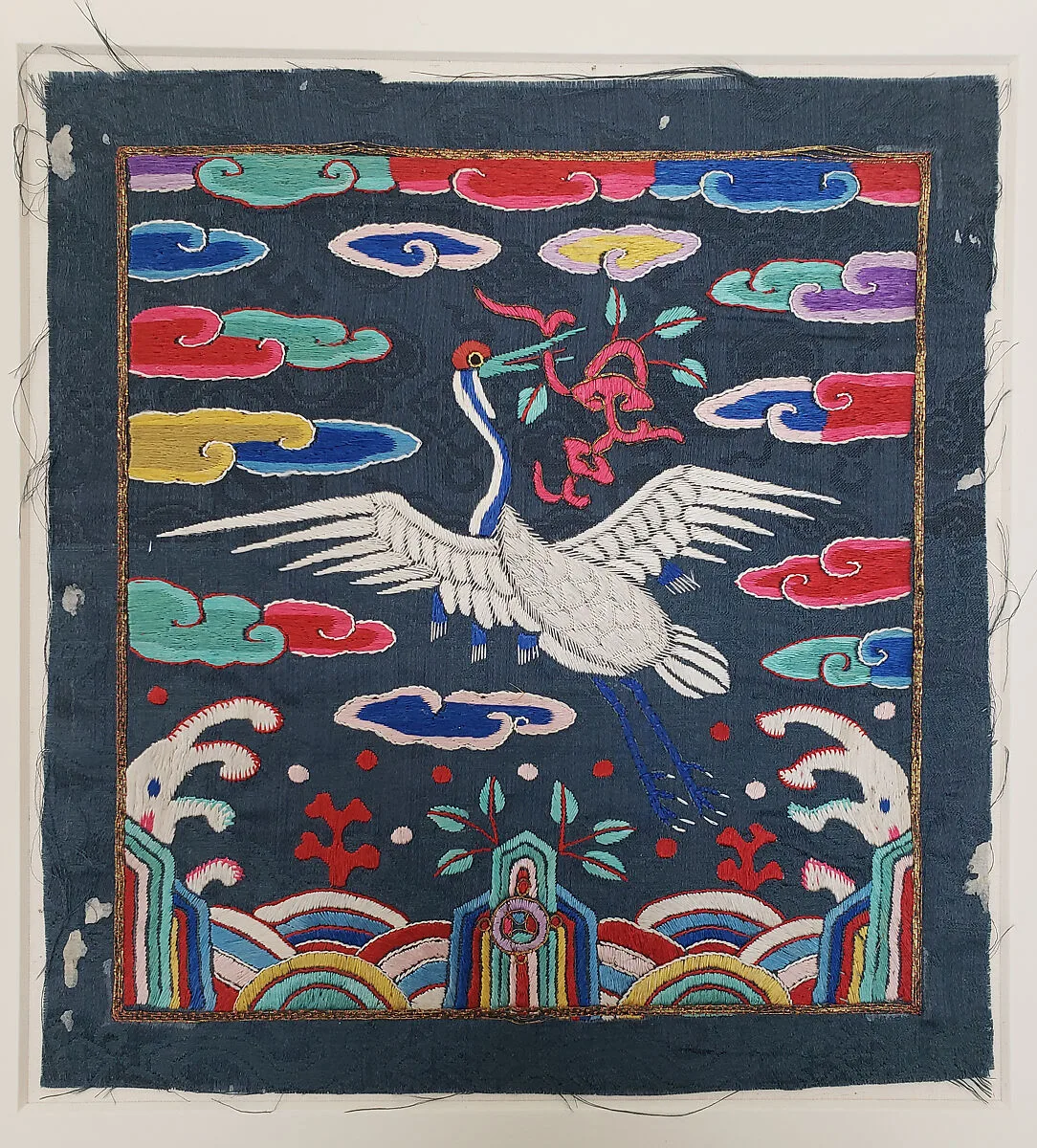
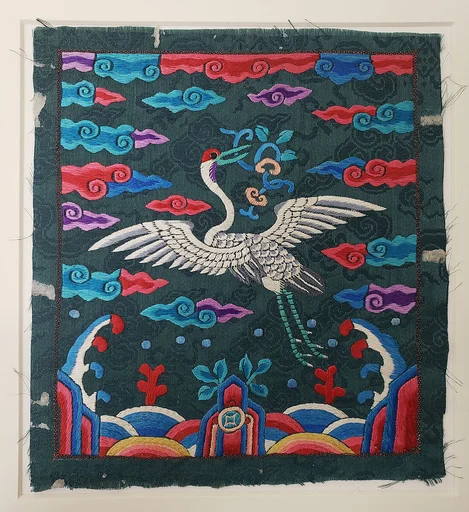
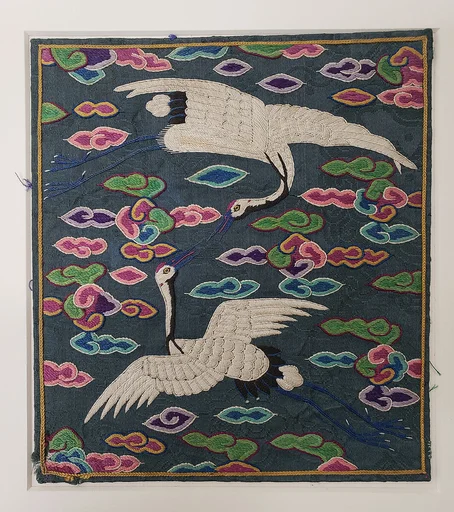
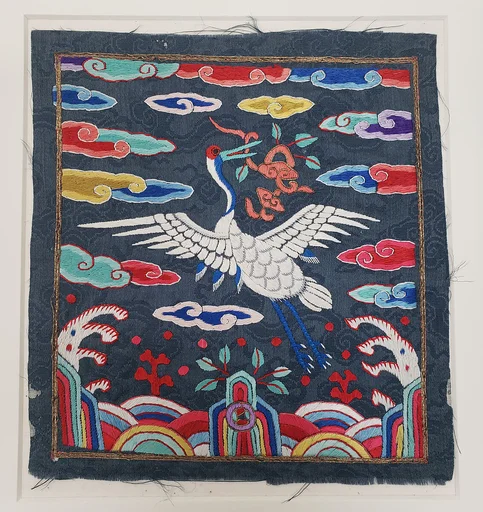
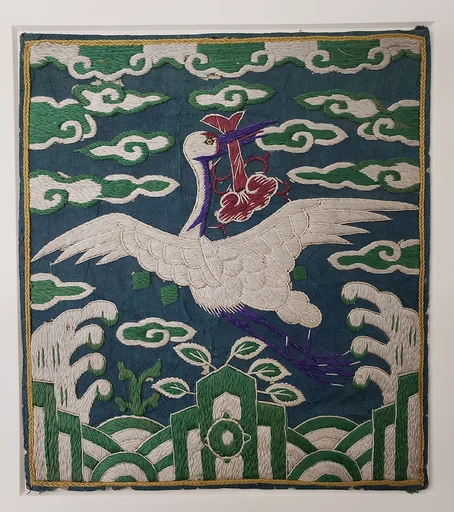
The Joseon court adopted an insignia system in the mid-fifteenth century to display the ranks of officials. Worn on the front (hyung) and back (bae) of costumes, hyungbae, or rank badges, served as decorative status markers in a society that prized strict hierarchies. Initially permitted only for civil and military officials of the third rank and higher, their use was eventually broadened to all nine ranks. Various animals were used to designate rank, and the motifs evolved over the course of the Joseon dynasty. In 1871 the insignia were standardized to tigers for military officials and cranes for civil officials. The examples here are arranged clockwise by rank, from the highest, the double crane with bullocho (elixir plant) on the upper left, to the lowest, the single crane on the lower left. Considered elegant and pure, cranes also symbolize longevity, as does the bullocho. The surrounding clouds, waves, and rocks are auspicious motifs also featured in the adjacent painting. The hyungbae system was suspended in 1899
- Artist
- Unknown
- Date
- late 19th century
- Medium
- Silk embroidery on silk damask
- Culture
- Korea
- Department
- Asian Art
- Credit line
- Seymour Fund, 1953