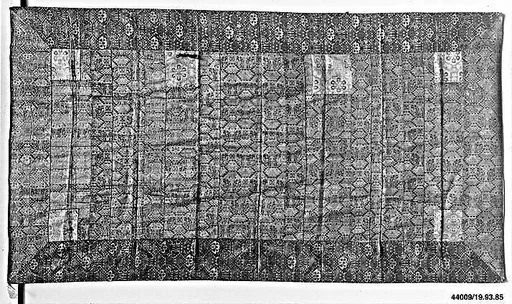
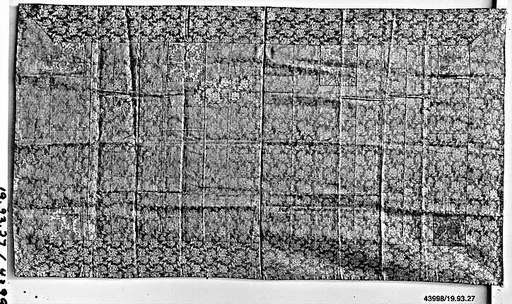
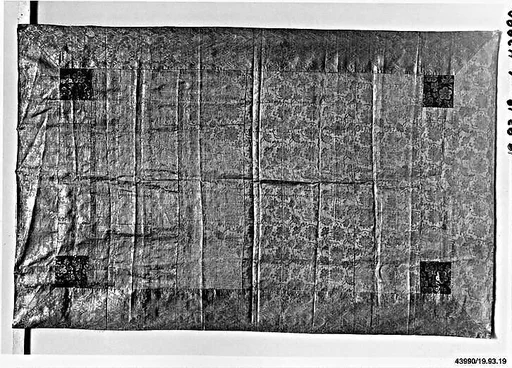
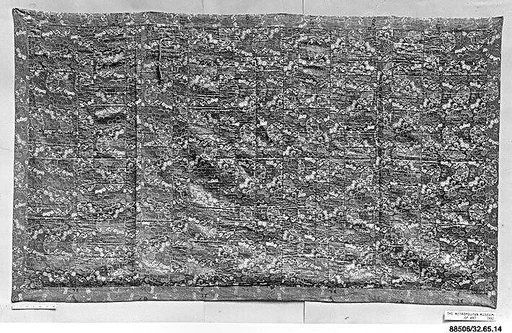
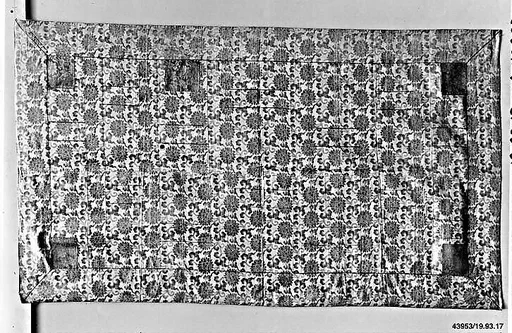
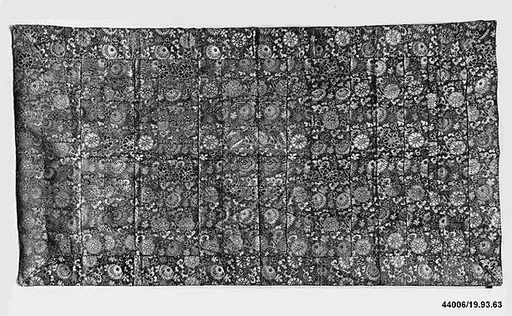
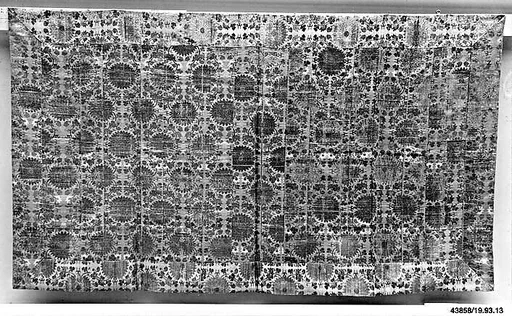
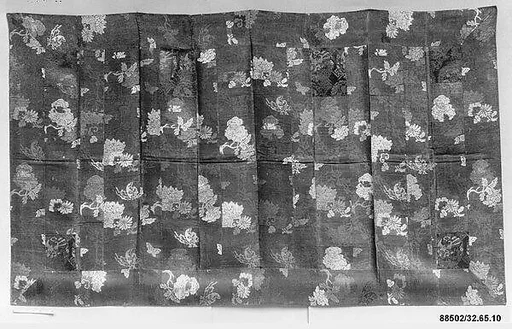
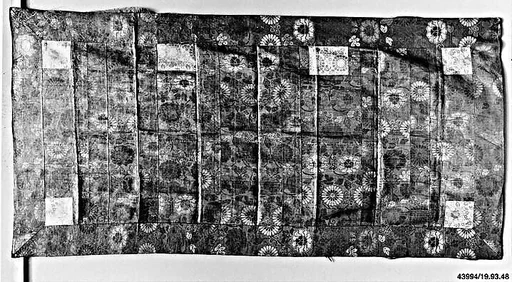
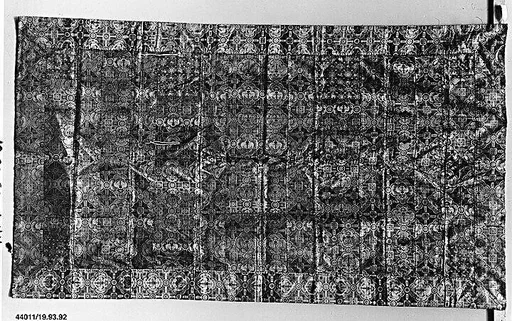
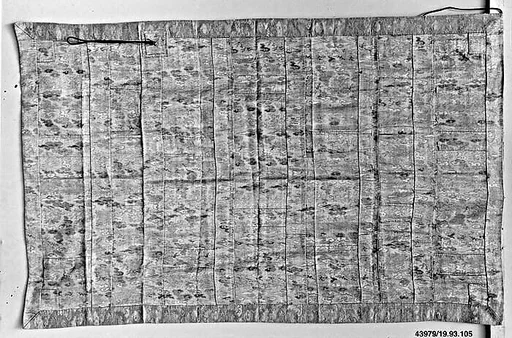
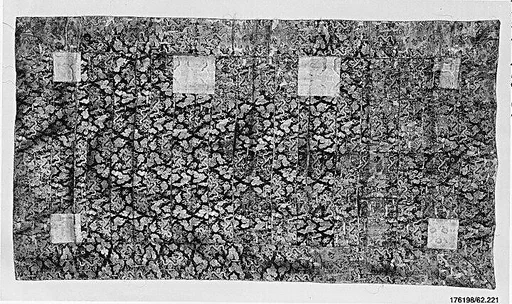
九条袈裟 蓮唐草文様|Nine-Panel Buddhist Monk’s Vestment (Kujō kesa) with Lotus Arabesque
Unknown
late 17th–mid 18th century · Silk satin with gold supplementary weft patterning (kinran) · Asian Art
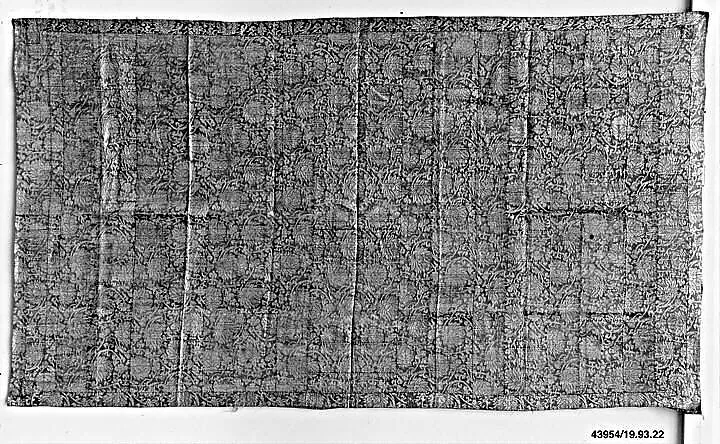
The transmission of the Buddhist master’s vestment (kesa) to the disciple represents the transmission of the dharma (teaching), especially in Zen Buddhism. The only person able to recognize that the disciple is on the way to enlightenment (or has reached it) is the master, who has already experienced it. Kesa are treasured and associated with those who wore or owned them. Small, rectangular pieces of fabric are joined together to form one kesa. Many robes have been created from cut-up religious offerings, reflecting the idea that what is worthless in the secular world translates into the sacred in the Buddhist realm.
- Artist
- Unknown
- Date
- late 17th–mid 18th century
- Medium
- Silk satin with gold supplementary weft patterning (kinran)
- Culture
- Japan
- Department
- Asian Art
- Credit line
- Purchase, Joseph Pulitzer Bequest, 1919