Untitled
Unknown
18th century · Twill-weave silk brocaded with silk (karaori) · Asian Art
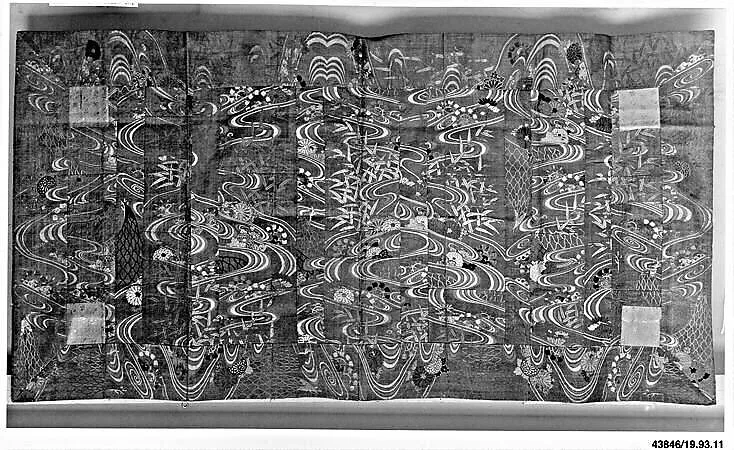
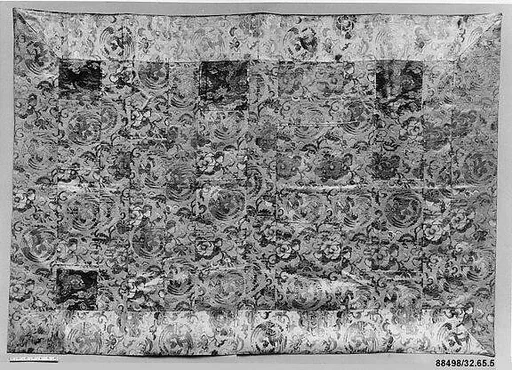
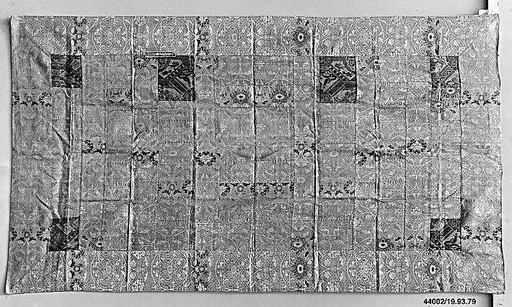
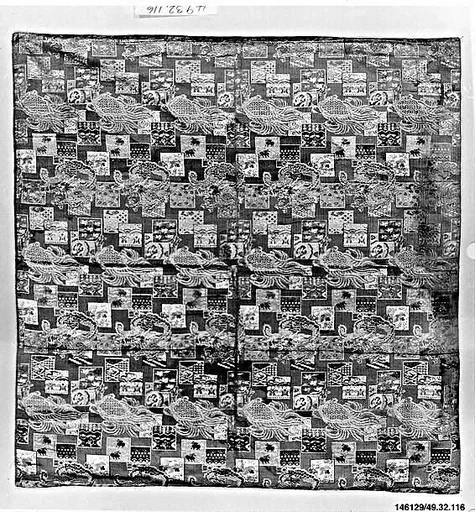
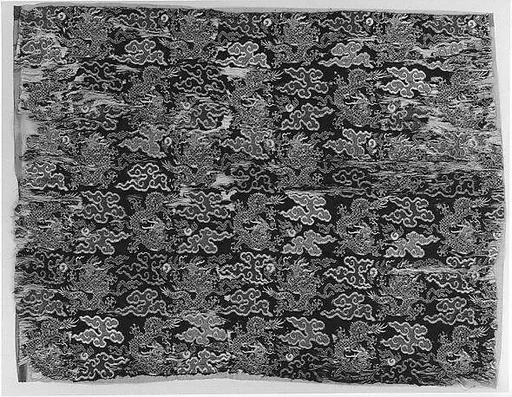
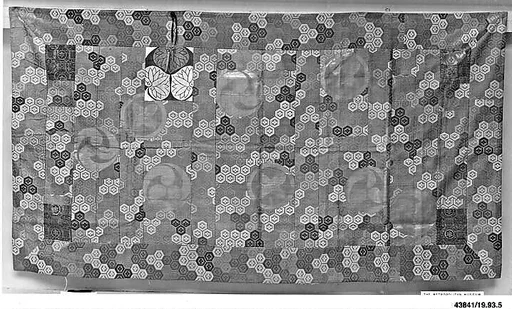
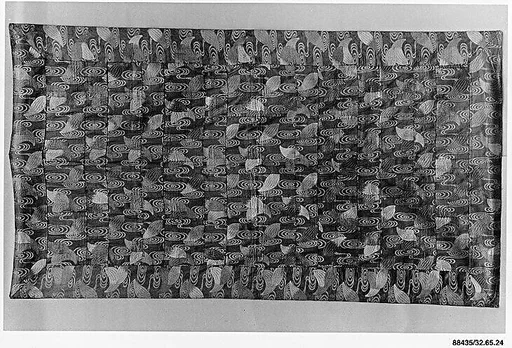
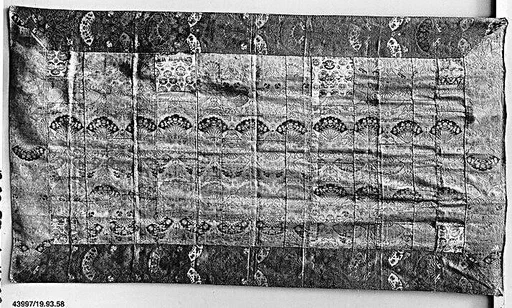
The elements of the multicolored design of this textile—sinuous streams, reeds, fishing nets, chrysanthemums, and waterwheels—remain clearly recognizable on its now-faded red background. Buddhist vestments were usually made from donated garments or other textiles that were cut into pieces and assembled into patchwork configurations. This kesa consists of a type of cloth called karaori, in which parts of the design are brocaded in long, floating silk wefts of many colors. The same kind of cloth was used for the type of Noh costume also called a karaori, usually worn as an outer robe for a female role.
- Artist
- Unknown
- Date
- 18th century
- Medium
- Twill-weave silk brocaded with silk (karaori)
- Culture
- Japan
- Department
- Asian Art
- Credit line
- Purchase, Joseph Pulitzer Bequest, 1919