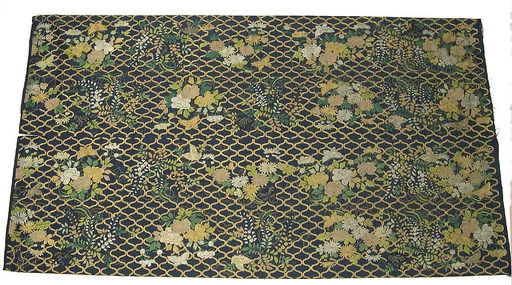
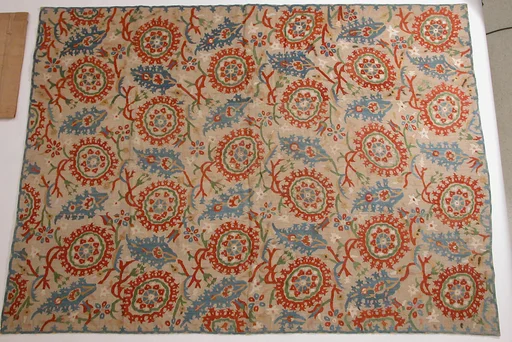
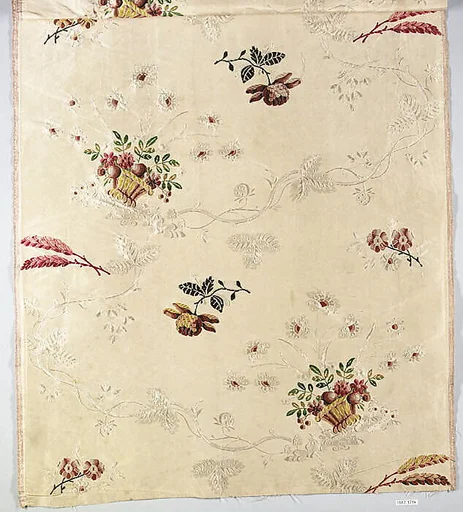
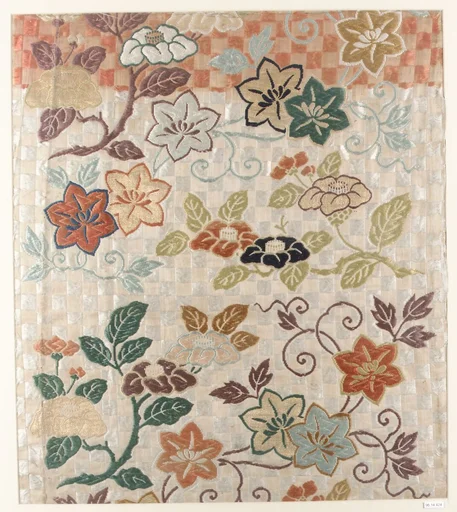
茶浅葱段秋草蝶模様唐織袈裟|Buddhist Vestment (Kesa) Made from a Noh Costume (Karaori) with Autumn Grasses and Butterflies
Unknown
18th–19th century · Twill-weave silk brocaded with silk and metallic thread · Asian Art
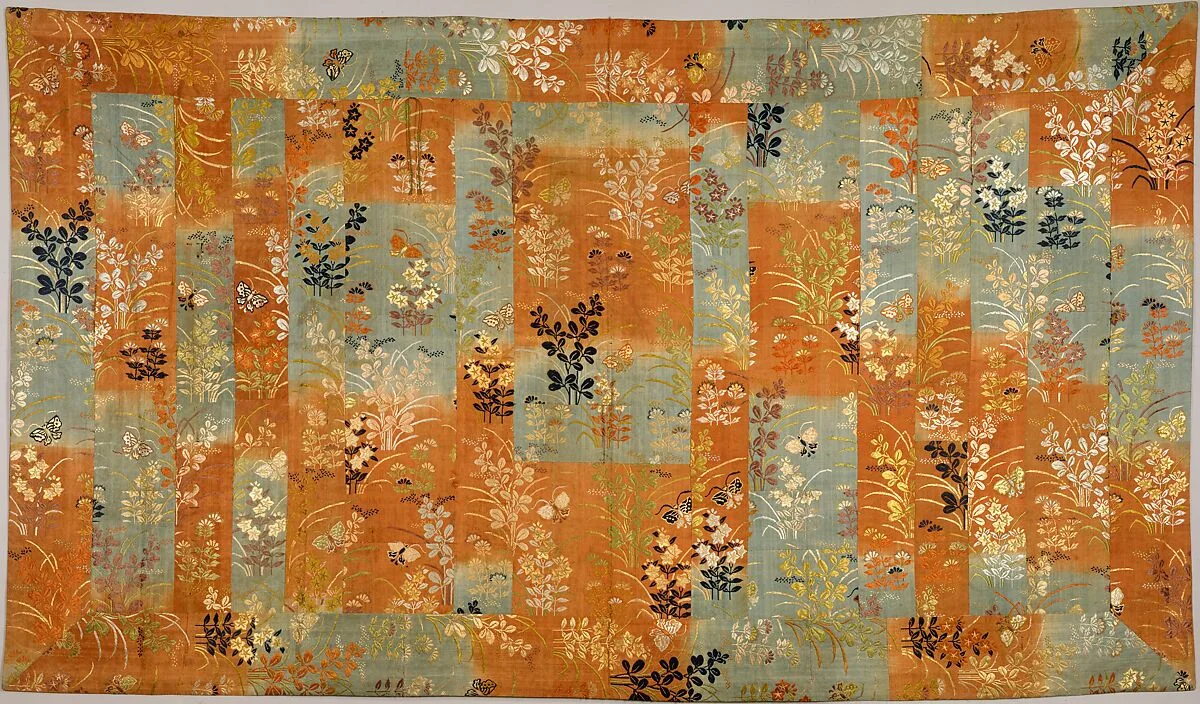
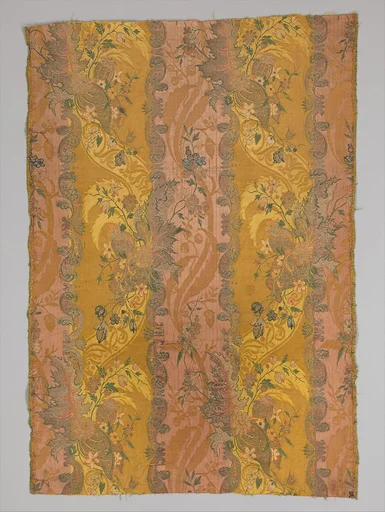
Buddhist vestments were often made from donated garments or textiles. Perhaps ironically, this kesa, once used by an old monk, was probably fashioned from a gorgeous eighteenth-century karaori, a type of costume worn by a male actor playing the role of a young woman in a Noh play. Karaori (translated literally as "Chinese weaving”) is also the name of a type of multicolored brocaded silk, and this textile has a pattern of butterflies and autumn grasses on a ground of blue and red. The autumn plants all belong to the standard group of seven used in Japanese art and poetry: bush clover (hagi); Chinese bellflower (kikyō); miscanthus grass (obana); “purple trousers” flower (fujibakama); large pink (nadeshiko); pampas grass (susuki), and valerian, sometimes called maiden flower (ominaeshi).
- Artist
- Unknown
- Date
- 18th–19th century
- Medium
- Twill-weave silk brocaded with silk and metallic thread
- Culture
- Japan
- Department
- Asian Art
- Credit line
- Purchase, Joseph Pulitzer Bequest, 1919