Untitled
Unknown
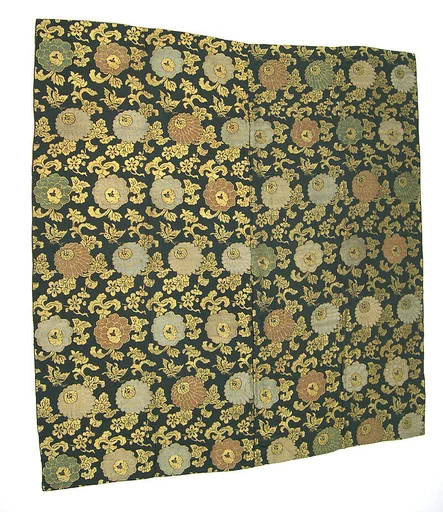
17th century · Body of the kesa: brocaded silk twill (karaori); Squares: silk and metallic-thread lampas · Asian Art
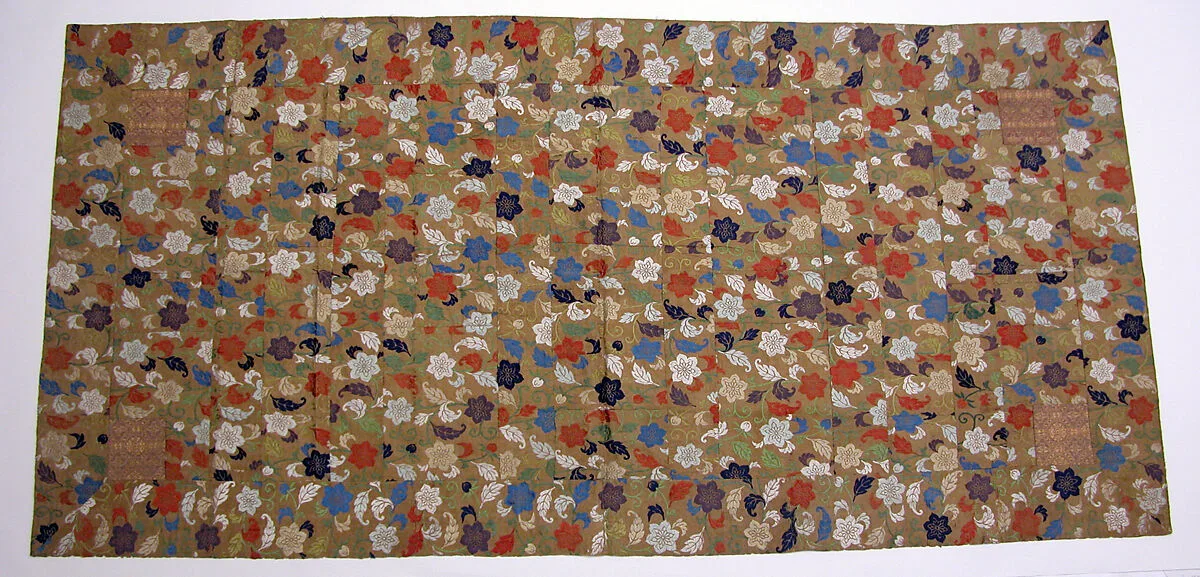
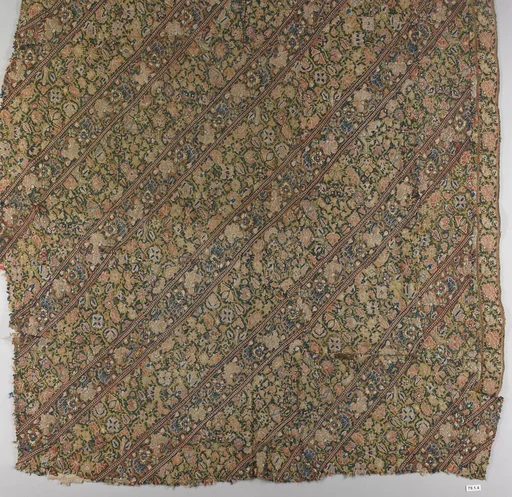
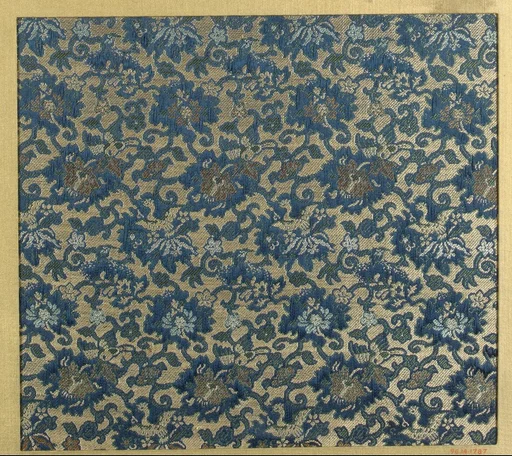
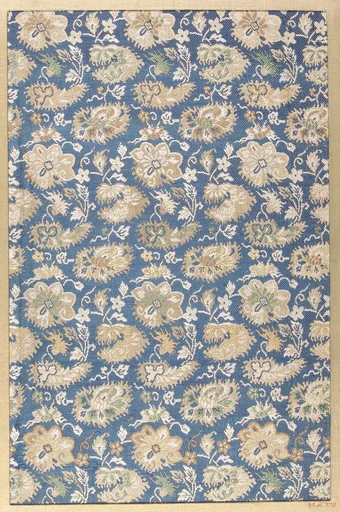
Buddhist vestments were usually made from donated textiles or from garments that were cut into pieces and then assembled into patchwork onfigurations. Such donations constitute shôgon, or adornment of the Buddha—realm, an act that results in the accumulation of karmic merit for the donor. This kesa consists of a type of cloth called karaori, in which the design is brocaded in long, floating silk wefts of many colors—nine colors in this fine example. The same kind of cloth was used for a Noh costume also called karaori, usually worn as an outer robe by an actor playing a female role.
- Artist
- Unknown
- Date
- 17th century
- Medium
- Body of the kesa: brocaded silk twill (karaori); Squares: silk and metallic-thread lampas
- Culture
- Japan
- Department
- Asian Art
- Credit line
- Purchase, Joseph Pulitzer Bequest, 1919