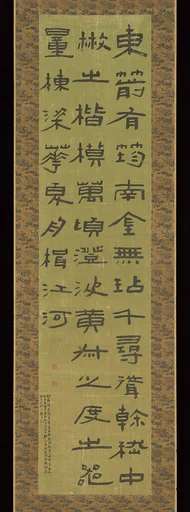
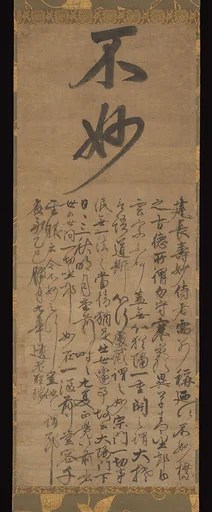
清 鄭簠 隷書軸|Poetic Maxim
Zheng Fu
dated 1691 · Hanging scroll; ink on paper · Asian Art
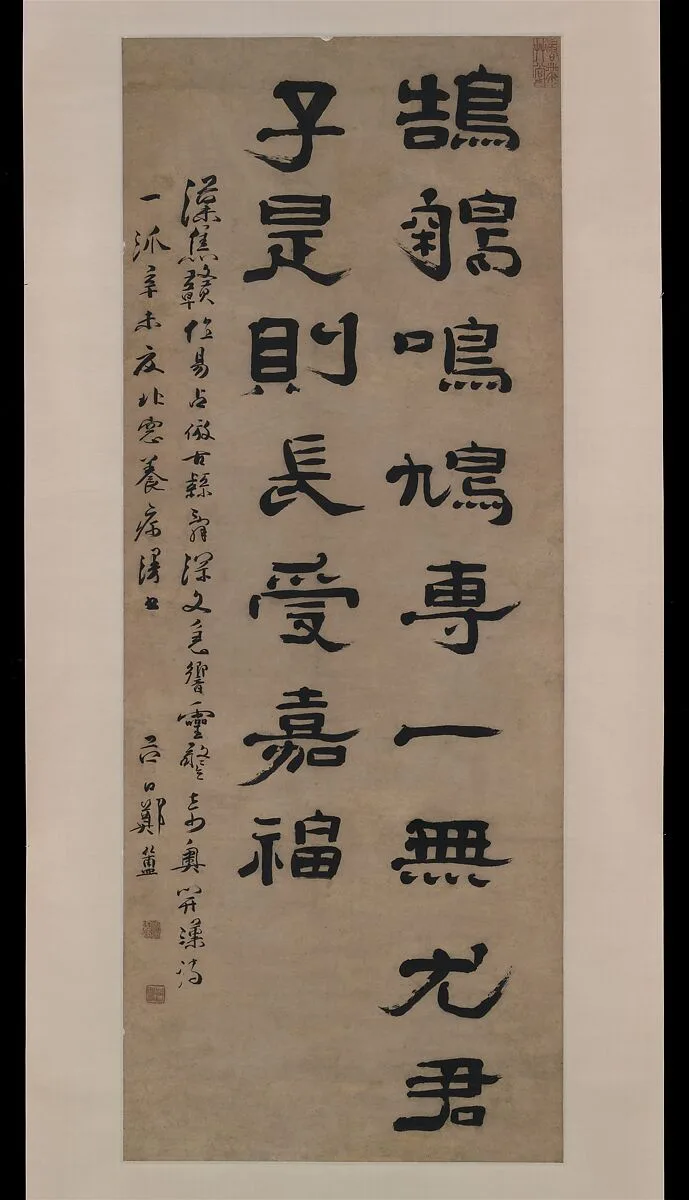
Zheng Fu, a Nanjing native, lived through the fall of the Ming dynasty and elected to practice medicine rather than to study for the civil-service examinations. He was best known for his large-scale clerical script writings, as exemplified by this hanging scroll. A pioneer in the revival of interest in Han dynasty (206 B.C..–A.D. 220) stele writings, Zheng traveled to Shandong and Hebei Provinces in search of original stones, inspiring the playwright Kong Shangren (1648–1718) to compose a poem about Zheng’s obsession. In addition to creating independent works of calligraphy, Zheng was also much sought after to execute large-character frontispieces for paintings. This piece quotes Jiao Gan’s (act. 86–34 B.C.) poetic explanation of one of the trigrams in the Book of Changes (Yi Jing). The text offers an inspiring sentiment suitable for a gentleman’s studio. He who acts like the single-minded cuckoo will not make mistakes. If a gentleman upholds this code of conduct, he will enjoy a happy and long life.
- Artist
- Zheng Fu
- Date
- dated 1691
- Medium
- Hanging scroll; ink on paper
- Culture
- China
- Department
- Asian Art
- Credit line
- Gift of Julia and John Curtis, in memory of Marie-Hélène and Guy Weill, 2015