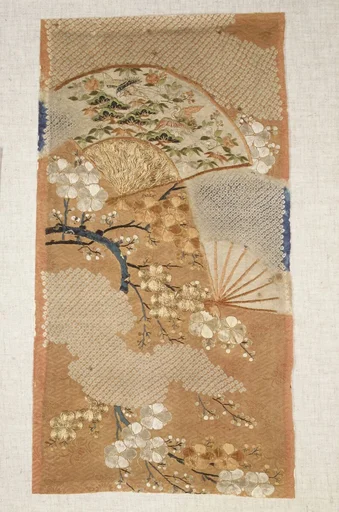
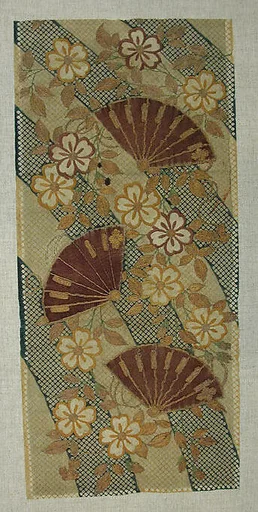
縞平絹地草花扇面雪輪雲模様辻が花 裂|Tsujigahana Textile with Horizontal Stripes, Flowering Plants, Fans, Snowflakes, Clouds, and Bellflowers
Unknown
ca. late 16th century · Plain-weave silk with resist dyeing and ink painting · Asian Art
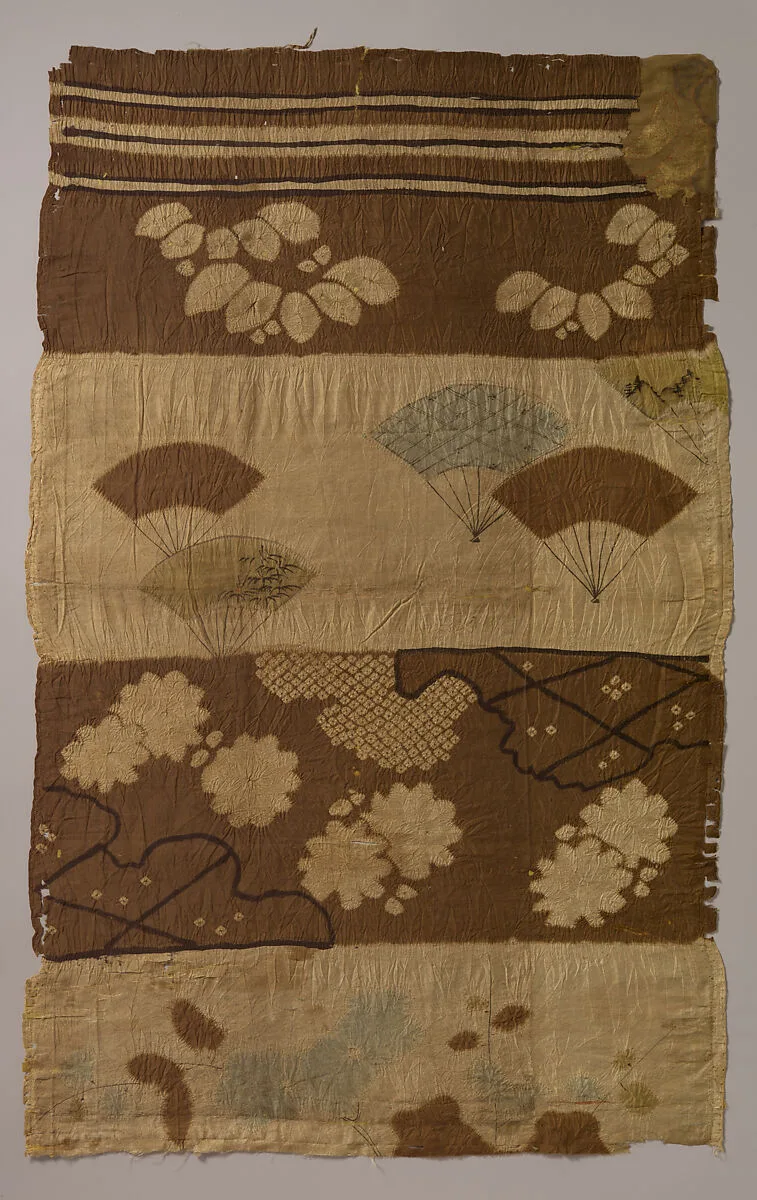
Probably once part of the back of a kosode (predecessor of the modern kimono), this tsujigahana textile panel has four ornamented horizontal bands that alternate in brown and white. The term tsujigahana, translated literally as “flowers (hana) at the crossroads (tsuji),” evokes images of delicate blossoms amid pathways. While these motifs survive in textile fragments, the precise meaning of tsujigahana remains unclear. Late Muromachi (1392–1573)- and Momoyama-period written sources used the word in descriptions of garments, but twentieth-century scholars redefined it as a textile technique: stitch-resist dyeing and ink painting on a lightweight, plain-weave ground, often further embellished with gold-leaf imprinting and embroidery.
- Artist
- Unknown
- Date
- ca. late 16th century
- Medium
- Plain-weave silk with resist dyeing and ink painting
- Culture
- Japan
- Department
- Asian Art
- Credit line
- Purchase, Parnassus Foundation/Jane and Raphael Bernstein Gift, and Friends of Asian Art Gifts, 2002