Untitled
Unknown
19th century · Paper reinforced with silk · Asian Art
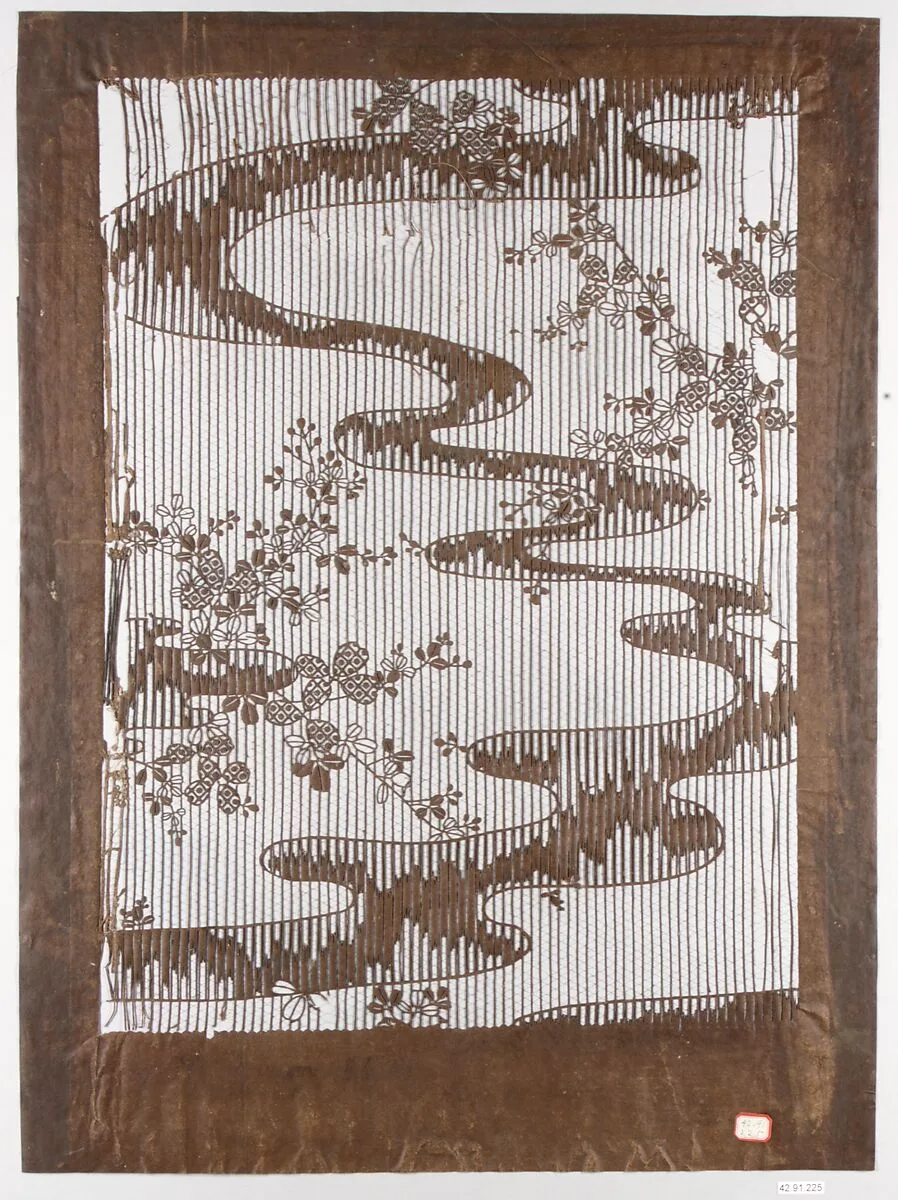
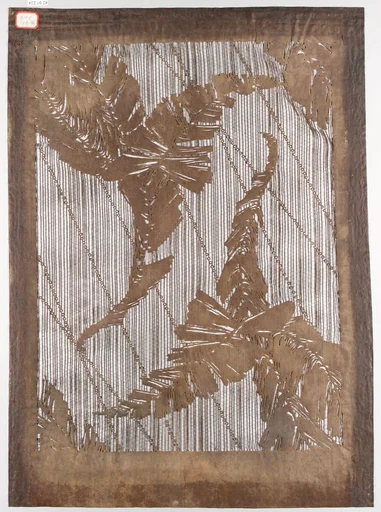
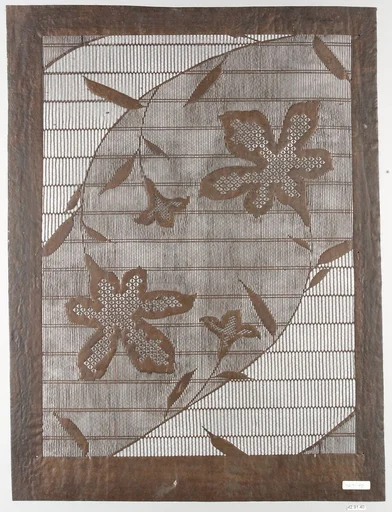
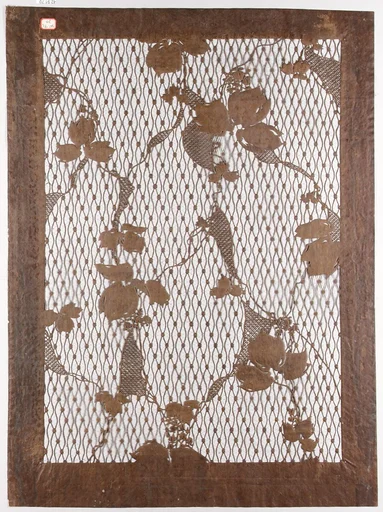
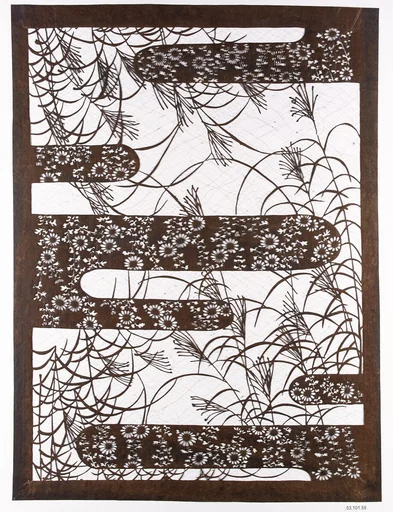
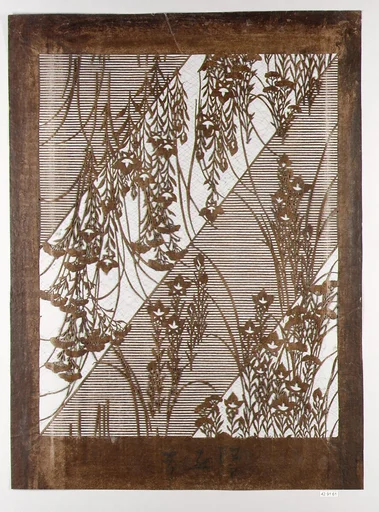
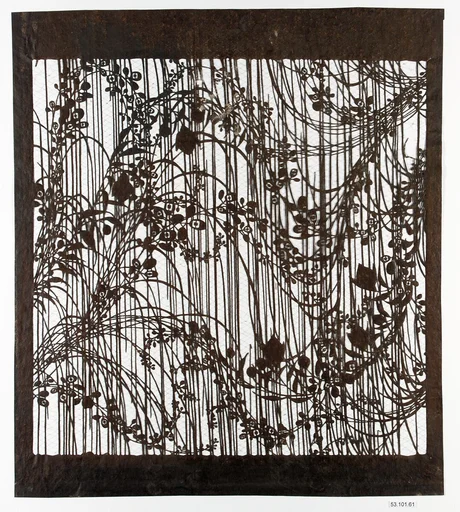
A poetic autumn landscape is represented by only two elements, bush clover and a meandering stream. Stencils like this one were traditionally used in Japan in a resist-dyeing process to produce patterned cloth. A length of white cloth was stretched out and paste was applied through the stencil, which was then moved to the next area and the next until the entire length was covered. The cloth was then dyed, usually with indigo, and the areas covered with the paste resisted the dye. Although the pattern is pictorial, its direction is ambiguous, a hard-to-achieve effect that is a tribute to the designer's skill. This ambiguity allows the textile to be right-side up, whether used as the front or back of traditional Japanese garments, which have no shoulder seam.
- Artist
- Unknown
- Date
- 19th century
- Medium
- Paper reinforced with silk
- Culture
- Japan
- Department
- Asian Art
- Credit line
- Gift of Mrs. Horace Havemeyer, 1942