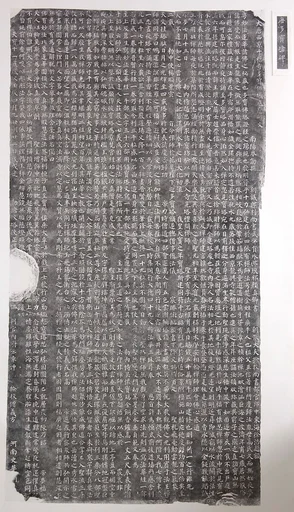
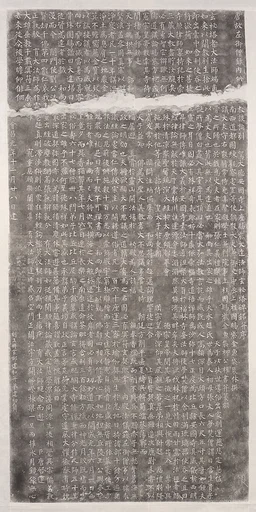
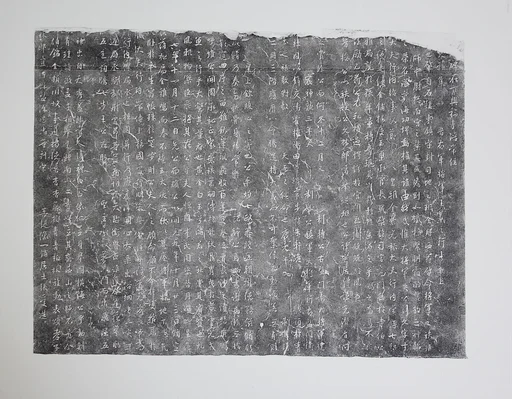
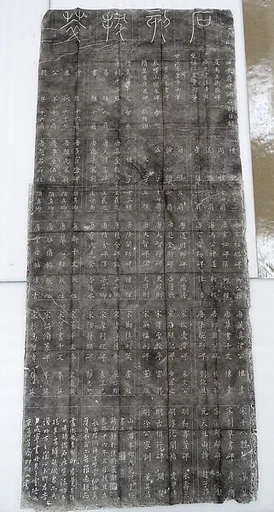
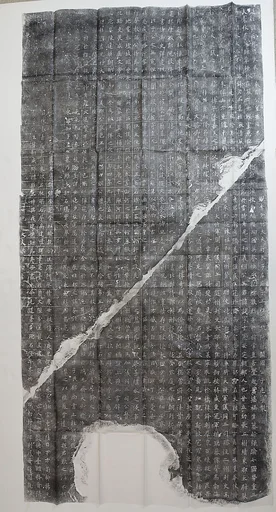
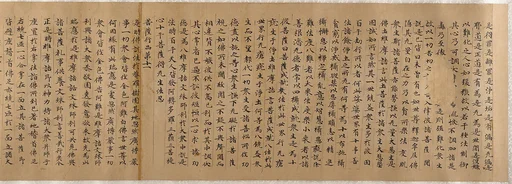
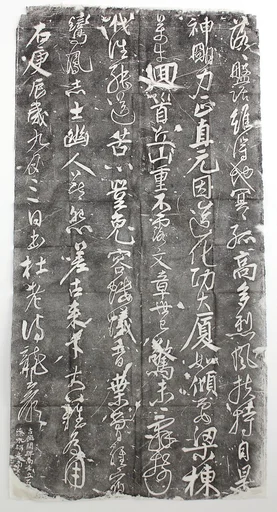
唐 颜真卿 顏家廟碑 現代拓片 紙本|Yan Family Temple Stele
Yan Zhenqing
20th century · 20th-century rubbing of a stele dated 780; ink on paper · Asian Art
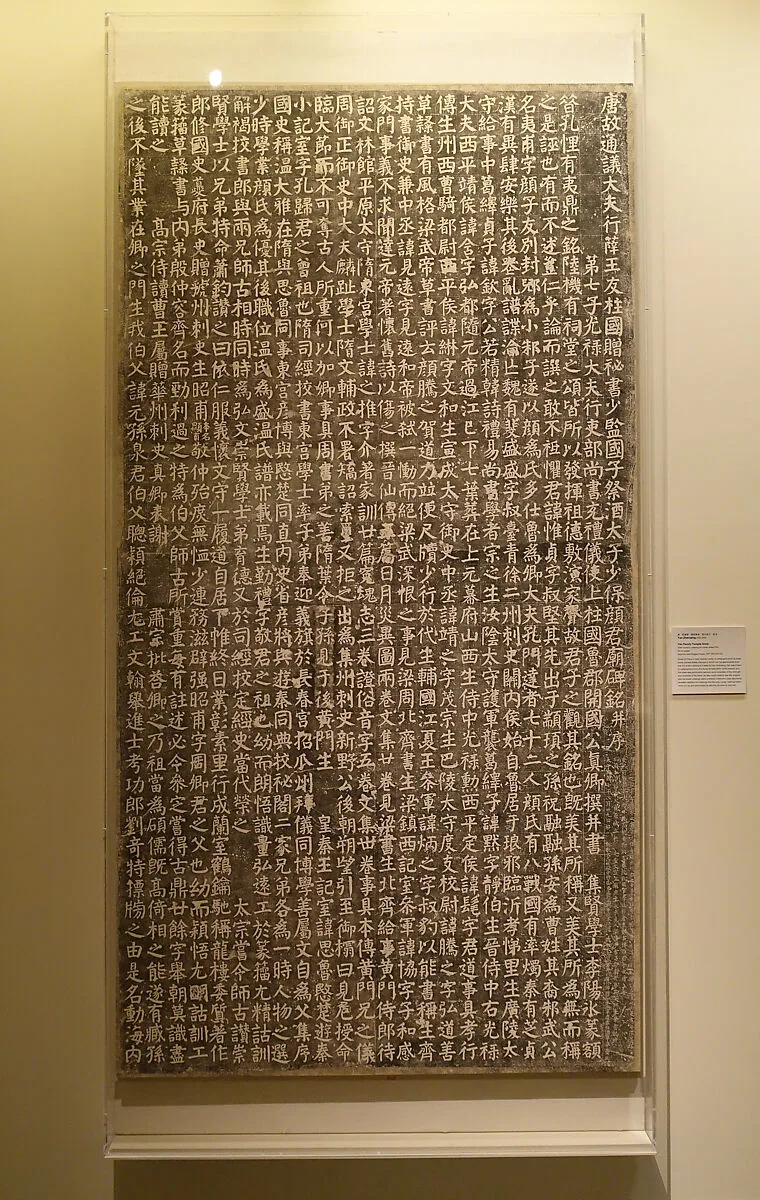
The calligraphy reproduced in this rubbing was engraved on a stone stele erected at the family temple of the official and calligrapher Yan Zhenqing. The text on the stele, which is dedicated to Yan's father, records the achievements of earlier generations of the family. The original stele is preserved today in the Forest of Stelae in Xi'an. Although many forms of calligraphy were practiced during the Tang dynasty, standard script from that period had the greatest impact on the later history of the art. In standard script, exemplified by Yan's stele inscription, square-shaped characters are written with articulated strokes that have complex turns, hooks, and dots. From the Tang dynasty on, this script type was used extensively for formal documents and public monuments. Standard script is the form of calligraphy first learned by children and is the basis for the typefaces used in Chinese printing. One of the most influential artists in Chinese history, Yan Zhenqing was also a prominent statesman of the Tang dynasty and suffered a martyr's death when he refused to submit to rebels intent on overthrowing the dynasty. This monumental writing is seen by scholars of calligraphy as a powerful reflection of Yan's unconquerable integrity.
- Artist
- Yan Zhenqing
- Date
- 20th century
- Medium
- 20th-century rubbing of a stele dated 780; ink on paper
- Culture
- China
- Department
- Asian Art
- Credit line
- Seymour and Rogers Funds, 1977