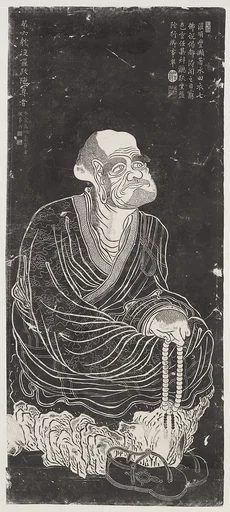
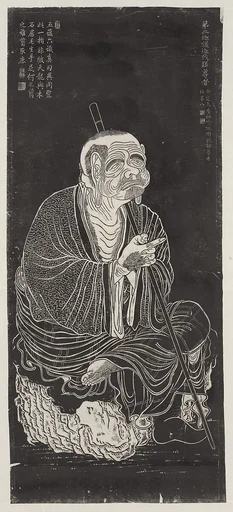
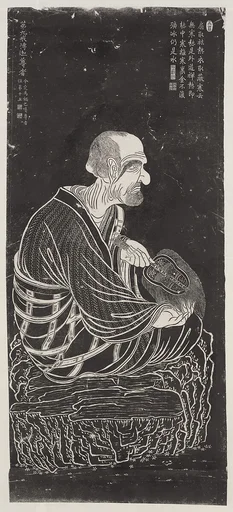
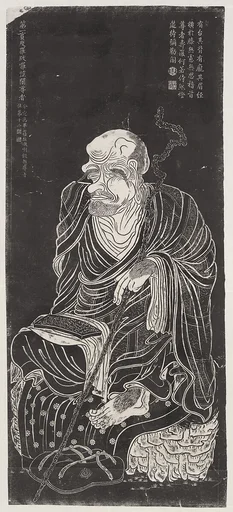
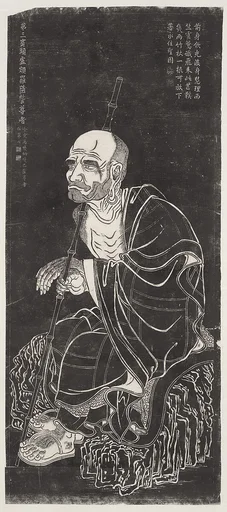
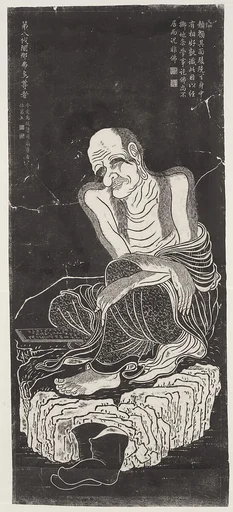
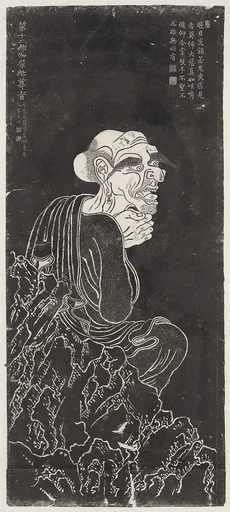
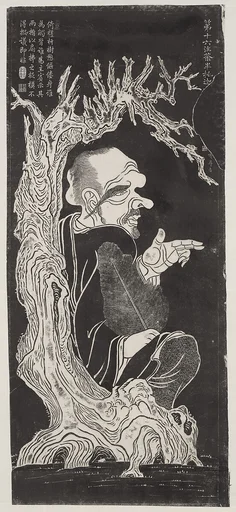
清 臨貫休十六羅漢圖 (拓片)|Luohan, after a set attributed to Guanxiu
Unidentified
stone carved in 1757; rubbing 18th or 19th century? · Ink on paper · Asian Art
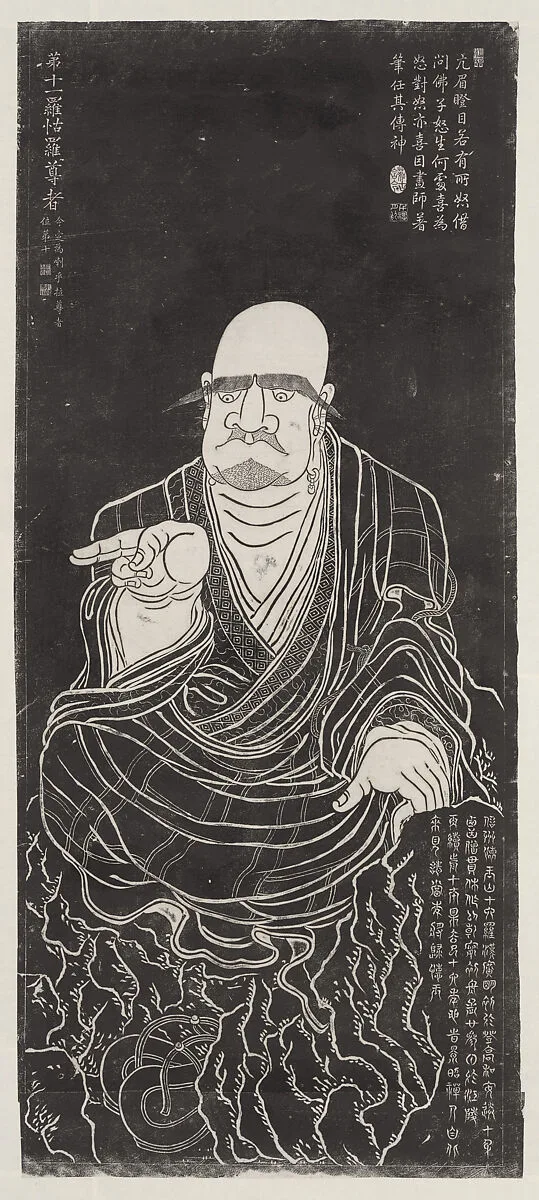
Of the many luohan painters throughout Chinese history, none was more influential than the Buddhist monk Guanxiu (832–912), whose wild caricatures inspired generations of artists to depict luohans as exotic, superhuman beings. Guanxiu’s paintings were already considered rare in 1757, when the Qianlong emperor encountered what he believed to be an authentic set in a monastery in Hangzhou. To preserve their appearance, the emperor commissioned copies and had them carved in stone so that rubbings like these could be made. The original paintings are now lost, making these copies some of the most important surviving evidence of Guanxiu’s style.
- Artist
- Unidentified
- Date
- stone carved in 1757; rubbing 18th or 19th century?
- Medium
- Ink on paper
- Culture
- China
- Department
- Asian Art
- Credit line
- Gift of Miss H. C. Wagner, 1959