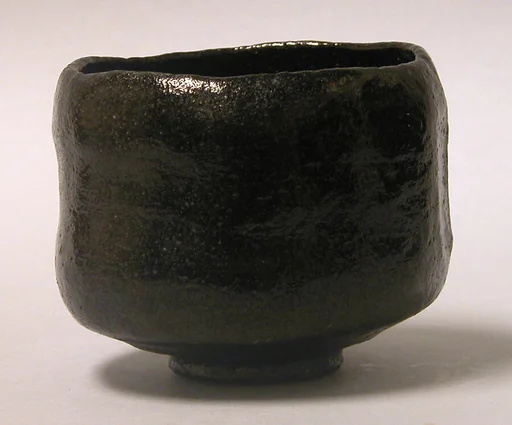
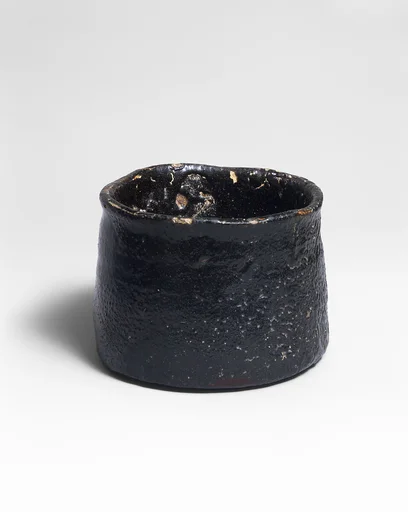
黒楽茶碗|Black Raku Tea Bowl
Unknown
early 17th century · Earthenware with black raku glaze (Raku ware) · Asian Art
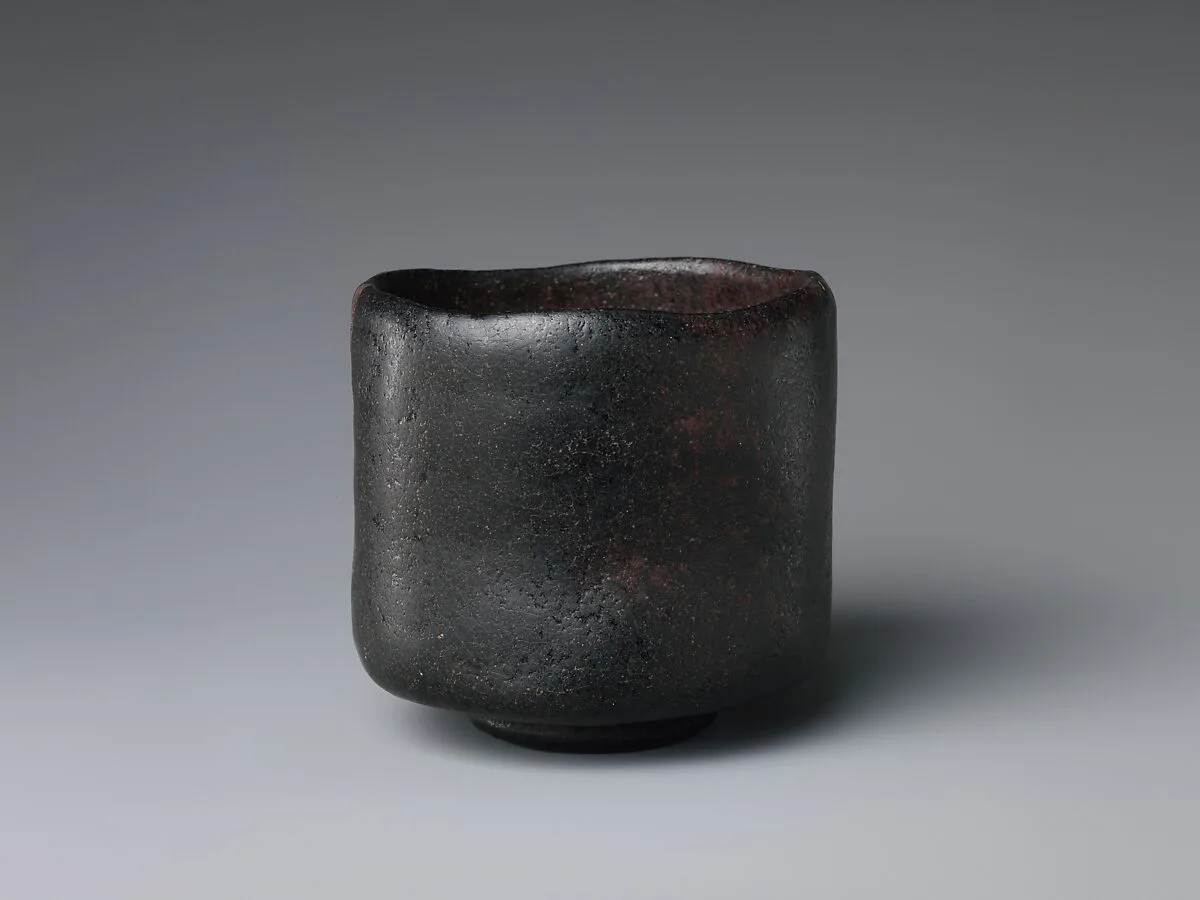
Raku ware is a type of ceramic highly esteemed in the Japanese tea ceremony. It is a lightweight glazed earthenware molded by hand rather than thrown on a potter's wheel. The clay is rough and unpretentious, covered in an opaque glaze, as we see here. Raku ware could be fired in small, indoor kilns, which contributed to its popularity in the city of Kyoto, a major tea center. It is traditionally associated with the Raku family of potters, which traces its lineage back to the time of the famous tea master Sen no Rikyū, and which is still producing Raku ware today. This tea bowl is tentatively attributed to the sixteenth-century tile maker who is believed to be the founder of Raku ware, known as Chojirō. According to legend, Chojirō's production of tea bowls was stimulated and supervised by Rikyū himself.
- Artist
- Unknown
- Date
- early 17th century
- Medium
- Earthenware with black raku glaze (Raku ware)
- Culture
- Japan
- Department
- Asian Art
- Credit line
- Rogers Fund, 1917