Untitled
Unknown
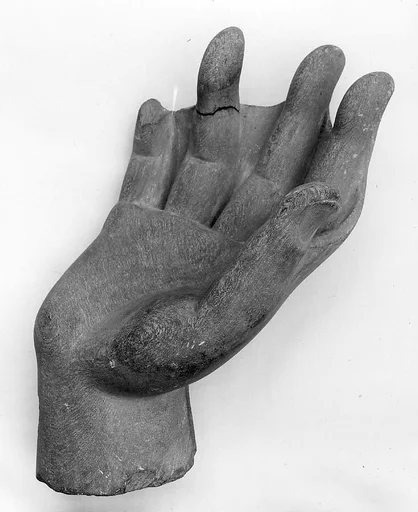
Date unknown · Fragment of a wooden sculpture · Asian Art
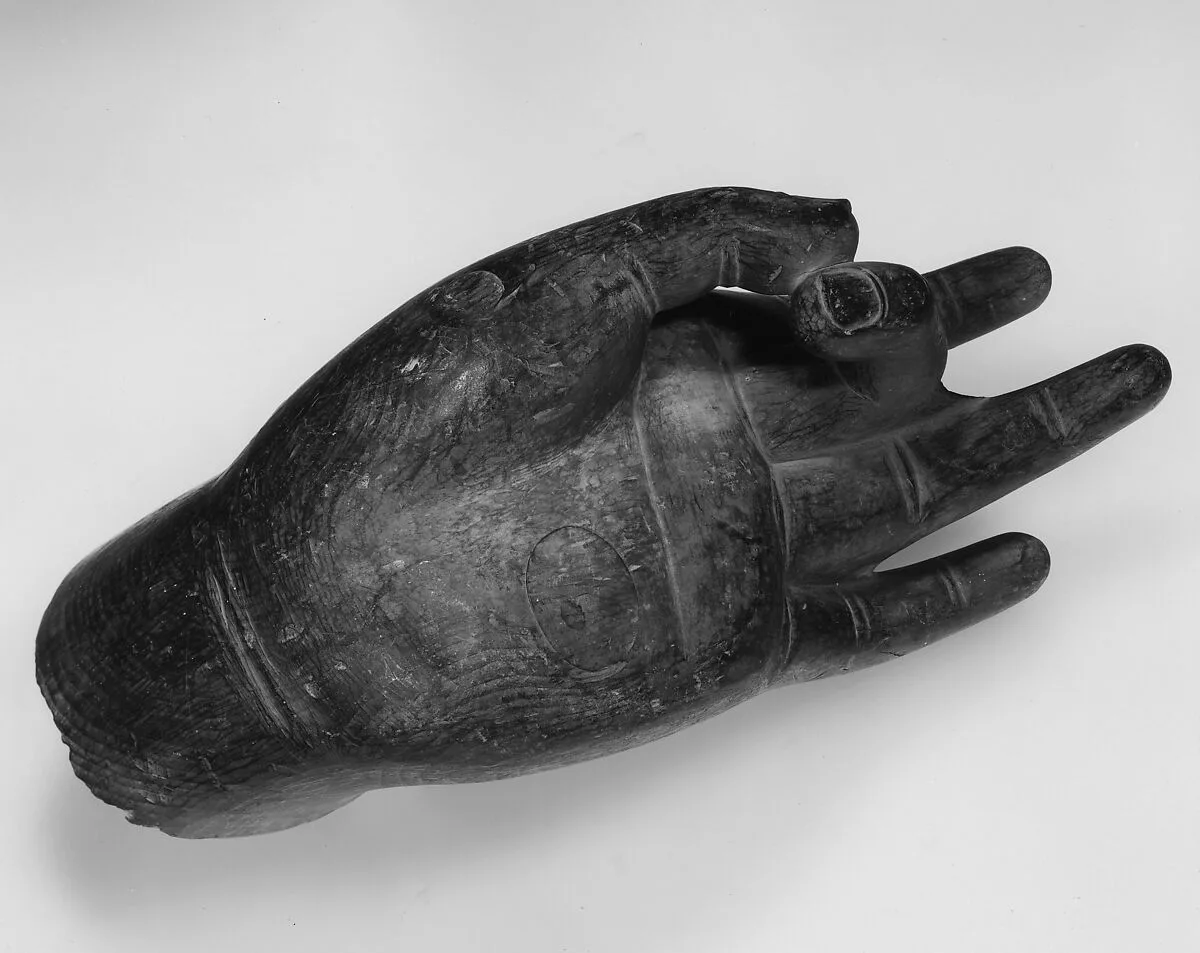
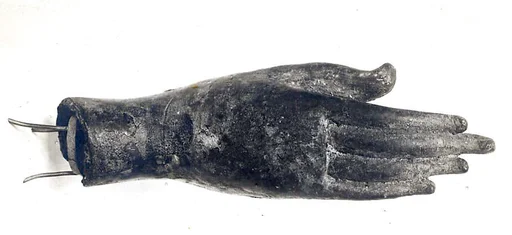
One of the most common mudras in Japanese Buddhist sculpture—an open hand with an inflected index or third finger touching the thumb—symbolizes peace and the exposition of Buddhist teaching. It is most often associated with Shakyamuni, the historical Buddha, or Amida (Sanskrit: Amitabha), the Buddha of the Western Paradise. The modeling of this carving suggests the sensuous forms of religious sculpture of the early Heian period, when the styles and iconography of Tang-dynasty Esoteric Buddhist art were introduced to Japan from China.
- Artist
- Unknown
- Date
- Date unknown
- Medium
- Fragment of a wooden sculpture
- Culture
- Japan
- Department
- Asian Art
- Credit line
- The Harry G. C. Packard Collection of Asian Art, Gift of Harry G. C. Packard, and Purchase, Fletcher, Rogers, Harris Brisbane Dick, and Louis V. Bell Funds, Joseph Pulitzer Bequest, and The Annenberg Fund Inc. Gift, 1975