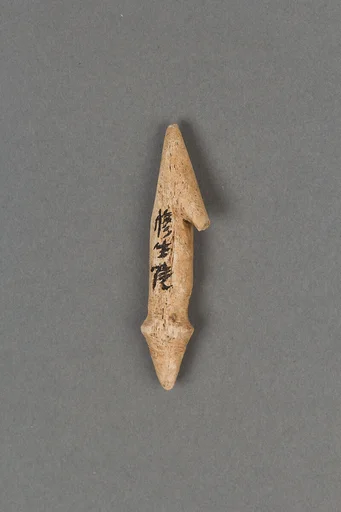
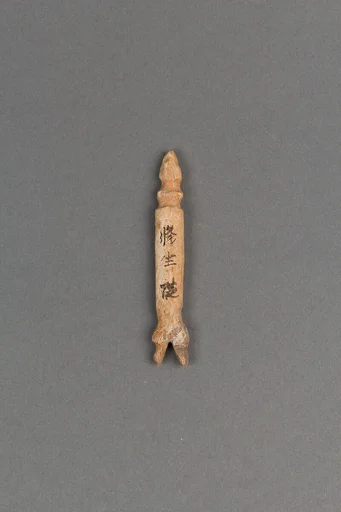
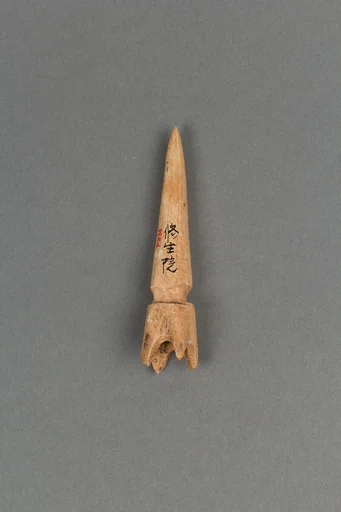
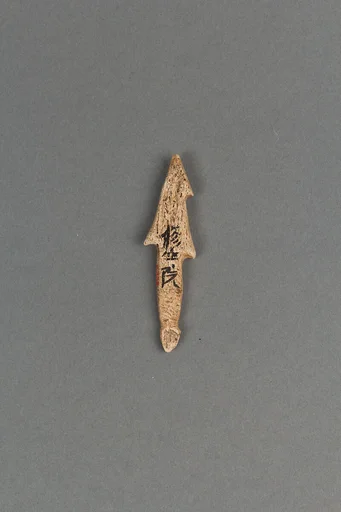
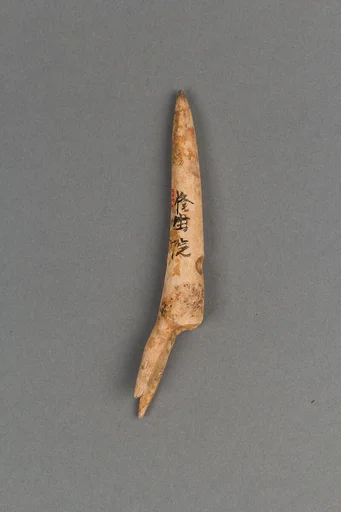
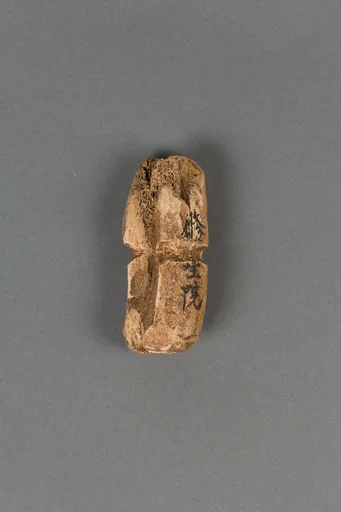
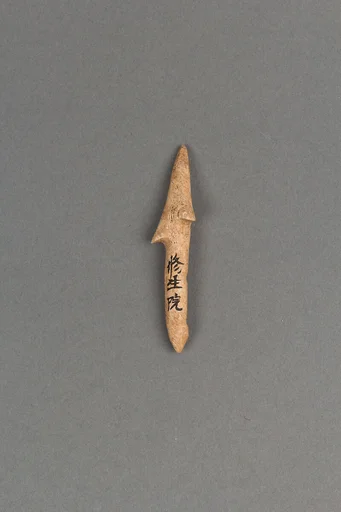
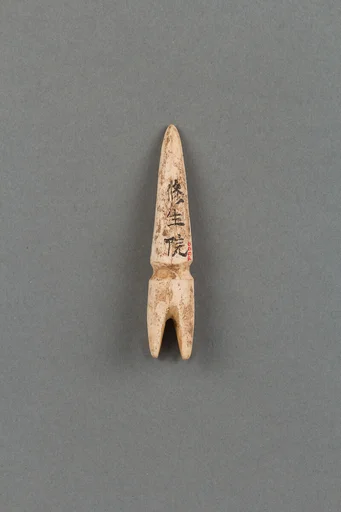
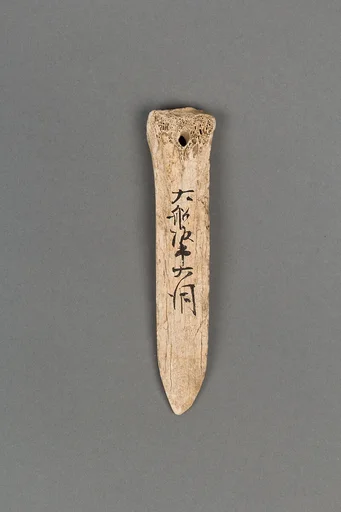
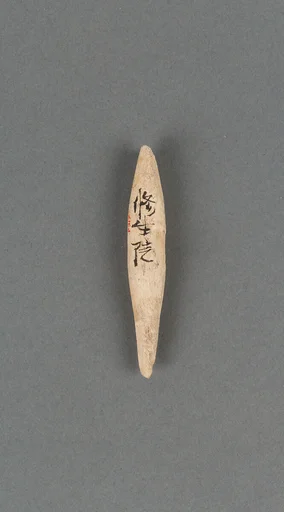
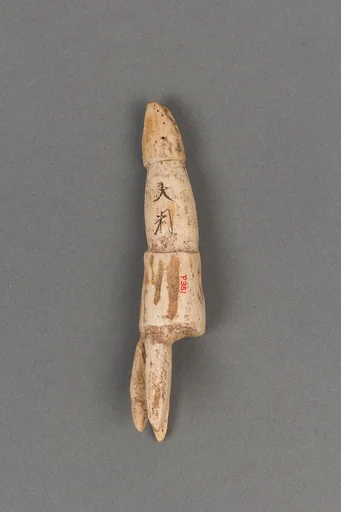
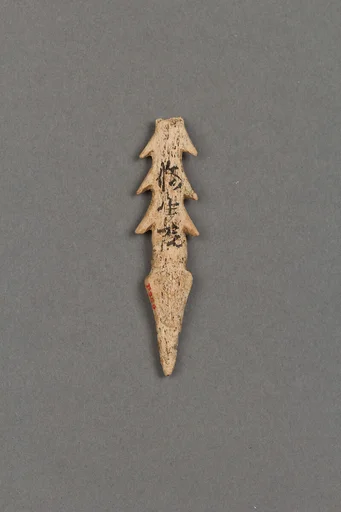
弓筈|Nock of a bow
Unknown
Date unknown · Bone · Asian Art
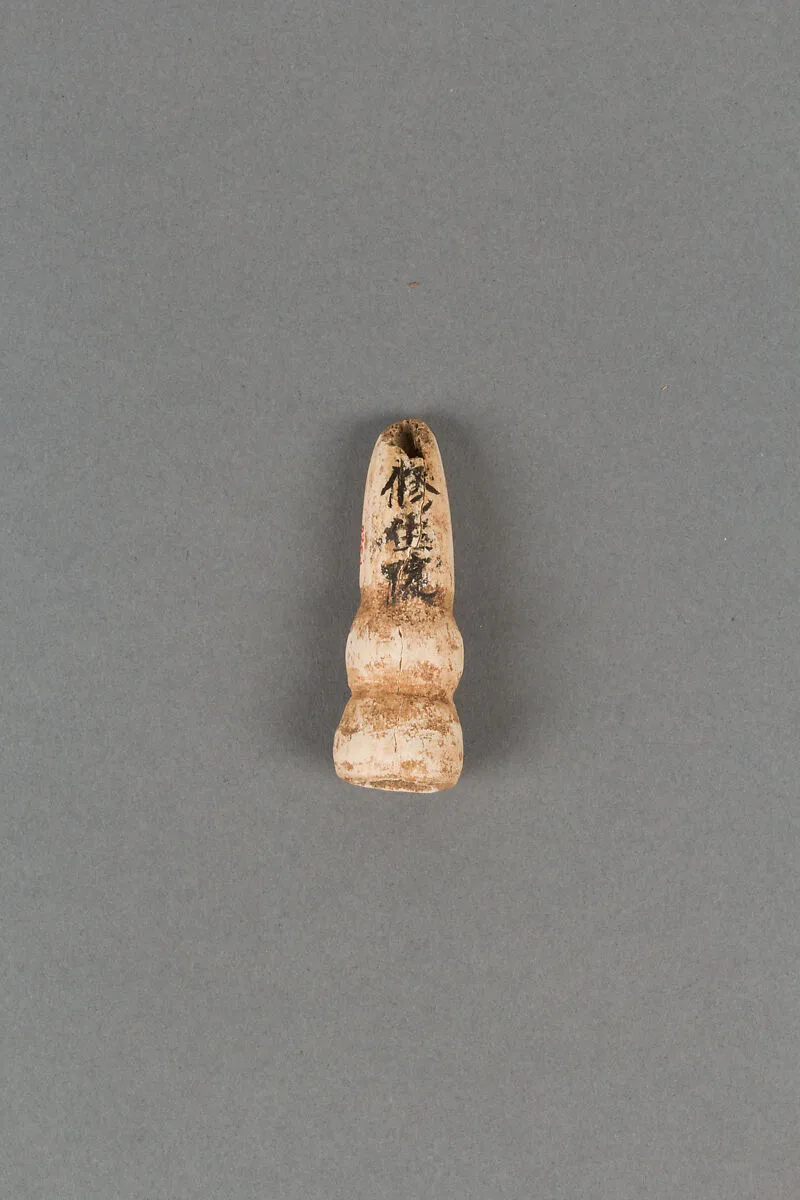
The Jōmon period is the earliest period in Japanese history, lasting from roughly 14,000 to 300 BCE. This device, called a nock, would have held the string onto a bow, facilitating the use of the bow and arrow to hunt a wide variety of land animals which were key to the survival of the Jōmon people’s hunter-gatherer society. Archaeological evidence indicates that the Jōmon hunted over 60 species of mammal throughout the Japanese archipelago, including tanuki (Japanese raccoon dogs) and monkeys, both of which would likely be considered unpalatable in contemporary Japanese society.
- Artist
- Unknown
- Date
- Date unknown
- Medium
- Bone
- Culture
- Japan
- Department
- Asian Art
- Credit line
- The Harry G. C. Packard Collection of Asian Art, Gift of Harry G. C. Packard, and Purchase, Fletcher, Rogers, Harris Brisbane Dick, and Louis V. Bell Funds, Joseph Pulitzer Bequest, and The Annenberg Fund Inc. Gift, 1975