Untitled
Unknown
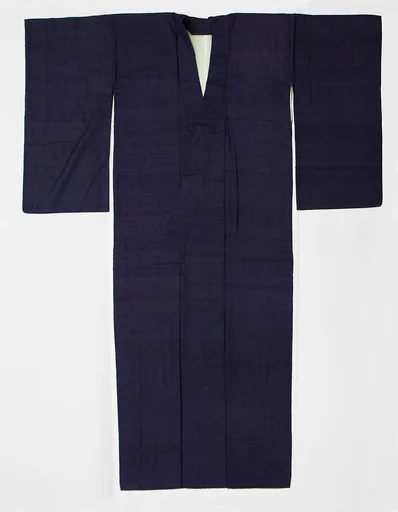
second half of the 18th–19th century · Resist-dyed and painted plain-weave silk crepe · Asian Art
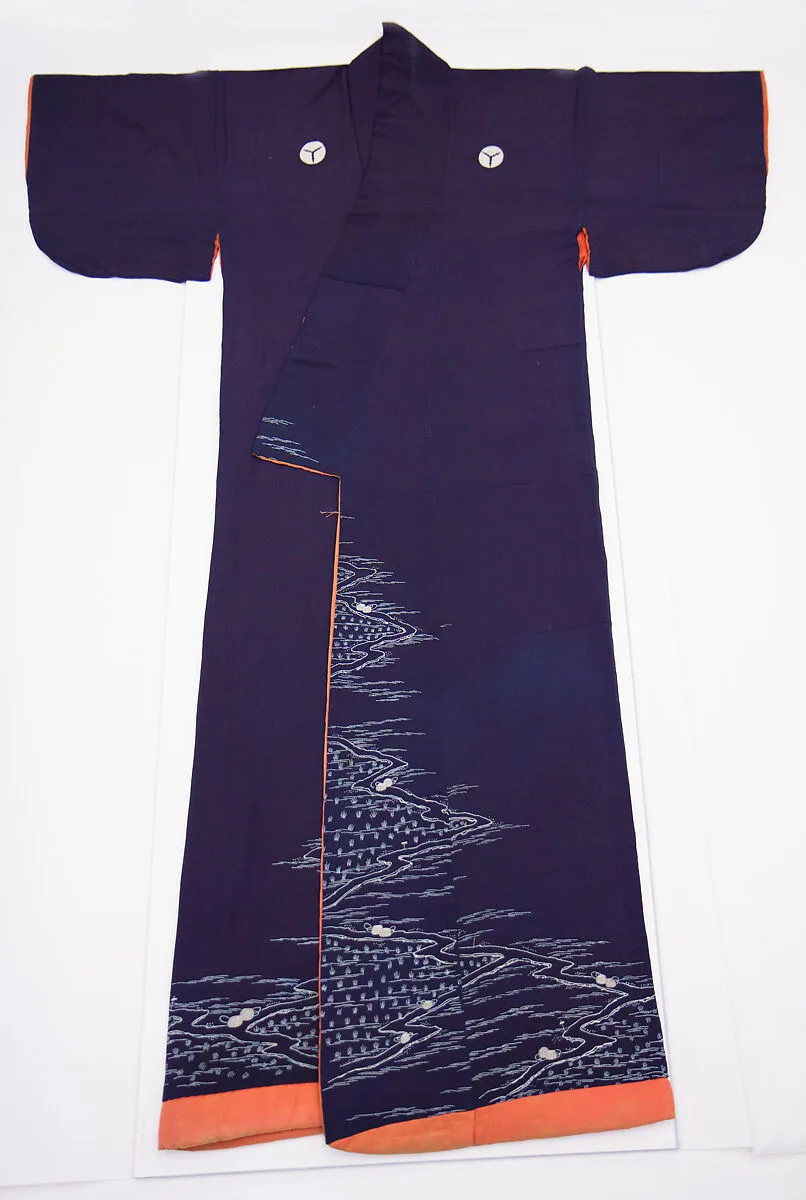
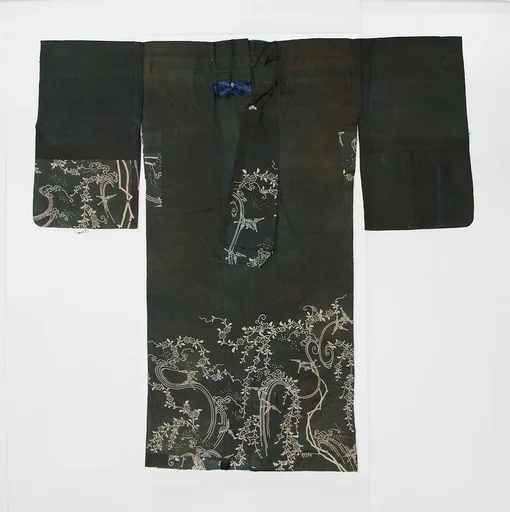
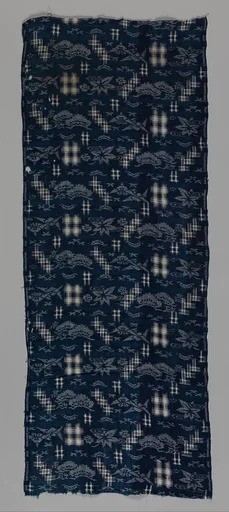
This robe exemplifies the late Edo period’s minimalist aesthetic in fashion, characterized by simple "white-reserve” (shiro-age) patterns on a monochrome ground. The compositions were rendered in paste, which would resist the dye subsequently applied to the white fabric. Here, the resulting rural landscape features newly planted, spring rice fields, the paths between them dotted with baskets embellished in ink by hand. Because rice cultivation has long played an essential role in Japanese culture, the paddies where the crop is grown are a frequent subject in art and often symbolize Japanese identity.
- Artist
- Unknown
- Date
- second half of the 18th–19th century
- Medium
- Resist-dyed and painted plain-weave silk crepe
- Culture
- Japan
- Department
- Asian Art
- Credit line
- Purchase, Roy R. and Marie S. Neuberger Foundation Inc. and several members of The Chairman's Council Gifts, 2000 Benefit Fund, and funds from various donors, 2001