Untitled
Unknown
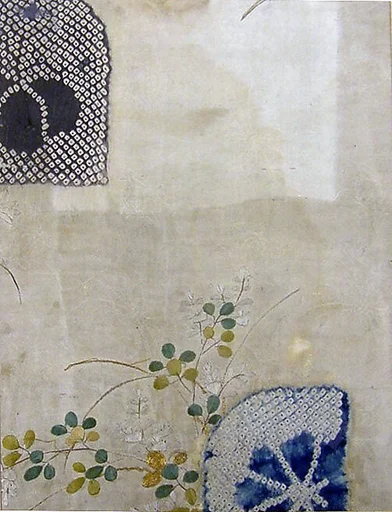
first half of the 18th century · Stitch- and paste-resist-dyed and painted float-patterned plain-weave silk · Asian Art
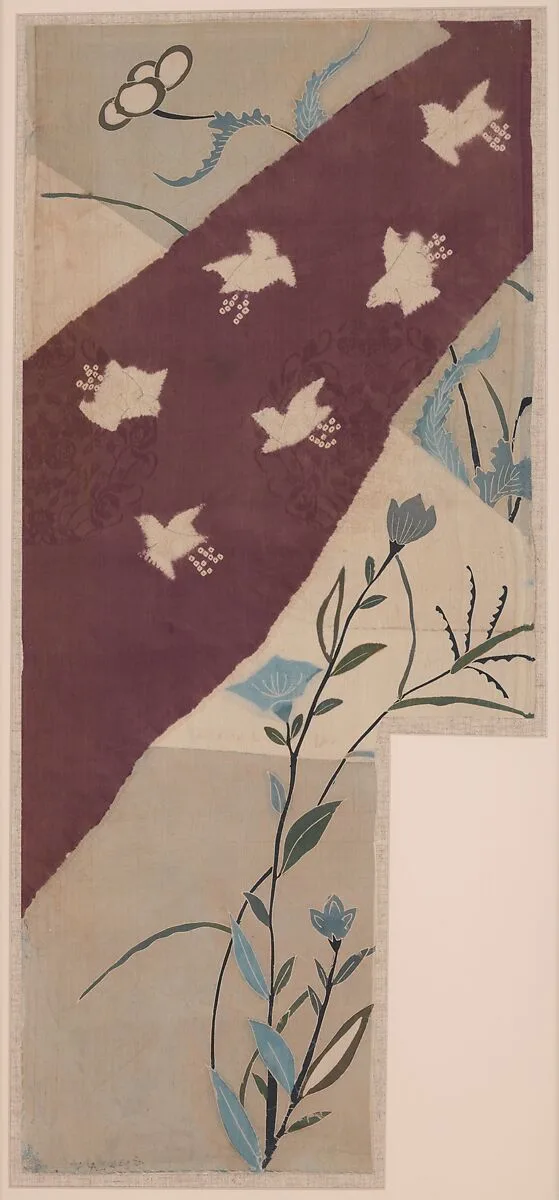
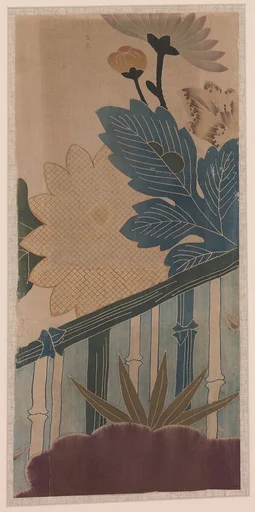
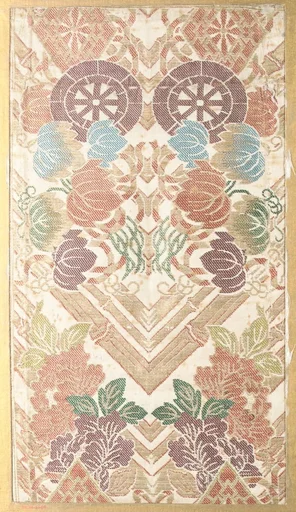
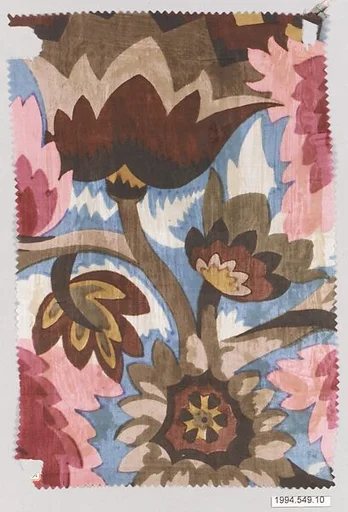
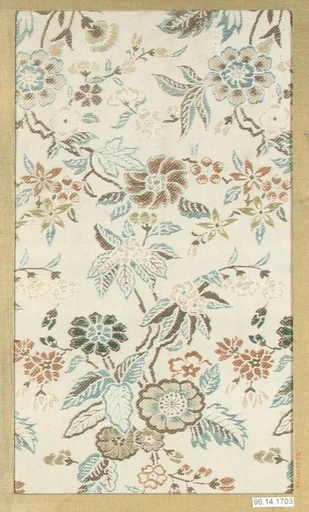
These textiles have a lighthearted pattern of various autumn grasses, including Chinese bellflowers (kikyō), bush clover (hagi), and miscanthus grass (susuki) on a background of large triangular shapes. The pieces were once part of a robe (kosode). The textiles share the simplified, somewhat flattened style consistent with designs called "Kōrin patterns" (Kōrin moyō) after the great Rinpa artist Ogata Kōrin (1658–1715). Beginning in the 1710s, kosode pattern books often labeled designs "kōrin," though they used homophonic characters for the syllable "-rin" rather than the actual character of the artist’s name. One such reference occurs in a book of 1716, Hiinagata kiku no i (Pattern Book: Chrysanthemum Well). Among its several designs for kosode with backgrounds of triangular shapes similar to those seen here is one labeled "kōrin."
- Artist
- Unknown
- Date
- first half of the 18th century
- Medium
- Stitch- and paste-resist-dyed and painted float-patterned plain-weave silk
- Culture
- Japan
- Department
- Asian Art
- Credit line
- Purchase, Roy R. and Marie S. Neuberger Foundation Inc. and several members of The Chairman's Council Gifts, 2000 Benefit Fund, and funds from various donors, 2001