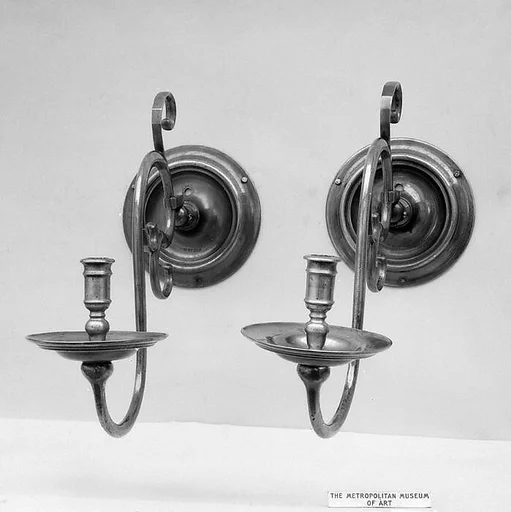
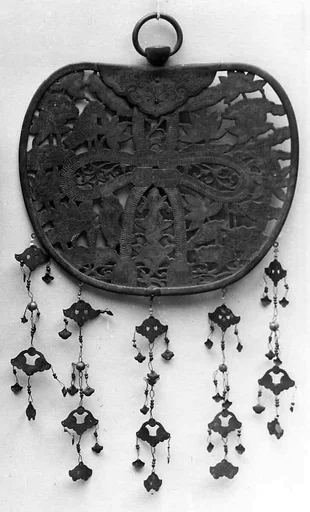
華鬘|Keman (“Flower Garland” Temple Decoration)
Niiro Chōnosuke
early 20th-century copy of 8th-century original · Iron and wood · Asian Art
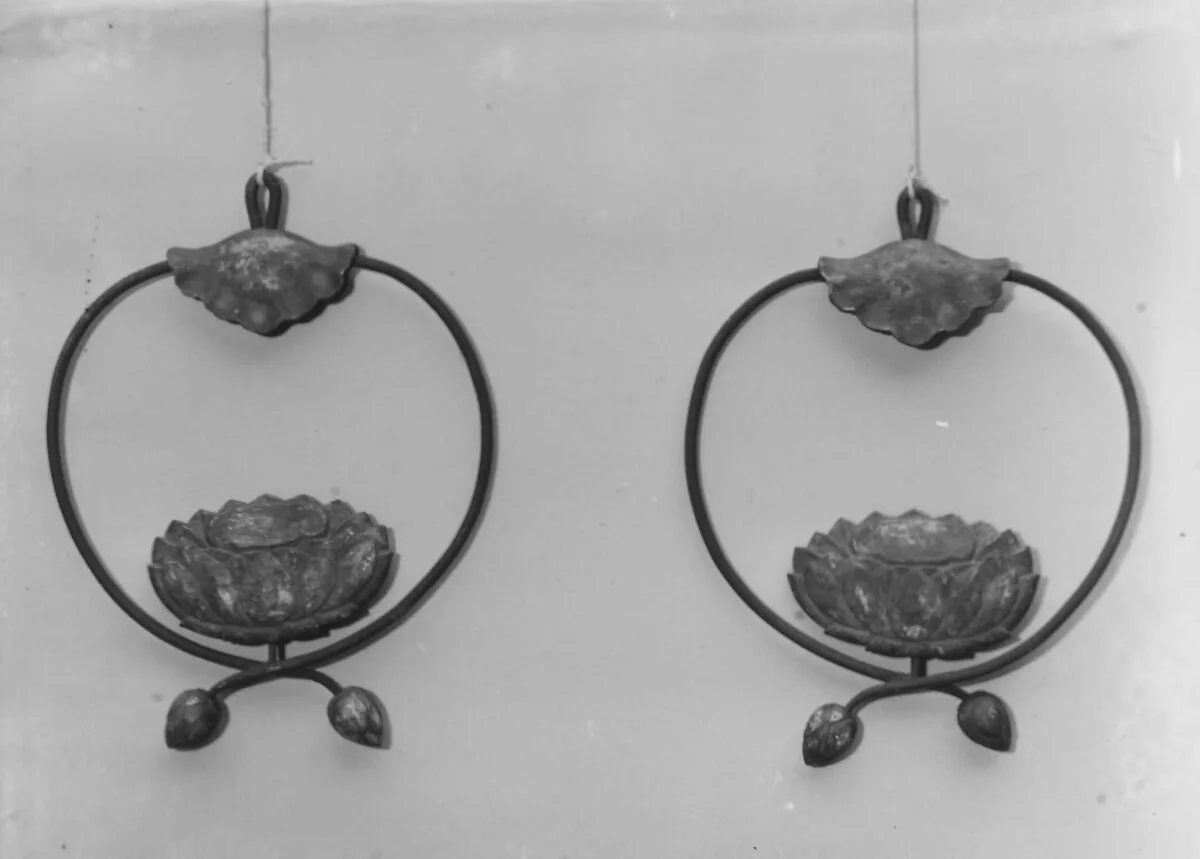
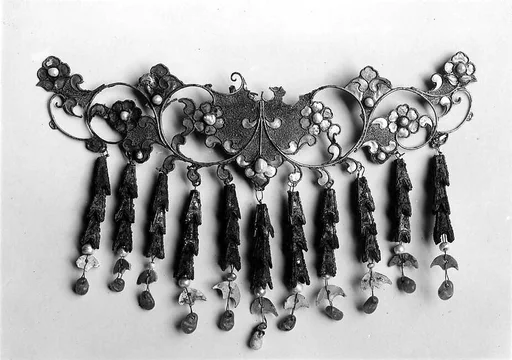
Keman (Sanskrit: kusumamala) literally means “garland of flowers,” and refers to pendant decorative disks, usually made of bronze in the shape of a round fan (uchiwa), that are suspended from beams of inner sanctuary of a temple, above a Buddhist statue. They are thought to have their origin in the garlands of fresh flowers that were offered to nobles in ancient India. This pair of keman (with 25.229.1) are copies of 8th-century examples preserved at Horyūji Temple near Nara.
- Artist
- Niiro Chōnosuke
- Date
- early 20th-century copy of 8th-century original
- Medium
- Iron and wood
- Culture
- Japan
- Department
- Asian Art
- Credit line
- Fletcher Fund, 1925