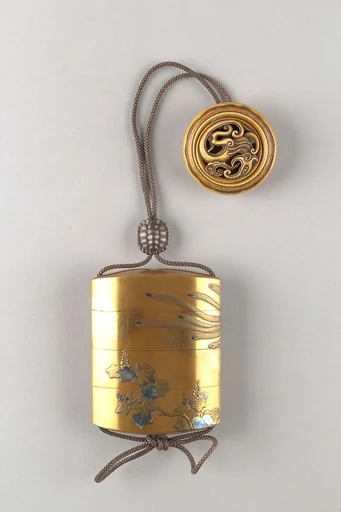
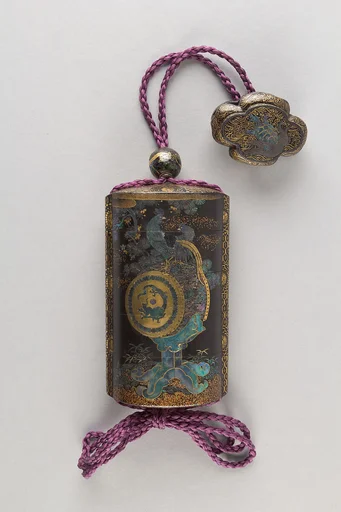
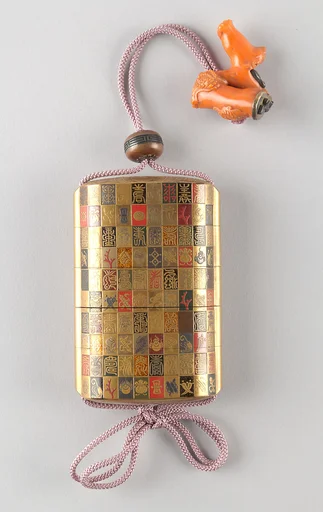
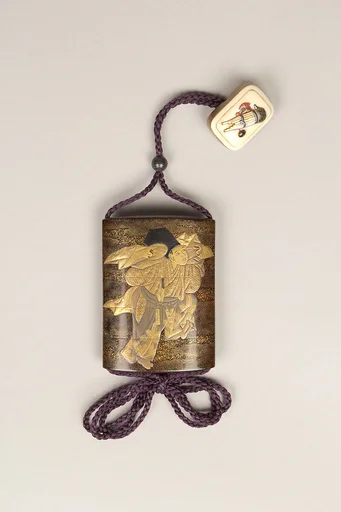
七夕蒔絵印籠|Inrō with Tanabata Story of the Weaver and the Herdboy
Nomura Kyūkoku
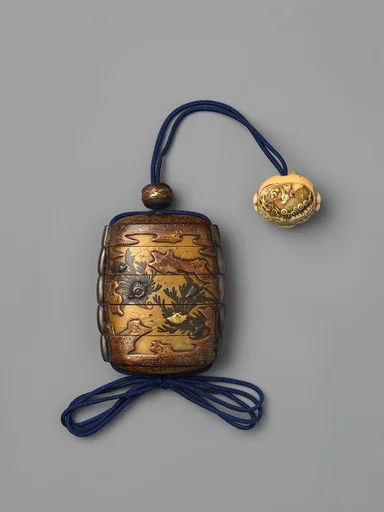
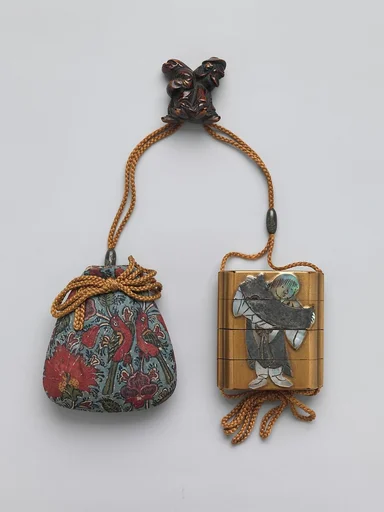
active first half of the19th century · Three cases; lacquered wood with gold hiramaki-e and ivory inlay on mother-of-pearl ground; Netsuke: carved ivory; flowers and grasses with silver butterflies; Ojime: silver and gold quail in autumn grasses · Asian Art
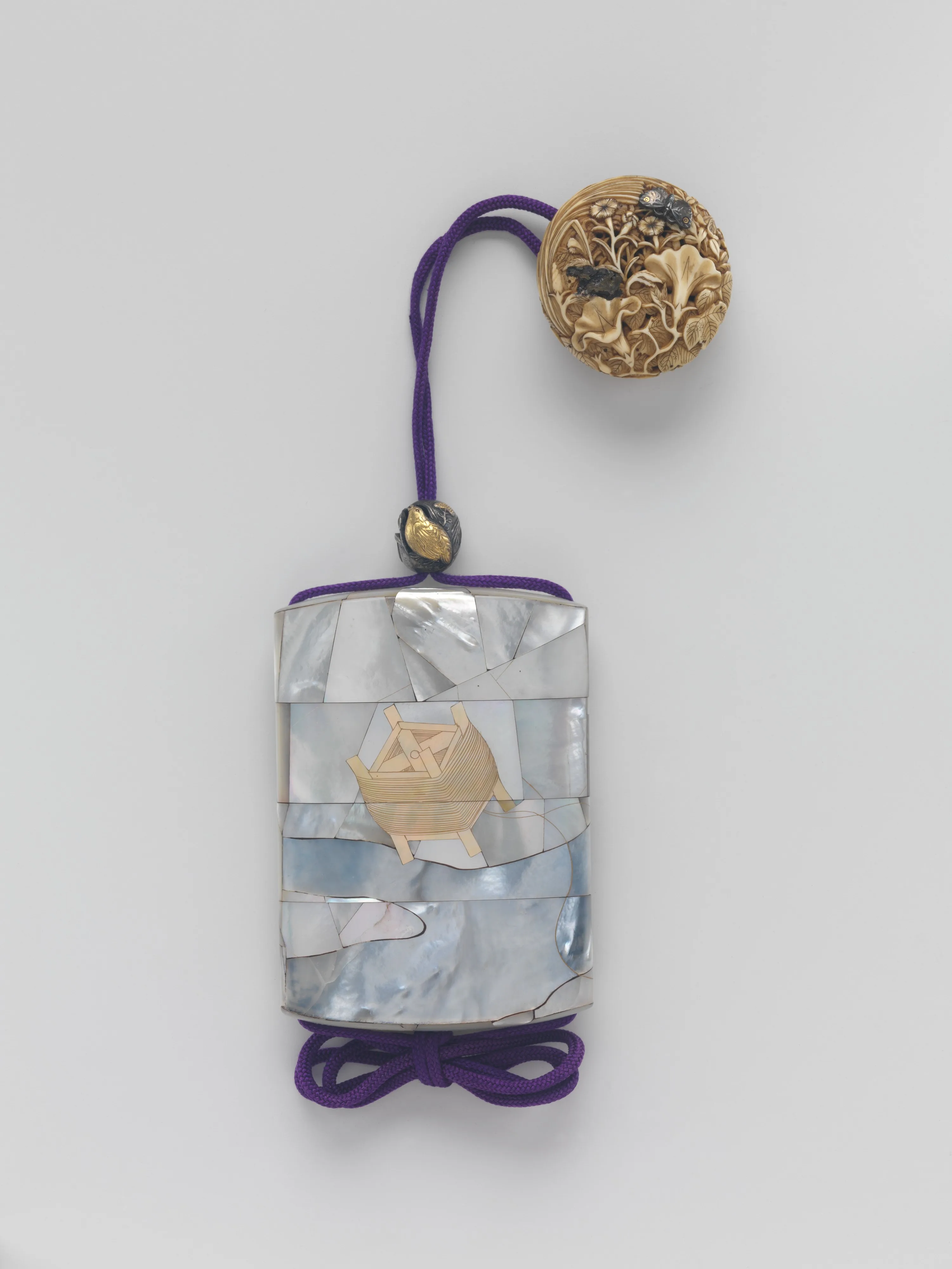
One of the relatively large pieces of mother-of-pearl that comprise the surface of this inro was colored with gold and incised to create an image of a silk winder, identifying the imagery as a representation of the Milky Way. The winder refers to the Weaver Star, who is tragically separated by the Milky Way from her lover, the Cowherd Star. The two are allowed to meet only once a year, a union that is the basis for Tanabata, or the Star Festival, in Japan, held annually between July 7 and August 7. Over time, this festival has been conflated with Obon, a celebration of one's ancestors.
- Artist
- Nomura Kyūkoku
- Date
- active first half of the19th century
- Medium
- Three cases; lacquered wood with gold hiramaki-e and ivory inlay on mother-of-pearl ground; Netsuke: carved ivory; flowers and grasses with silver butterflies; Ojime: silver and gold quail in autumn grasses
- Culture
- Japan
- Department
- Asian Art
- Credit line
- Bequest of Benjamin Altman, 1913