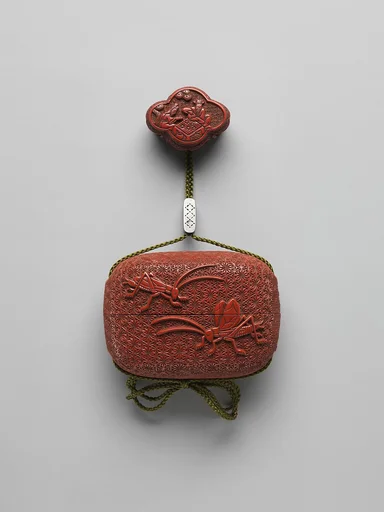
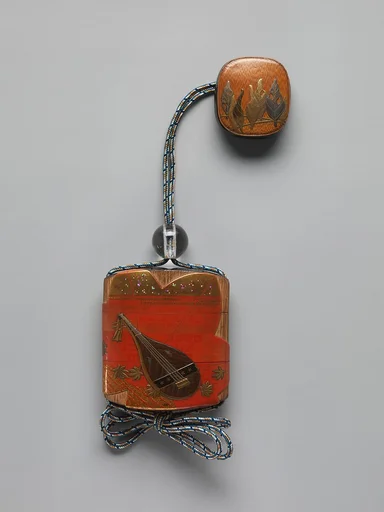
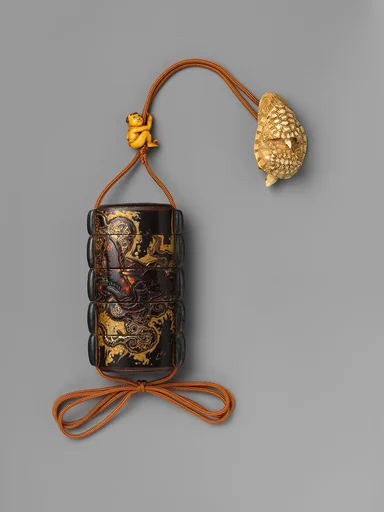
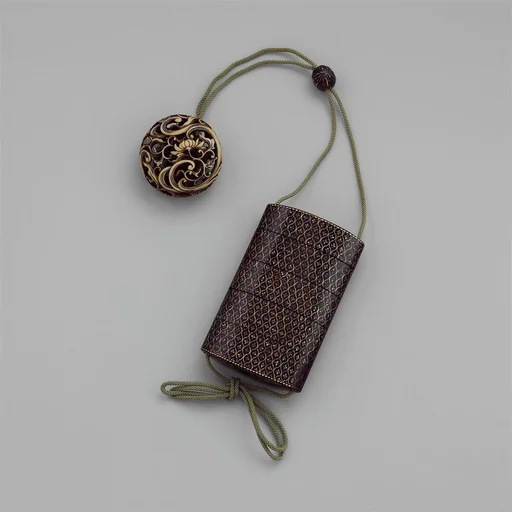
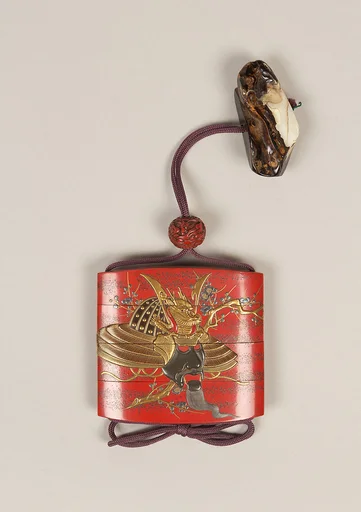
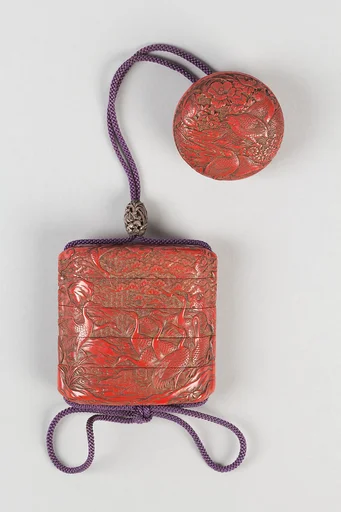
山田常嘉斎作 木蓮オウム蒔絵螺鈿印籠|Inrō with Cockatoo and Magnolia
Yamada Jōkasai
19th century · Red lacquer ground with gold maki-e, carved red lacquer, and mother-of-pearl inlay Netsuke: poppy; ivory Ojime: roundels; red and green lacquer in wood · Asian Art
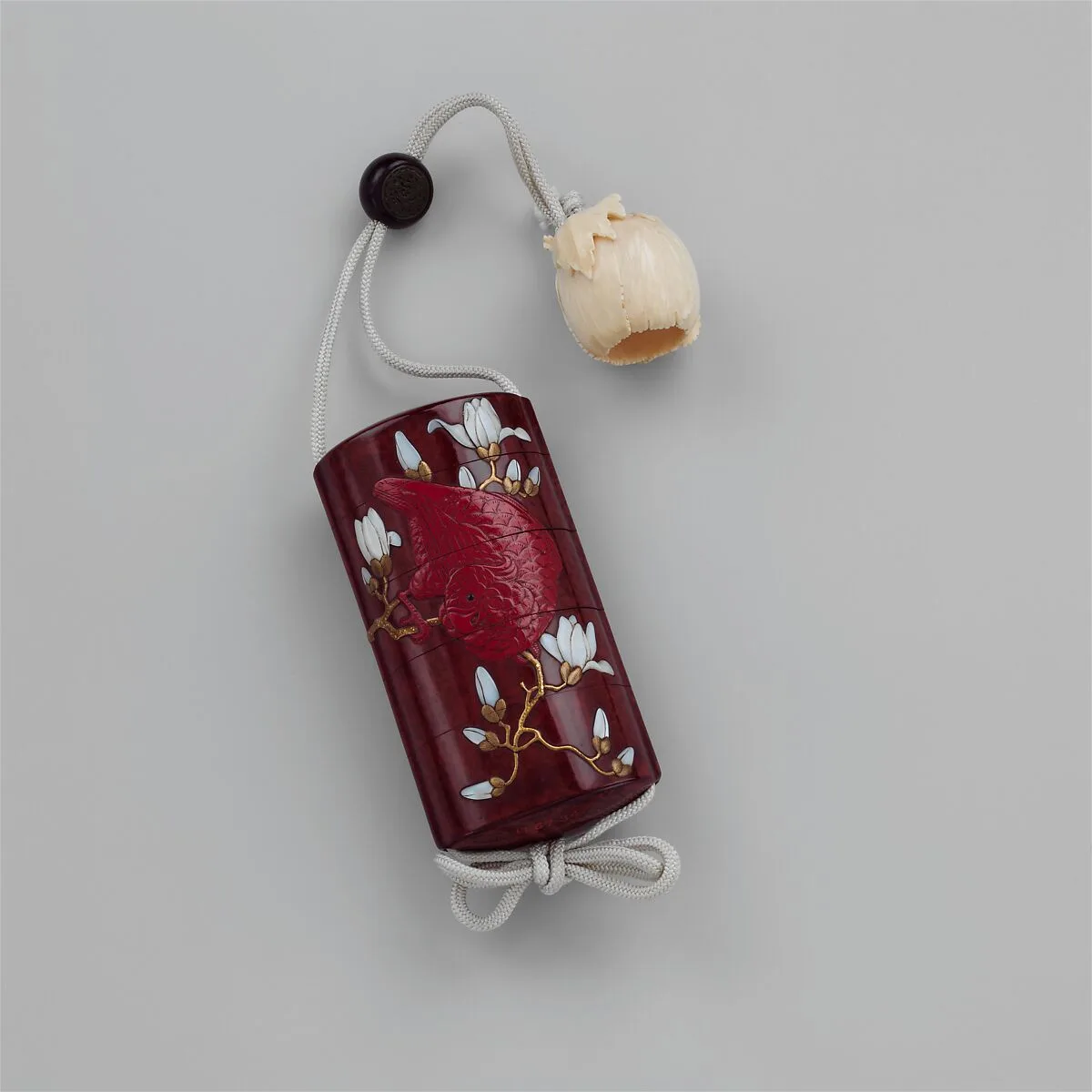
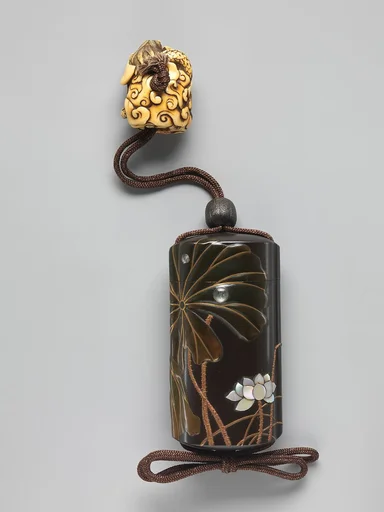
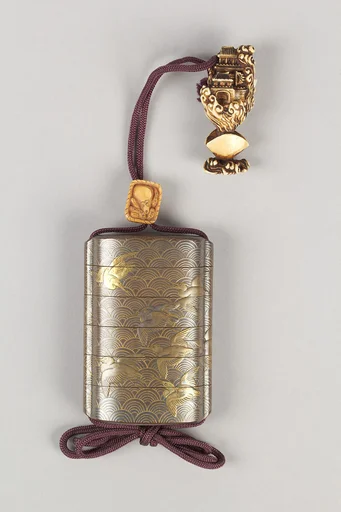
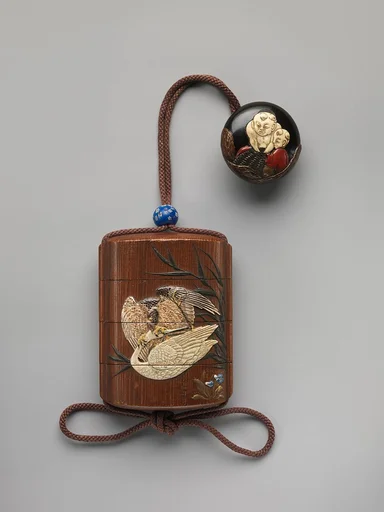
Inrō are small containers with multiple chambers for holding medicinal herbs, seals, and other small items. They are worn suspended from a sash by means of small toggles that are known as netsuke. Use of inrō, which developed in lieu of pockets in traditional Japanese clothing, flourished from the seventeenth to the nineteenth century. The signature on the bottom of this example reads "Jōkasai," a reference to any one of a number of artists in the Yamada family, active after the late seventeenth century, who used that name.
- Artist
- Yamada Jōkasai
- Date
- 19th century
- Medium
- Red lacquer ground with gold maki-e, carved red lacquer, and mother-of-pearl inlay Netsuke: poppy; ivory Ojime: roundels; red and green lacquer in wood
- Culture
- Japan
- Department
- Asian Art
- Credit line
- Rogers Fund, 1913