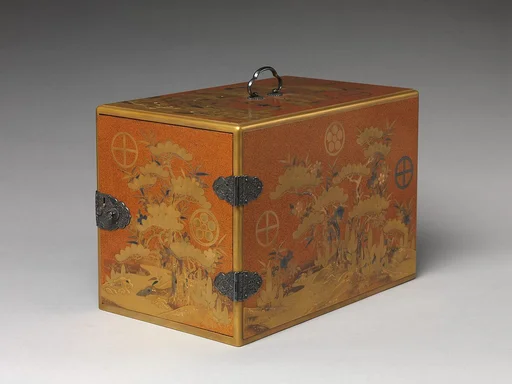
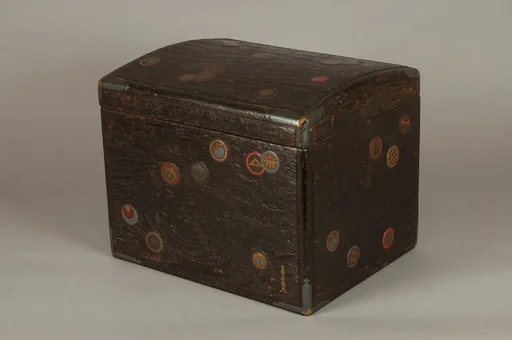
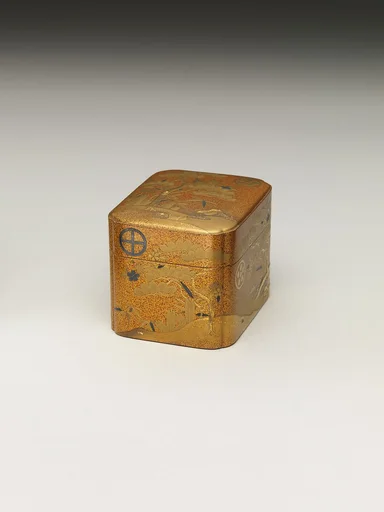
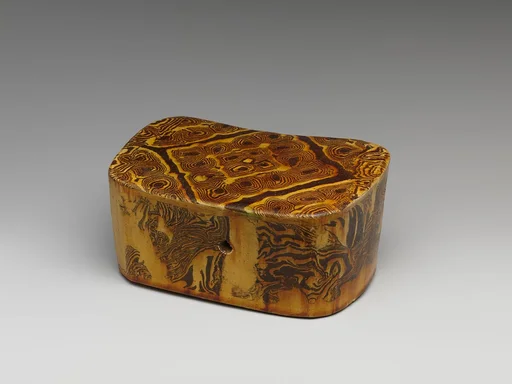
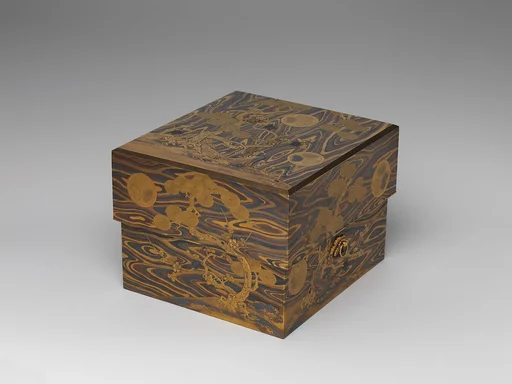
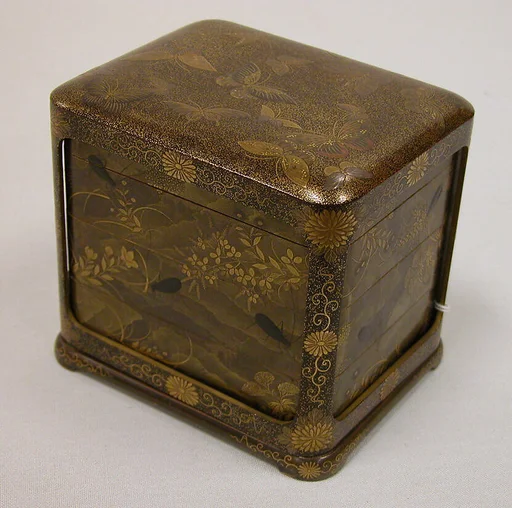
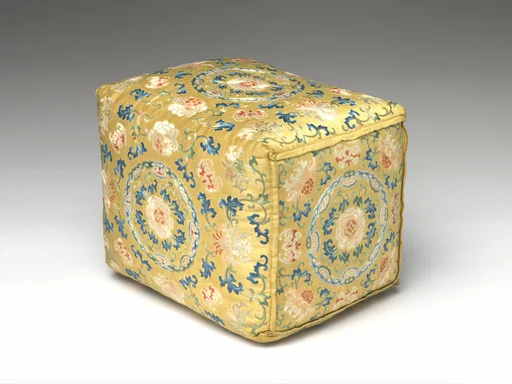
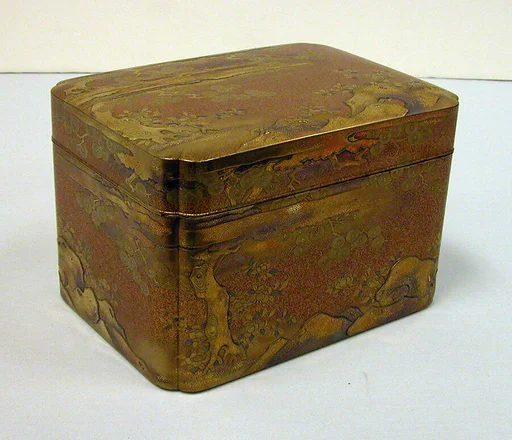
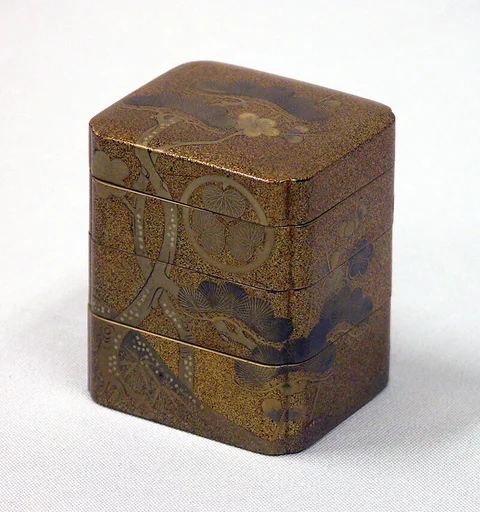
木目地松竹梅葵紋蒔絵眉作箱|Cosmetic Box (mayudzukuri-bako) with Pine, Bamboo, Plum, and Tokugawa Family Crest on Wood-Grain Ground
Unknown
early 18th century · Lacquered wood with gold, silver takamaki-e, hiramaki-e, togidashimaki-e, gold and silver foil application, gold and silver inlay on wood-grain lacquer ground · Asian Art
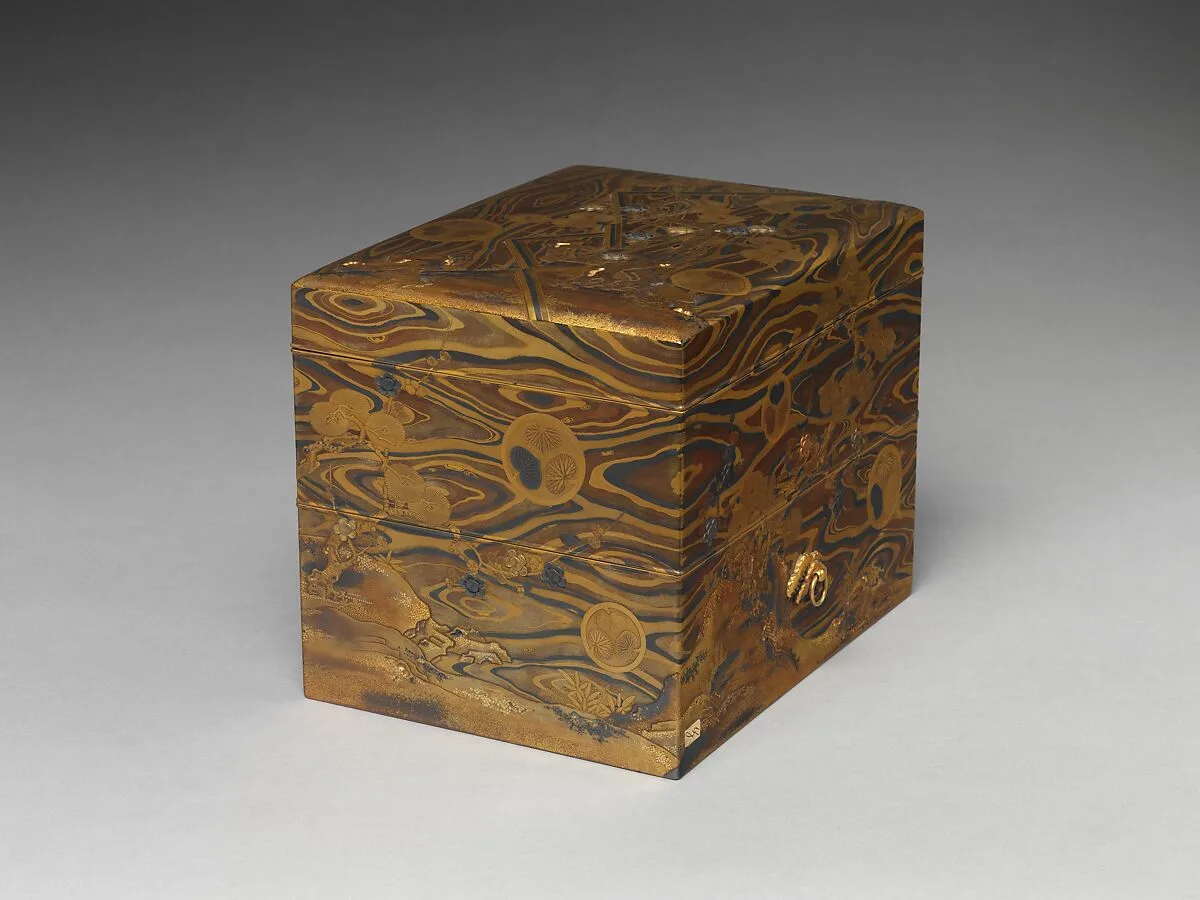
This two-tiered cosmetics box would have contained an inner tray with several smaller boxes—now missing—for items such as facial powder, combs, and mirrors. The lid's structure, typical of those found on eyebrow cosmetic boxes, is similar to the decorative paper wrappings for precious items. The exquisite maki-e (decoration in gold and/or silver sprinkled powder) decoration shows the "Three Friends of Winter"—pine, bamboo, and plum—a popular pattern of auspicious motifs that originated in China. The decoration, set on an elegant background in imitation of woodgrain, is executed with several types of gold and silver maki-e, decorative techniques such as metal inlay, line drawing, metal foil application, geometric metal foil cuttings, and several other time-consuming lacquer techniques. The metal fittings take the form of a pine. The background technique, the application of the relief gold powder sprinkling, and the very fine details are evidence that the wedding set to which this eyebrow cosmetics box belonged was ordered for the wealthiest and most powerful family of the Edo period: the shogun family. The crest of the Tokugawa family is depicted on the box.
- Artist
- Unknown
- Date
- early 18th century
- Medium
- Lacquered wood with gold, silver takamaki-e, hiramaki-e, togidashimaki-e, gold and silver foil application, gold and silver inlay on wood-grain lacquer ground
- Culture
- Japan
- Department
- Asian Art
- Credit line
- H. O. Havemeyer Collection, Bequest of Mrs. H. O. Havemeyer, 1929