Untitled
Unknown
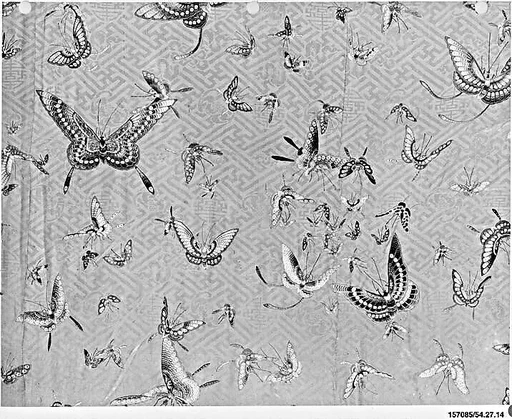
17th century · Robe: gold and silver leaf on silk satin damask; butterflies: silk embroidery on plain-weave silk · Asian Art
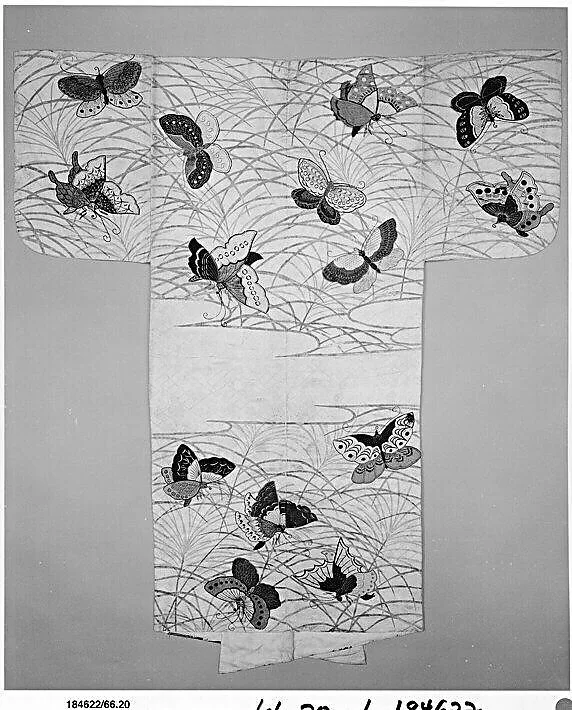
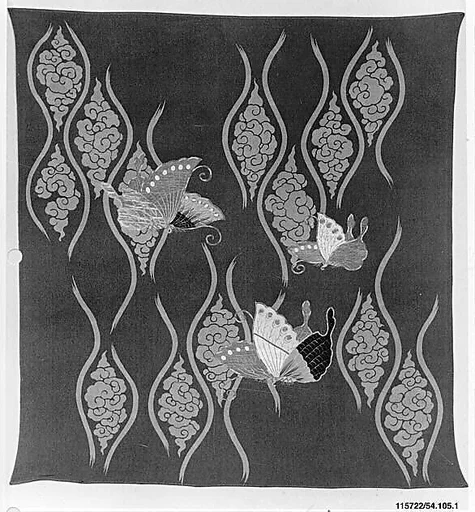
In China, the butterfly is an ancient theme, making a celebrated appearance in the philosophical text the Zhuangzi (in which Zhuang Zhou dreams he is a butterfly and, upon waking, does not know whether he had dreamed he was a butterfly or a butterfly had dreamed that it was Zhou). The butterfly motif came fully into its own during the Tang dynasty (618–906), and several examples of Tang decorative arts bearing this pattern were preserved in the eighth-century Shōso-in imperial repository in Nara, Japan. Chinese secular poetry and Buddhist writings also featured the butterfly, and Japanese admiration for such texts helped bring the motif to the fore in the literary and visual arts of Japan, where its popularity lasted for centuries. The Noh costume's engaging embroidered butterflies date to the seventeenth century, judging from their style, technique, and coloration. They must have been highly valued, because they were preserved and sewn onto this nineteenth-century robe.
- Artist
- Unknown
- Date
- 17th century
- Medium
- Robe: gold and silver leaf on silk satin damask; butterflies: silk embroidery on plain-weave silk
- Culture
- Japan
- Department
- Asian Art
- Credit line
- Gift of Alice Boney, 1966