Untitled
Kubo Shunman 窪俊満
1810s · Woodblock print (surimono); ink and color on paper · Asian Art
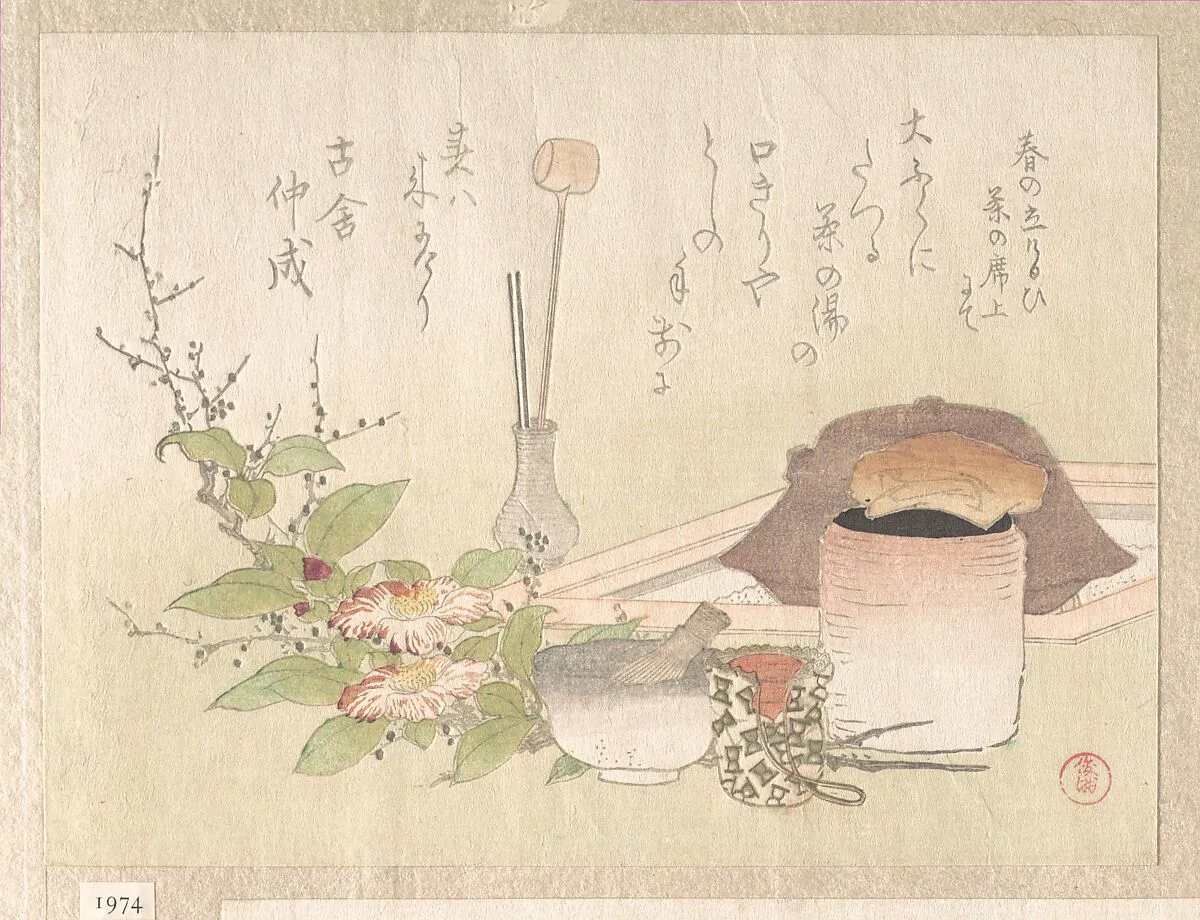
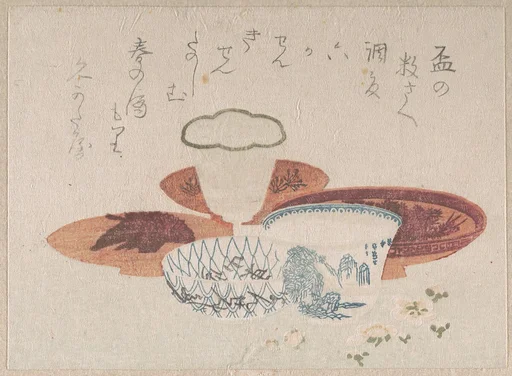
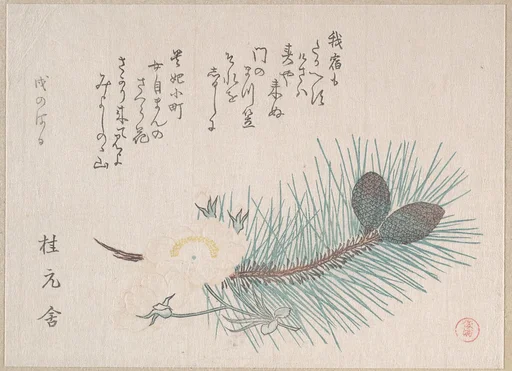
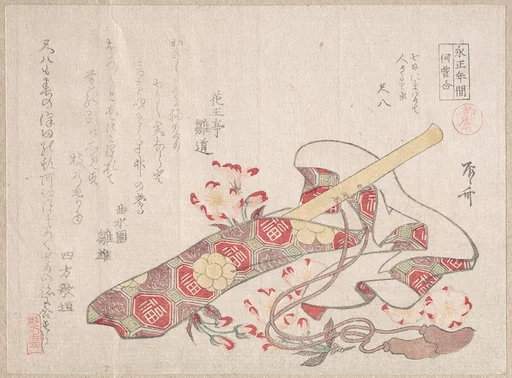
In this elegant still-life surimono by Shunman, accoutrements for a New Year’s tea ceremony are arrayed along with a branch of camellia, a flower that blooms at the end of winter and beginning of spring according to the lunar calendar. The poem reads: 春の立けるひ茶の席上にて 大ふくにたつる茶の湯の口きりや としの手前に春は来にけり 古今仲成 Haru no tachikeru hi cha no sekijō nite Ōbuku ni tatsuru chanoyu no kuchikiri ya toshi no temae ni haru wa ki ni keri At a tea gathering on the day spring arrives: Sipping auspicious tea made with New Year’s water, the tea ceremony begins— as spring arrives before the official start of the year. —Kokin no Nakanari (trans. by John T. Carpenter) The kyōka puns on tea-related terms such as ōbuku (New Year’s tea), chanoyu (tea ceremony), temae (formal tea preparation). Temae also serves as a pivot word here, meaning also “before the start of the year,” which alludes to the opening lines of the first poem of the Collection of Poems Ancient and Modern (Kokin wakashu): Toshi no uchi ni haru wa ki ni keri … (Spring has arrived before the end of the old year). The pouch for the tea caddy is decorated with the emblem of the Go-gawa poetry group, a seal script rendering of the character go, 五, meaning “five.”
- Artist
- Kubo Shunman 窪俊満
- Date
- 1810s
- Medium
- Woodblock print (surimono); ink and color on paper
- Culture
- Japan
- Department
- Asian Art
- Credit line
- H. O. Havemeyer Collection, Bequest of Mrs. H. O. Havemeyer, 1929