Untitled
Watanabe Kazan
1822, year of the horse · Woodblock print (surimono); ink and color on paper · Asian Art
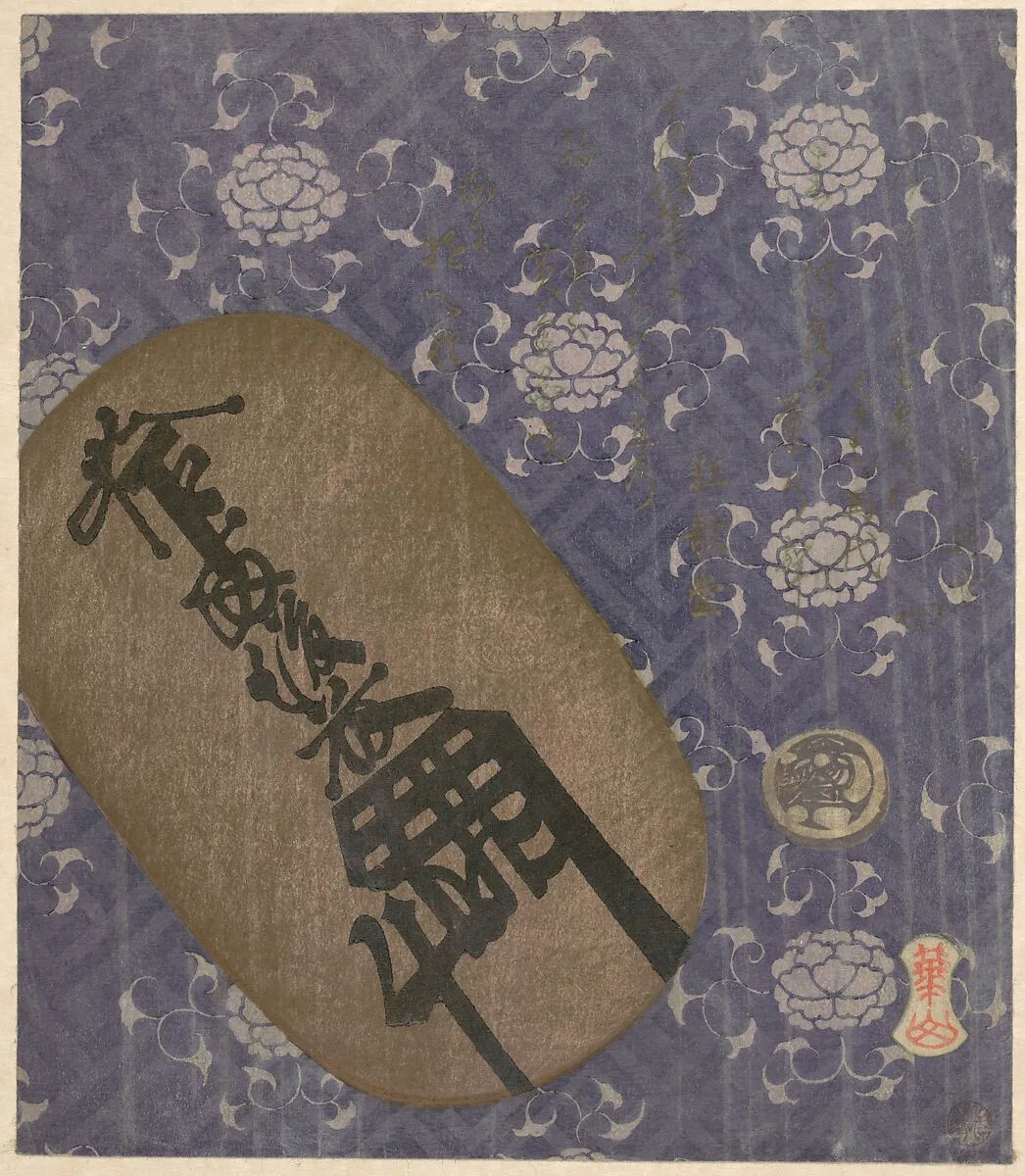
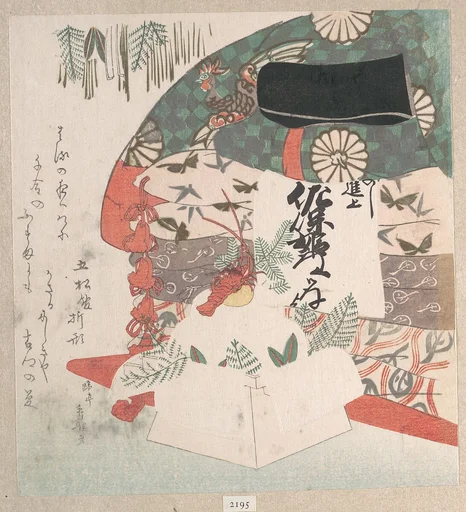
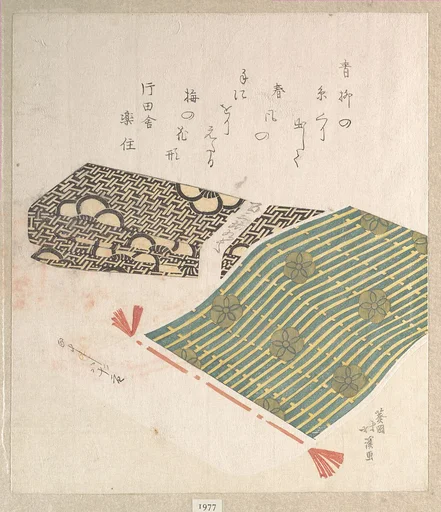
The first poem, with its mention of badai (horse payments), no doubt inspired the imagery in this print. It was a time-honored tradition to make a gift offering of a horse to a Shinto shrine, but for centuries it was also the custom to make a monetary payment—equal to the value of a fine horse. The ohiroma mentioned in the verse suggests that the setting is the reception room of a daimyo’s residence. A “large horse payment” (ō-badai) would be paid in gold, and a “small horse payment” (ko-badai) in silver. Also, the depiction of a ten-ryō coin on a print devoted to equine themes recalls the story of Chiyo, the wife of Yamauchi Kazutoyo(one of Oda Nobunaga’s generals) who skimped and saved—wearing robes patched with old cloth—to raise ten ryō to acquire a fine horse for her husband, which he rode into many military victories. The second poem is by Kyōkado, another pen name used by Yomo no Magao, whose verse also appears on another print that Kazan produced for 1829, year of the ox. The poem complements the image of “gold” by using the phrase “mountains where golden flowers bloom” (kogane hana saku yama), which is borrowed verbatim from a poem in the ancient poetry anthology Man’yōshū to refer to Michinoku, northern Japan. Colts raised in Michinoku were celebrated for their fine color, strength, and mettle. The poems can be deciphered and translated as follows: 愚連堂凹 御広間も庭も霞のたち馬代 春と披露の鶯の声 Ohiroma mo niwa mo kasumi no tachi badai haru to hirō no uguisu no koe In the reception room and garden as mist rolls in, the year’s “horse payments” for this spring are announced by the warbler’s song. —Gurendō Nakakubo 狂歌堂 はつ夢にみちのく立の駒なへて 黄金花咲山に遊へり hatsuyume ni Michinoku-dachi no koma nabete kogane hana saku yama ni asoberi In the year’s first dream, colts from Michinoku gambol and frolic together in the mountains where golden flowers bloom. —Kyōkadō (Trans. John T. Carpenter) Artist’s seal: Kazan in a fundō (copper counterweight) shaped seal Shikishiban surimono
- Artist
- Watanabe Kazan
- Date
- 1822, year of the horse
- Medium
- Woodblock print (surimono); ink and color on paper
- Culture
- Japan
- Department
- Asian Art
- Credit line
- Gift of Estate of Samuel Isham, 1914