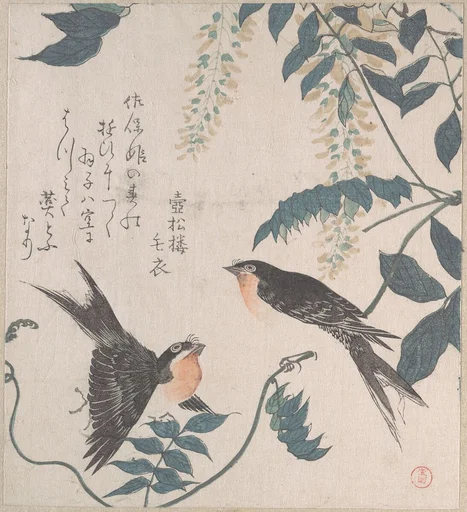
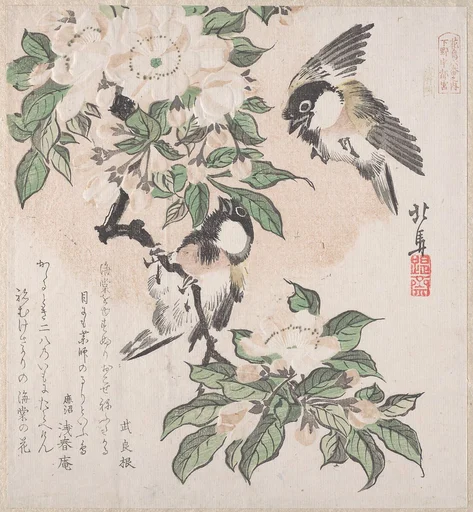
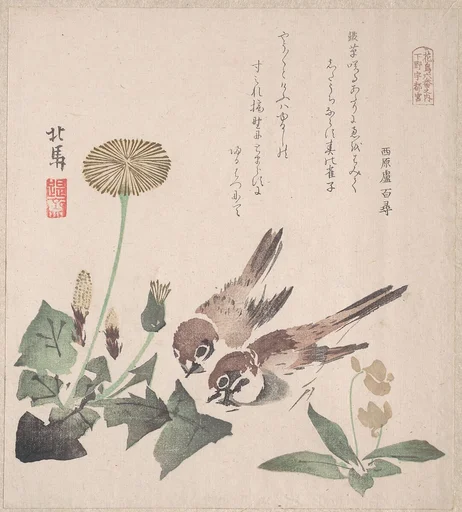
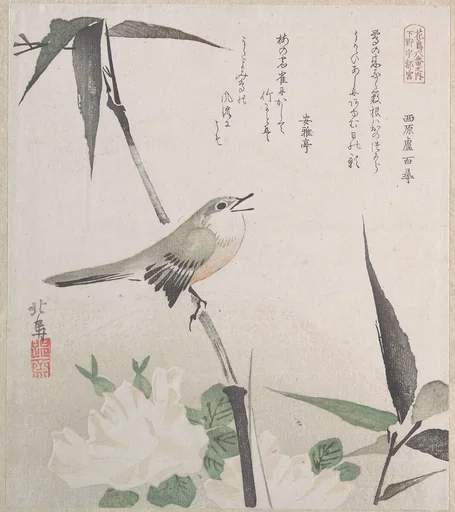
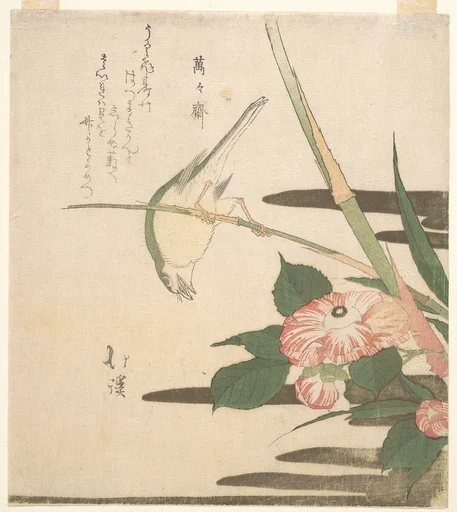
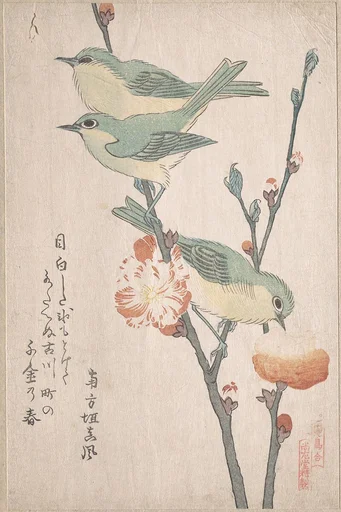
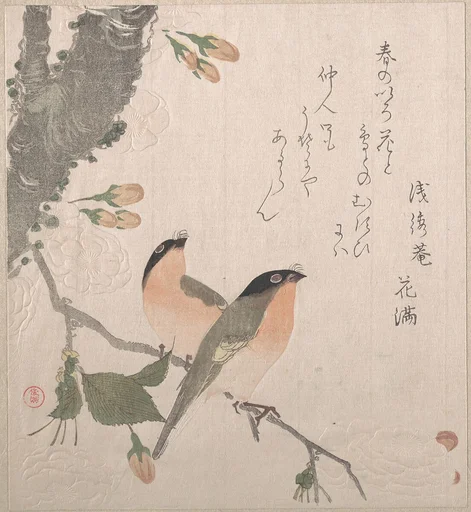
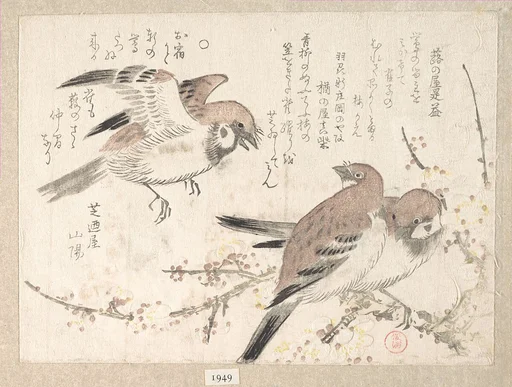
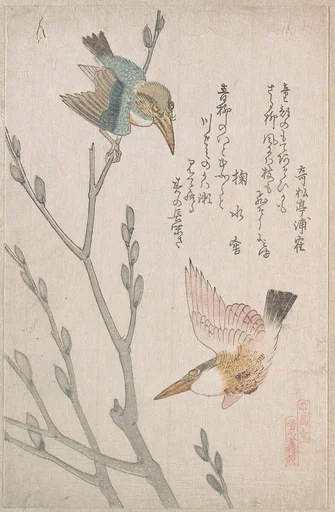
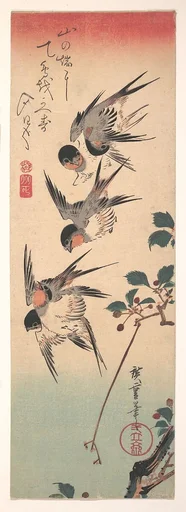
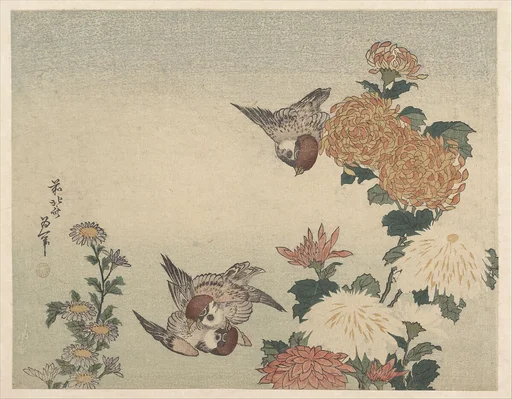
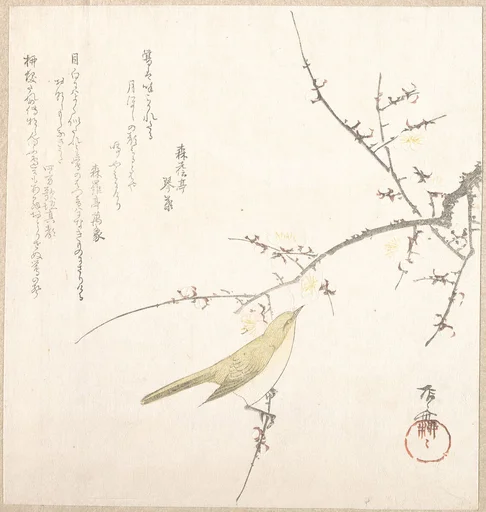
摺物帖 『春雨集』 『花鳥六番之内 下野宇都宮』 牡丹に燕|Spring Rain Collection (Harusame shū), vol. 3: Swallows and Peonies
Teisai Hokuba
ca. 1820 · Privately published woodblock prints (surimono) mounted in an album; ink and color on paper · Asian Art
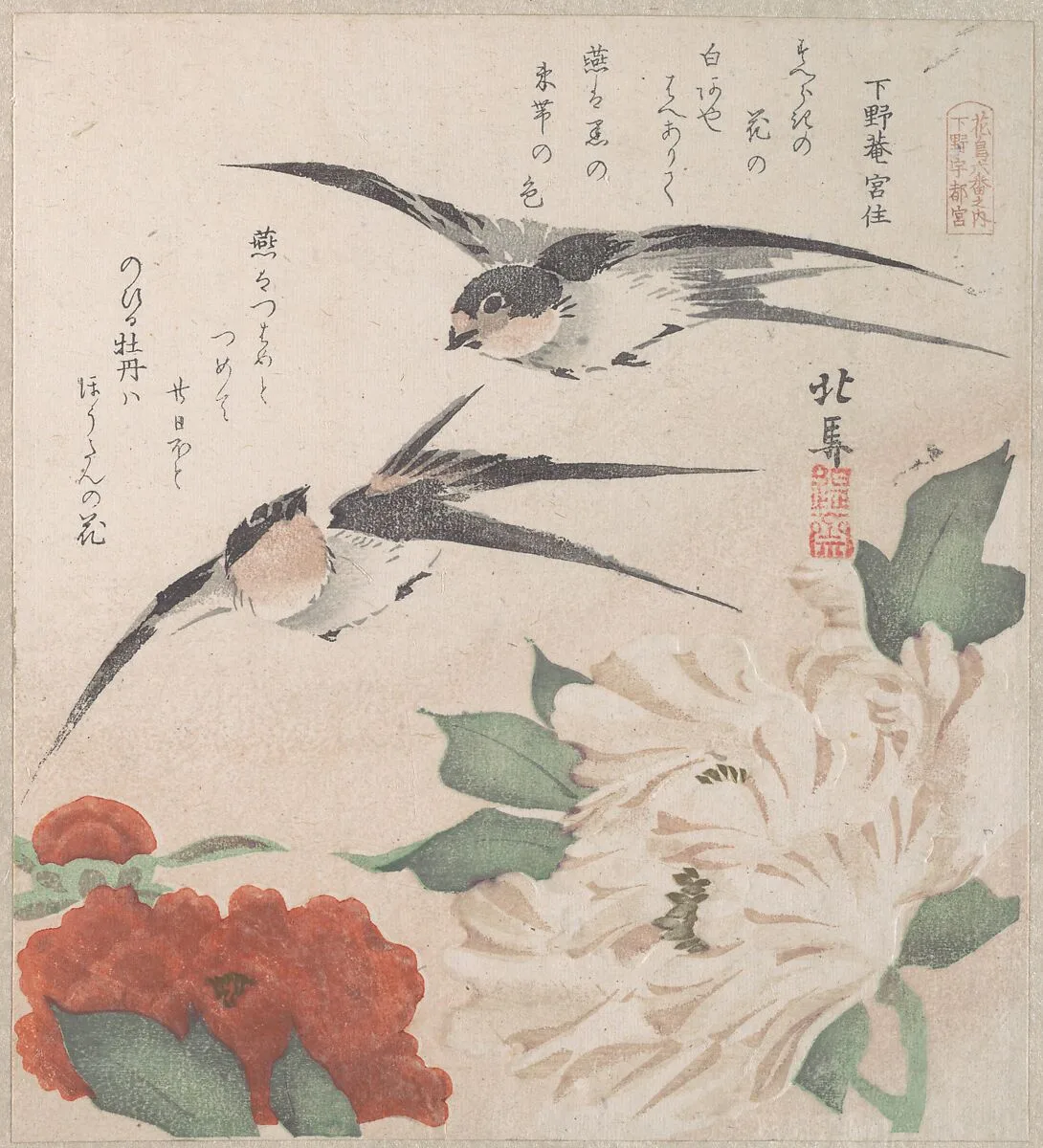
Surimono are privately published woodblock prints, usually commissioned by individual poets or poetry groups as a form of New Year’s greeting card. The poems, most commonly kyōka (witty thirty-one syllable verse), inscribed on the prints usually include felicitous imagery connected with spring, which in the lunar calendar begins on the first day of the first month. Themes of surimono are often erudite, frequently alluding to Japanese literary classics in both texts and images. All four compositions on these leaves (JP2362–2365) come from the same set of prints, Six Bird-and-flower Prints for Utsunomiya in Shimotsuke Province (Kachō rokuban no uchi, Shimotsuke Utsunomiya). The series was commissioned by a branch of the Asakusa kyōka poetry group based in the city of Utsunomiya, north of Edo (present-day Tokyo). The artist Teisai Hokuba, an early pupil of the great ukiyo-e master Katsushika Hokusai, was best known as a painter, but also occasionally created deluxe surimono commissions. Here, he demonstrated how painterly effects could be accomplished in the medium of woodblock printing by eliminating outlines and employing subtle use of gradated ink tones (accomplished by manual wiping the printing blocks).
- Artist
- Teisai Hokuba
- Date
- ca. 1820
- Medium
- Privately published woodblock prints (surimono) mounted in an album; ink and color on paper
- Culture
- Japan
- Department
- Asian Art
- Credit line
- H. O. Havemeyer Collection, Bequest of Mrs. H. O. Havemeyer, 1929