Untitled
Unknown
19th century · Leather, silk · Asian Art
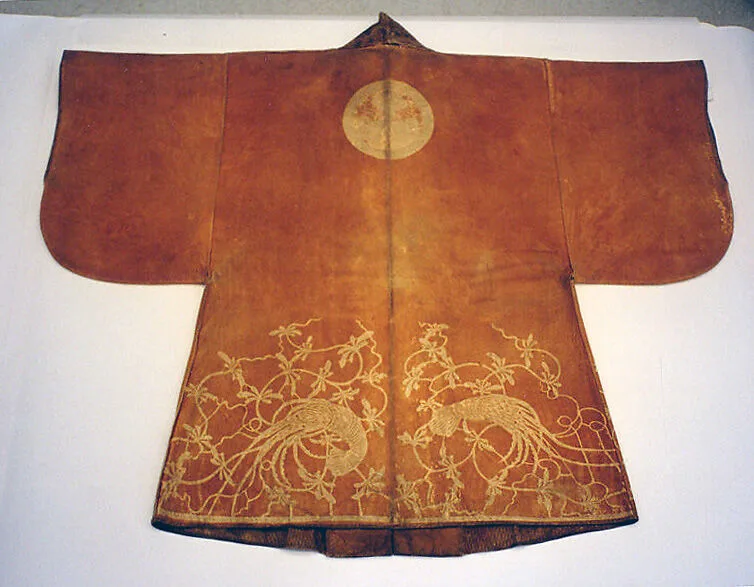
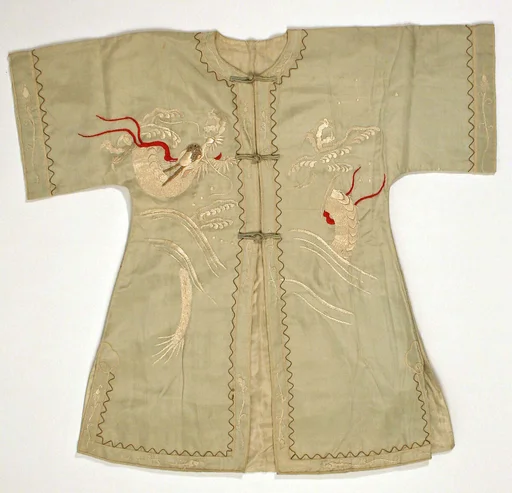
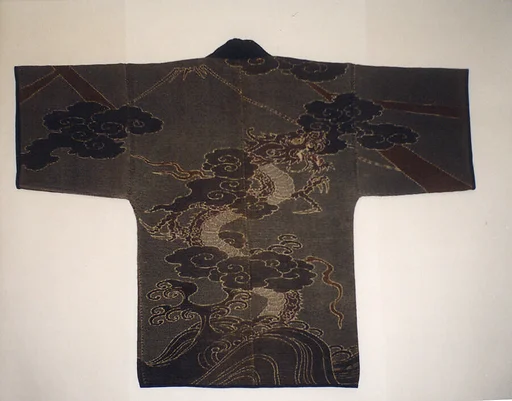
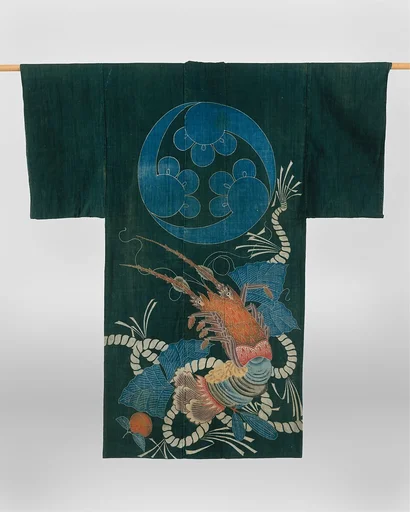
During the Edo period most kawabaori were used by townsmen who wore them for protection from the cold and for festival wear. The lively pattern of large shrimp resulted from a resist process called kataoki in which the pattern was reserved in the natural white color of the leather, while the rest was smoked to achieve a warm golden brown. The coat is reversible, with a pattern of stripes reserved in white on its other side.
- Artist
- Unknown
- Date
- 19th century
- Medium
- Leather, silk
- Culture
- Japan
- Department
- Asian Art
- Credit line
- Gift of John B. Elliott through the Mercer Trust, 1999