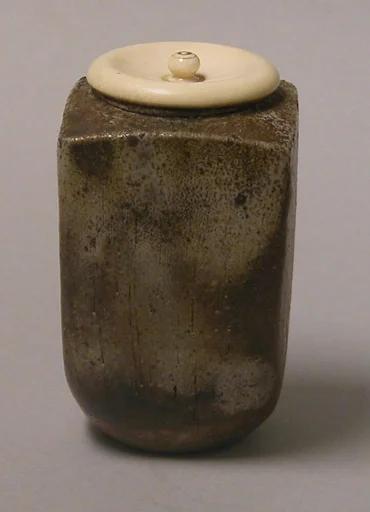
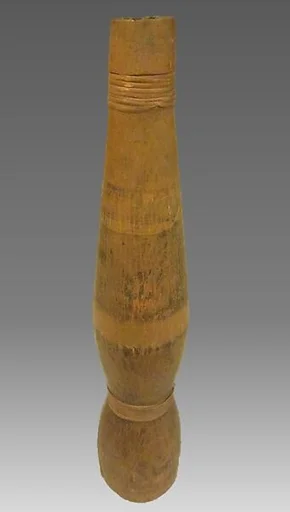
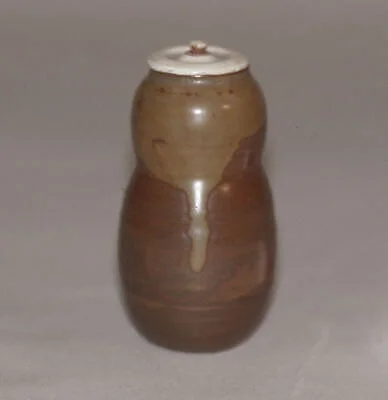
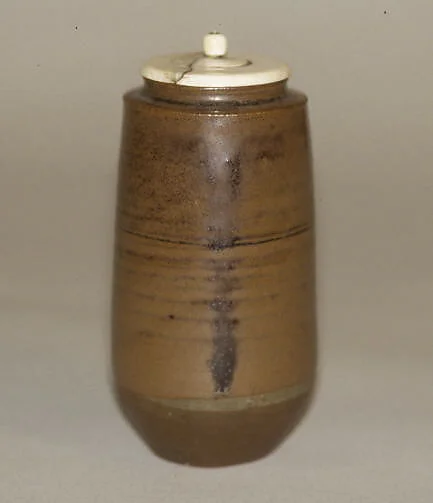
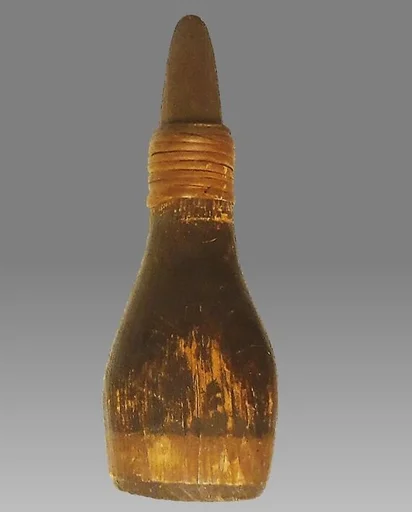
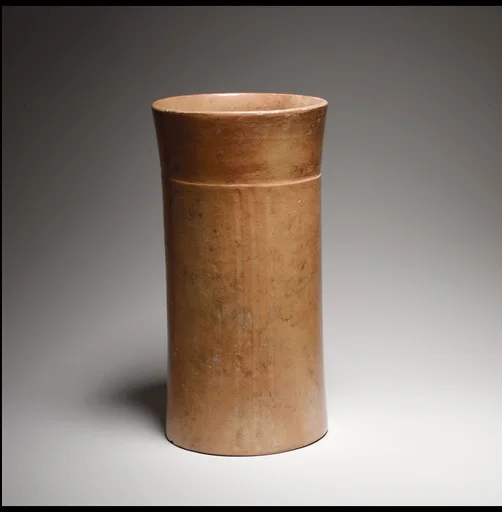
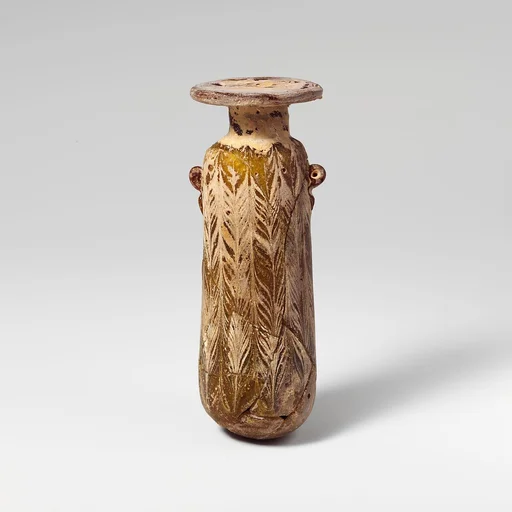
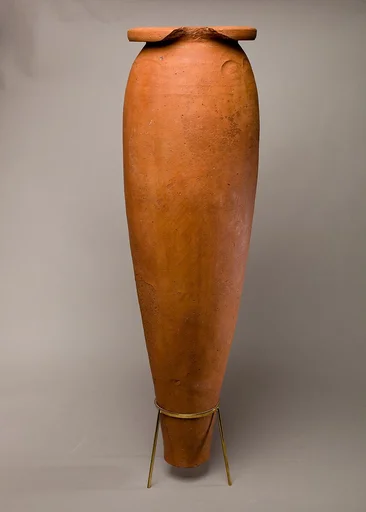
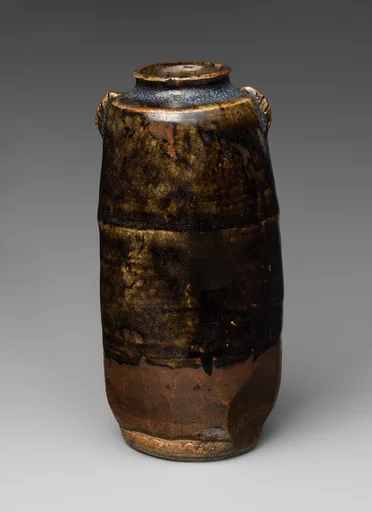
野々村仁清作 銘「背高」長茶入|Tea Caddy, named Tall (Seitaka)
Nonomura Ninsei
second half of the 17th century · Stoneware with iron glaze (Kyoto ware) · Asian Art
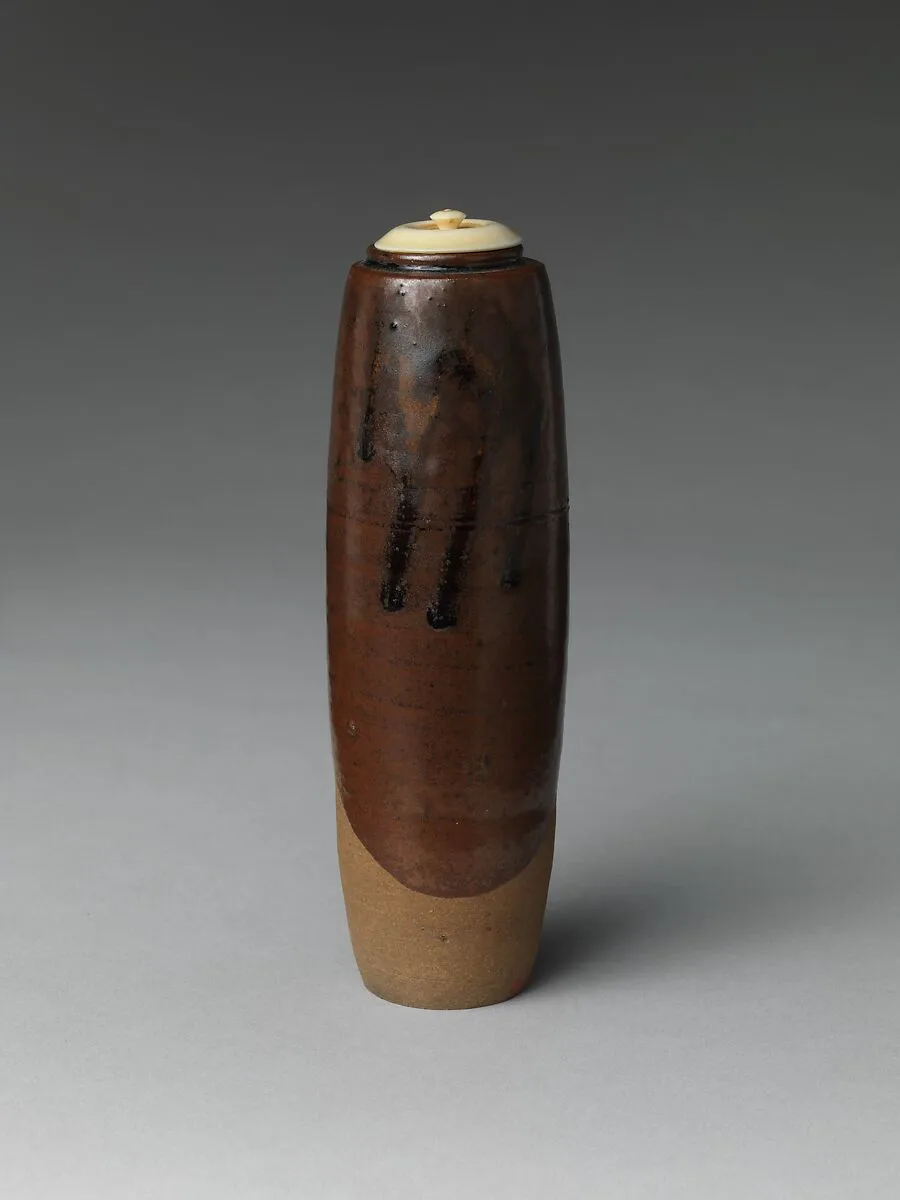
This small, thin tea caddy was designed to hold thick matcha, a powdered green tea used in the tea ceremony. The work of Nonomura Ninsei marks a turning point in the history of Kyoto ware. In 1647, Ninsei built a kiln near the Ninnaji Temple in Omuro, in northwest Kyoto. He excelled in creating tea wares, and greatly benefited from the support of the influential tea master Kanamori Sōwa (1584–1658). Known for its technical refinement, Ninsei’s colorful, overglaze-decorated Omuro ware immediately became a sought-after commodity. The artist merged earlier traditions of local ceramic production with high-fired glazing techniques of tea wares produced in Seto (Owari Province) and with his training in Tanba pottery.
- Artist
- Nonomura Ninsei
- Date
- second half of the 17th century
- Medium
- Stoneware with iron glaze (Kyoto ware)
- Culture
- Japan
- Department
- Asian Art
- Credit line
- The Howard Mansfield Collection, Gift of Howard Mansfield, 1936