長澤蘆洲筆 七福神図|Seven Gods of Good Fortune
Nagasawa Roshū
1837 · Hanging scroll; ink and color on silk · Asian Art
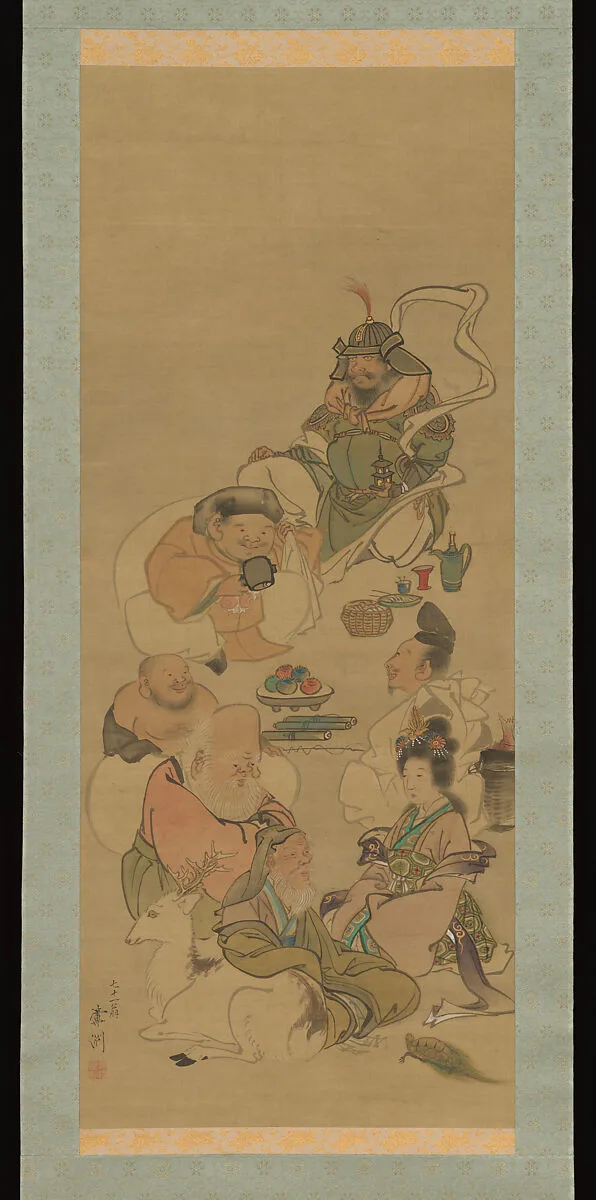
The Seven Gods of Good Fortune, principal icons of popular culture in the Edo period, were depicted by Nagasawa Roshū in an accessible and lively manner, as though partaking in a meal—replete with wine—together. Most of the deities are shown seated beside the attributes or animals commonly associated with them; for instance, Jurōjin leans against a deer, Fukurokuju has a scroll (in this instance, three scrolls), and Bishamonten holds a miniature pagoda. The long-tailed tortoise below the only female deity, Benzaiten, could belong to either Jurōjin or Fukurokuju. Although he never attained the stature of his father, Nagasawa Rosetsu (1754–1799), Roshū perpetuated his style of soft, impressionistic brushwork in emotionally compelling paintings on natural and figural subjects. The artist signed the painting “Roshū, Old Man of 71 Years” (Shichijū-ichi ō, Roshū), which is seventy years old by Western reckoning, so we know the work was executed in 1837.
- Artist
- Nagasawa Roshū
- Date
- 1837
- Medium
- Hanging scroll; ink and color on silk
- Culture
- Japan
- Department
- Asian Art
- Credit line
- Anonymous Gift, 2000