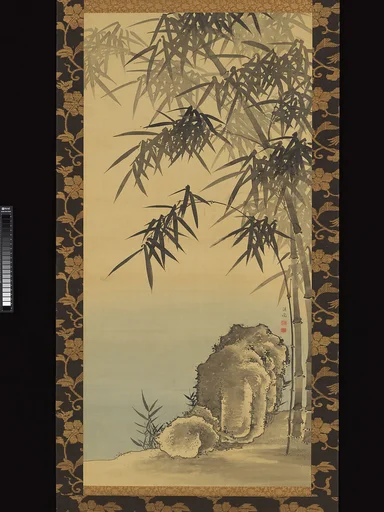
祇園南海筆 「竹窗雨日」図|Window onto Bamboo on a Rainy Day
Gion Nankai
first half of the 18th century · Hanging scroll; ink on paper · Asian Art
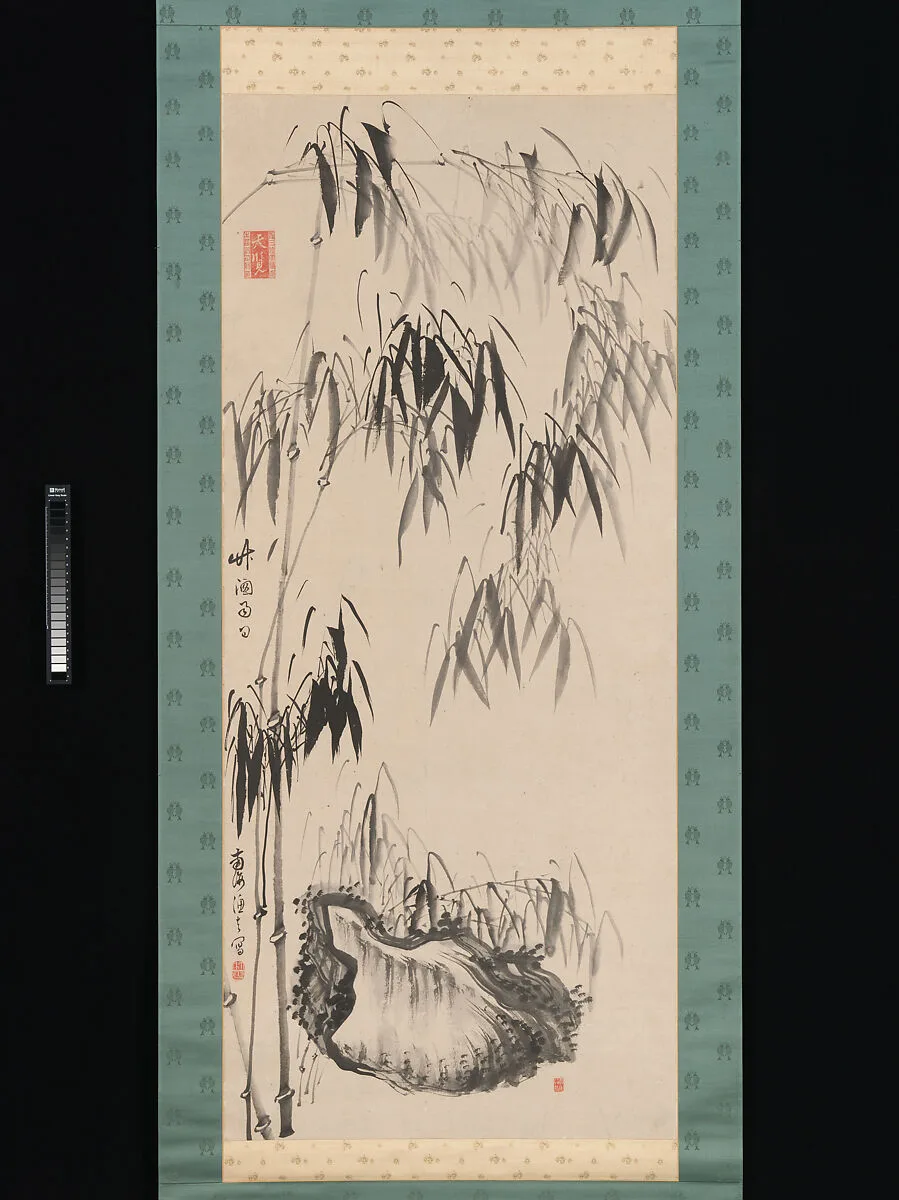
Bamboo was a favored theme of Nanga artists, who were largely based in Kyoto and often had backgrounds in Confucian studies and Chinese literati theory. Nankai was the son of a physician and clan official in Wakayama Prefecture. He studied literature and Confucianism in Edo (present-day Tokyo), but belonged to the first generation of influential Nanga painters. His earliest dated painting (1719) was of bamboo, and he produced a number of studies on the same subject. In this depiction, the artist precisely brushed leaves and jointed stalks in varying tones to evoke a rain-soaked atmosphere and dotted ink on the nearby rock for moss. His handling reflects brushwork in woodcut-illustrated Chinese painting manuals, such as the early eighteenth-century Mustard-Seed Garden Manual, that were newly available to Japanese artists. In the Chinese tradition, the strength and flexibility of bamboo are likened to the spirit of the gentleman-scholar who bends but does not break under adversity.
- Artist
- Gion Nankai
- Date
- first half of the 18th century
- Medium
- Hanging scroll; ink on paper
- Culture
- Japan
- Department
- Asian Art
- Credit line
- Mary Griggs Burke Collection, Gift of the Mary and Jackson Burke Foundation, 2015