雲谷等顔筆 四季山水図屏風|Landscape of the Four Seasons
Unkoku Tōgan
late 16th–early 17th century · Pair of six-panel folding screens; ink, color, and gold dust on paper · Asian Art
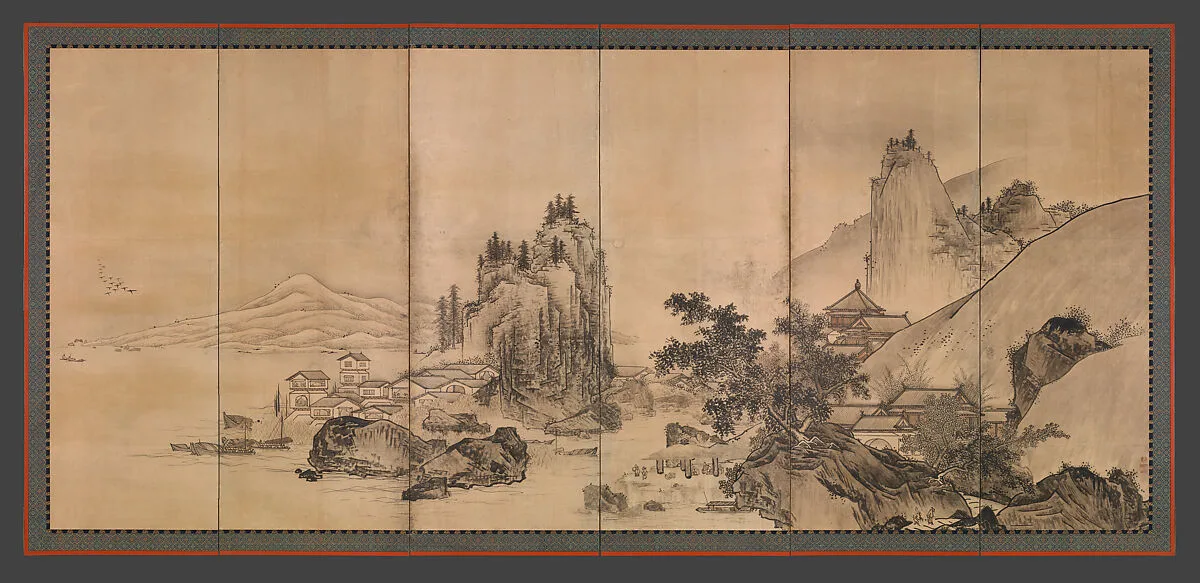
The four seasons of the year progress across the surface of this pair of screens, beginning at the right, with spring, and concluding with winter at the far left. The imaginary landscape, with rocky land masses, towering mountains, pavilions, and human activity, recalls aspects of the Chinese theme “Eight Views of the Xiao and Xiang Rivers,” particularly with its depiction of geese descending to a sandbar in the distance. Tōgan, founder of the Unkoku school, was one of the most important ink painters of the Momoyama period. This panoramic landscape composition reflects the influence of the earlier, Muromachi-period ink master, Sesshū Tōyō (1420–1506), whose studio, the Unkoku-an, was bestowed upon Tōgan in the 1590s and from which he adopted his family name. The sharp outlines and architectonic treatment of land masses visible in this work appear in other screens by Tōgan, some of which also feature gilded backgrounds.
- Artist
- Unkoku Tōgan
- Date
- late 16th–early 17th century
- Medium
- Pair of six-panel folding screens; ink, color, and gold dust on paper
- Culture
- Japan
- Department
- Asian Art
- Credit line
- Mary Griggs Burke Collection, Gift of the Mary and Jackson Burke Foundation, 2015