平家物語図屏風 「小督」 「大原御幸」|"Kogō" and "The Imperial Procession to Ōhara", from The Tale of the Heike (Heike monogatari)
Unknown
early 17th century · Pair of six-panel folding screens; ink, color, gold and gold leaf on paper · Asian Art
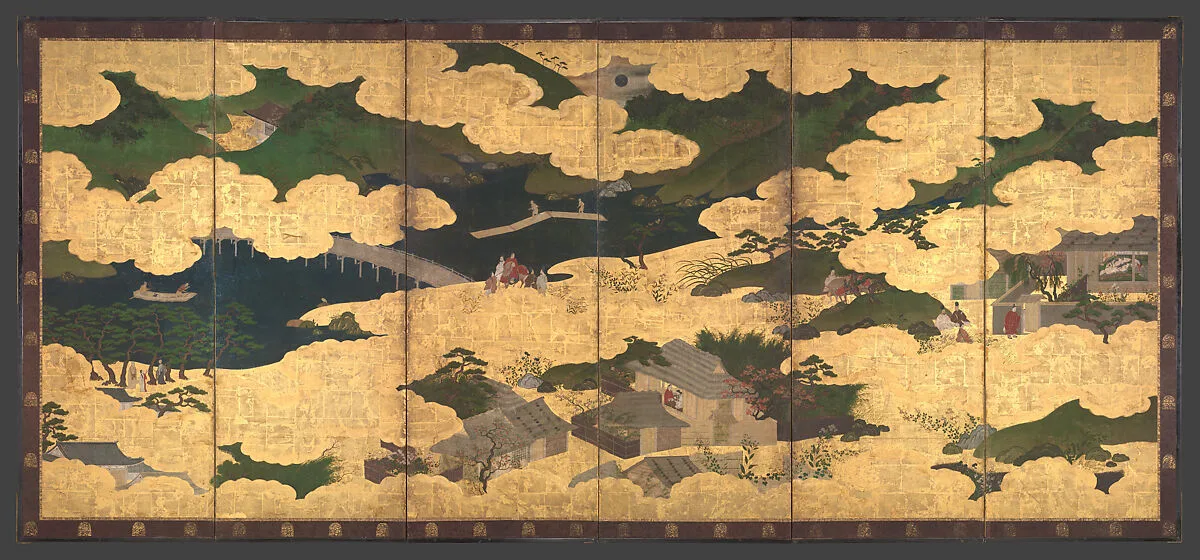
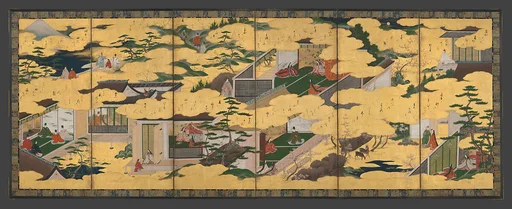
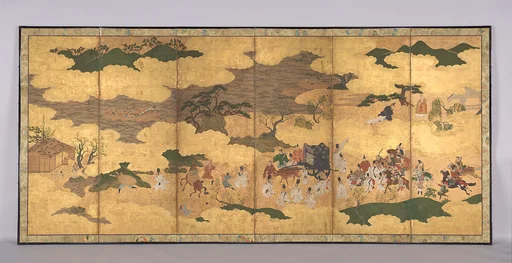
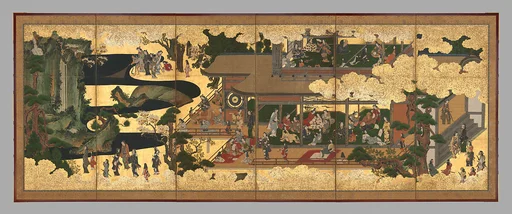
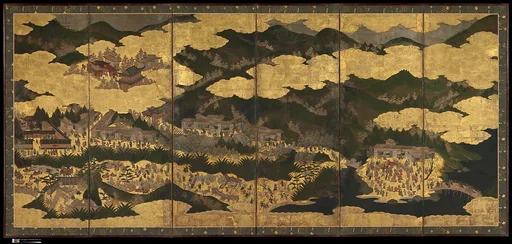
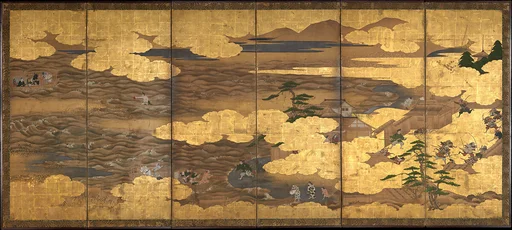
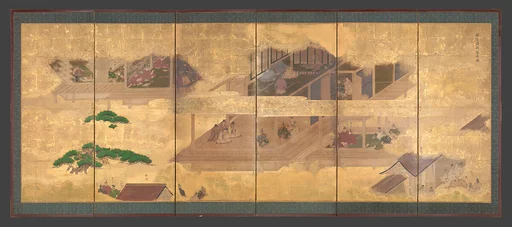
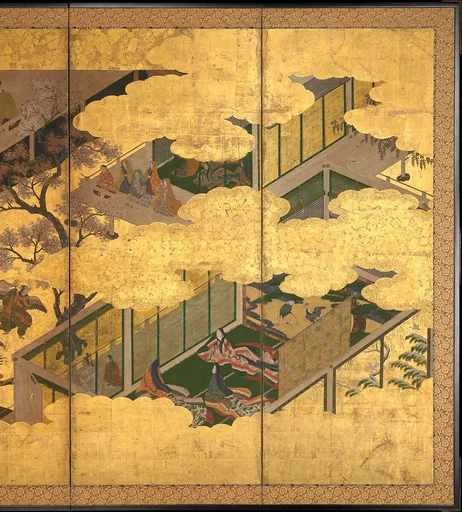
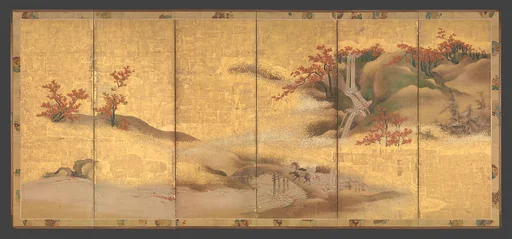
These screens depict two iconic scenes from The Tale of the Heike, a fourteenth-century account of late twelfth-century clashes between the rival Taira and Minamoto clans. The right screen represents the story’s “Kogō” chapter, which centers on Lady Kogō, a renowned beauty and accomplished koto player who finds herself banished after being caught in a love triangle involving Emperor Takakura and the leader of the Taira clan. Here, Minamoto no Nakakuni—the repeated figure wearing a red robe—searches for Lady Kogō on a moonlit night at the behest of the emperor. Following the sound of her koto, a type of zither, he tracks her to a dwelling in the Saga Plain of western Kyoto, pictured at far right. The left screen depicts the elaborate procession of Emperor Go-Shirakawa to Ōhara, in the hills north of Kyoto, in order to visit the former empress Kenreimon’in. Now living in a convent, Kenreimon’in is shown in the third panel from the left, seated on a veranda wearing a white robe.
- Artist
- Unknown
- Date
- early 17th century
- Medium
- Pair of six-panel folding screens; ink, color, gold and gold leaf on paper
- Culture
- Japan
- Department
- Asian Art
- Credit line
- Mary Griggs Burke Collection, Gift of the Mary and Jackson Burke Foundation, 2015