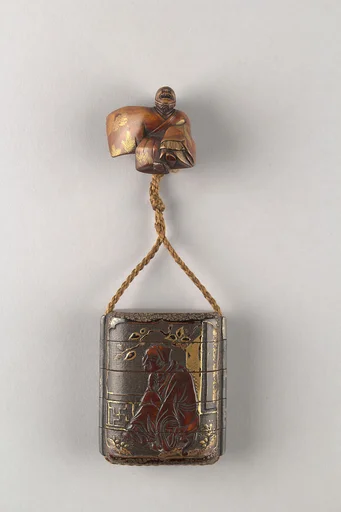
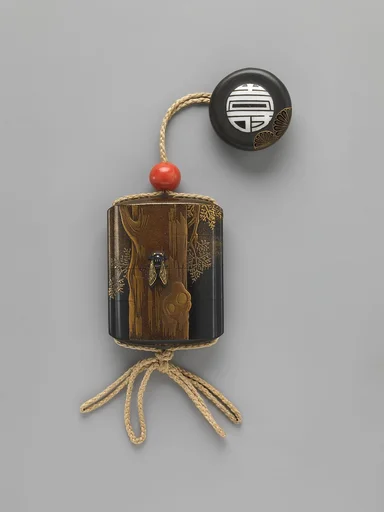
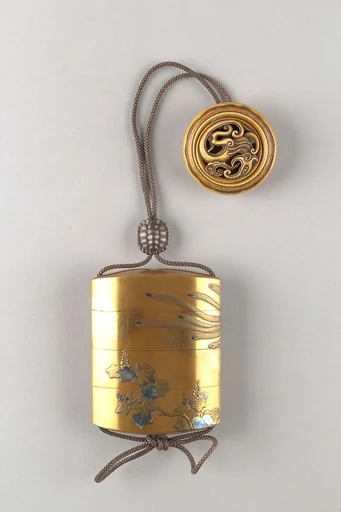
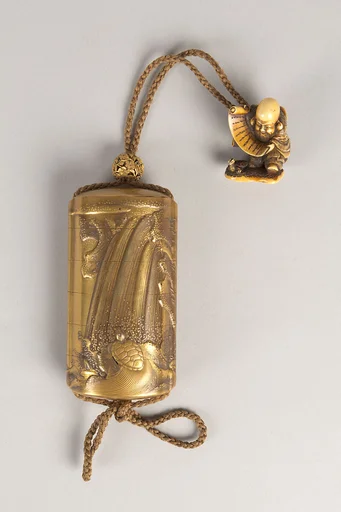
南蛮人蒔絵印籠|Inrō with Portuguese Figures
Unknown
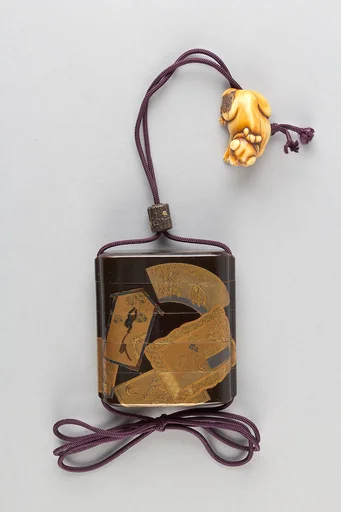
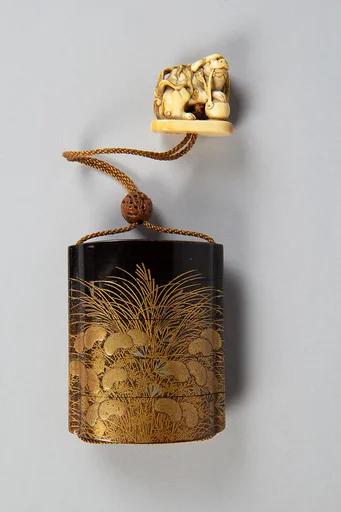
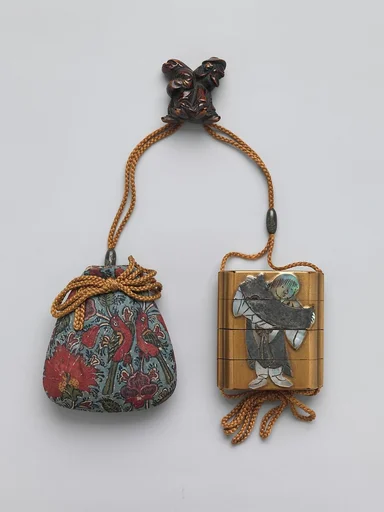
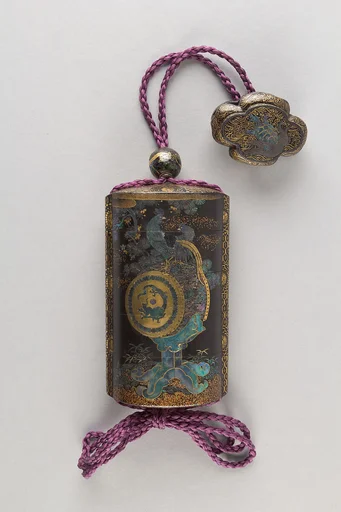
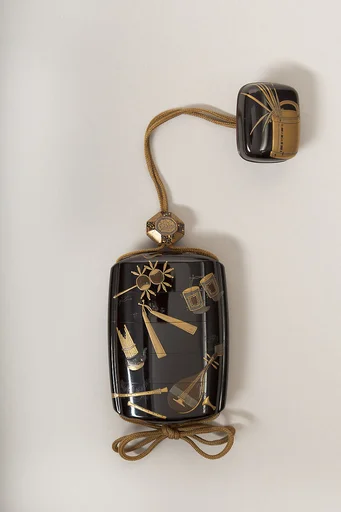
late 18th–early 19th century · Four cases; lacquered wood with gold hiramaki-e and cut-out gold foil application on black ground Netsuke: dog; ivory Ojime: antler bead · Asian Art
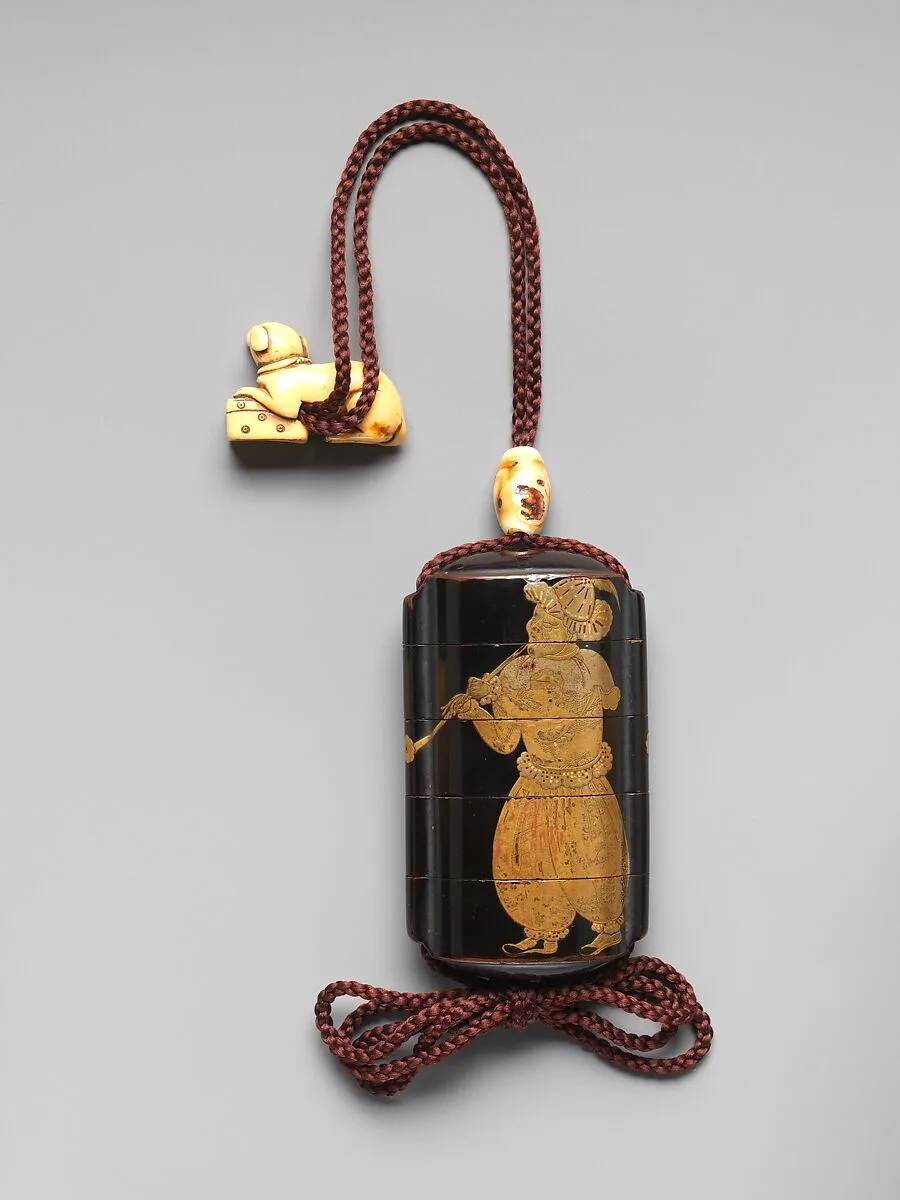
The mutual fascination with which the Japanese and Europeans regarded each other after their initial contacts in the late sixteenth century was expressed in part by Japanese art objects that incorporated images of Westerners as part of the ornamentation. This inro, which was worn suspended from the waist and used to hold medicines and other small items, is decorated with the images of three Portuguese men, dressed in their distinctive pantaloons and jackets with large, ruffled collars.
- Artist
- Unknown
- Date
- late 18th–early 19th century
- Medium
- Four cases; lacquered wood with gold hiramaki-e and cut-out gold foil application on black ground Netsuke: dog; ivory Ojime: antler bead
- Culture
- Japan
- Department
- Asian Art
- Credit line
- The Harry G. C. Packard Collection of Asian Art, Gift of Harry G. C. Packard, and Purchase, Fletcher, Rogers, Harris Brisbane Dick, and Louis V. Bell Funds, Joseph Pulitzer Bequest, and The Annenberg Fund Inc. Gift, 1975