Untitled
Shibata Zeshin
1880s · Lacquered wood; gold, silver, red, yellow, black hiramaki-e and takamaki-e on “bronze imitation” (seido-nuri) ground · Asian Art
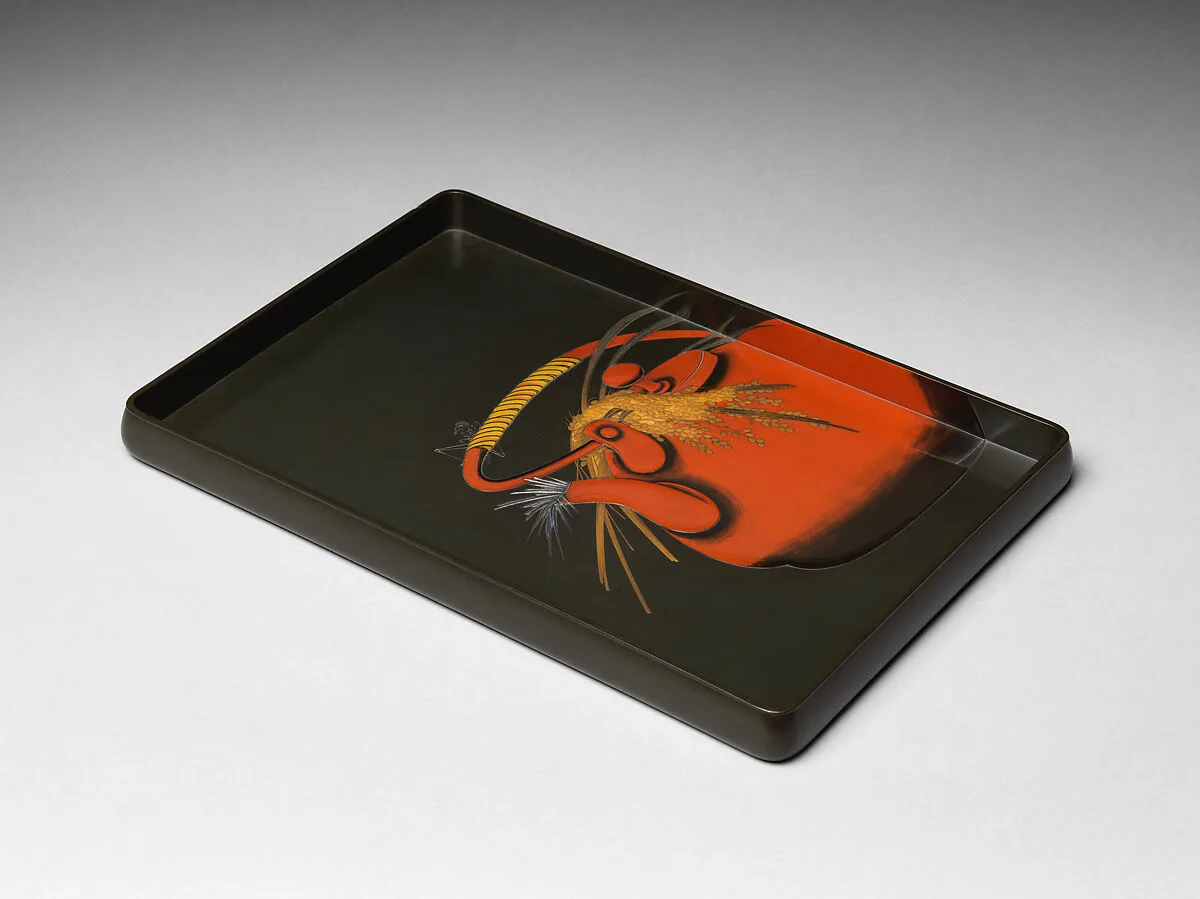
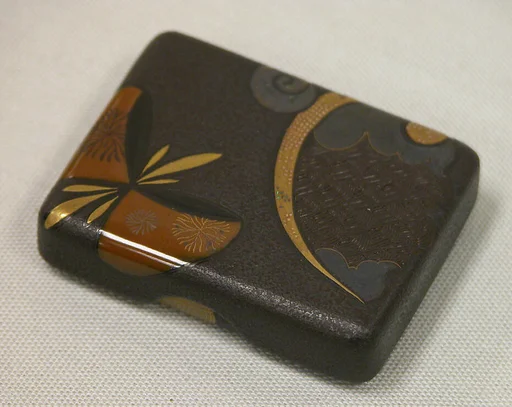
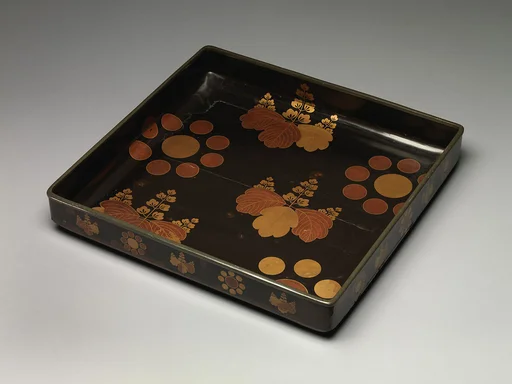
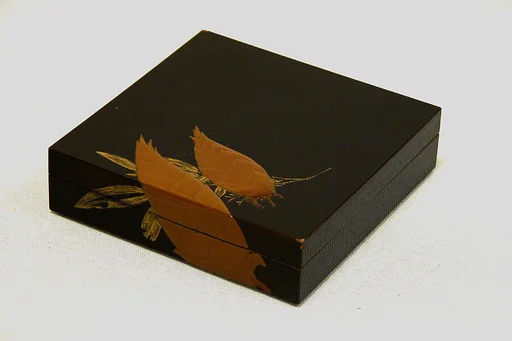
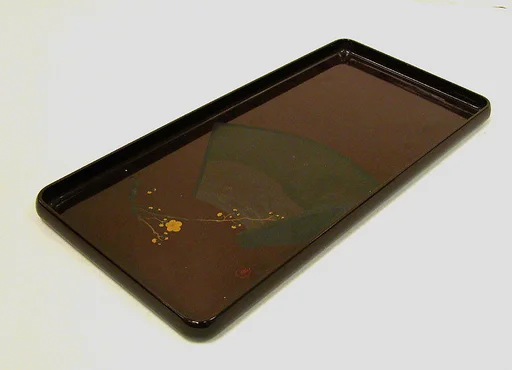
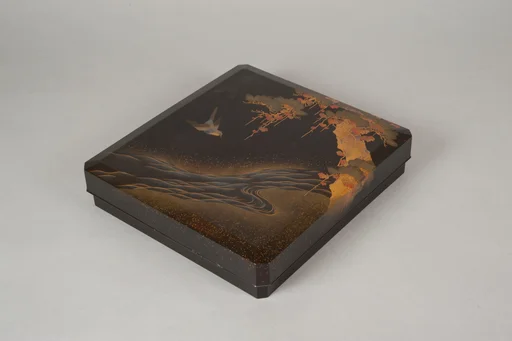
Shibata Zeshin (1807–1891) was an exceptional artist, born in Edo (now Tokyo), he joined the studio of the lacquer artist Koma Kansai II (1766–1835) as an apprentice to learn the painstaking methods of lacquer decoration. He subsequently moved to Kyoto to study the Maruyama-Shijo school of painting, which combined Western naturalism with East Asian painting techniques. This training provided the intellectual and aesthetic foundation for his sophisticated art. Returning to Edo, Zeshin established his career during the last decades of the Edo period, creating paintings and luxury goods such as lacquered writing boxes. He became the first Imperial Household lacquer artist in 1890 and one of the most well-known lacquer artists in Japan. For the ground of this tray, Zeshin created a dark-green background by scattering bronze and charcoal powders on the uncured lacquer. He then polished the surface to give it the luster and mottled tone of aged bronze ware. He used red lacquer, combined with black lacquer shading, to paint the large bronze tea kettle used by farmers to carry tea to the fields during the festive autumn harvest. Straw is stuffed into the kettle spout, perhaps to keep out insects such as the grasshopper clinging to the handle. Freshly harvested rice stalks are painted in raised gold, silver and blue-gold, an alloy of gold and silver. There are other trays with this design, indicating that the Irving example was originally one of a set of five. The tray is inscribed: Gyonen nanajusan okina Zeshin [Zeshin at the age of seventy-three].
- Artist
- Shibata Zeshin
- Date
- 1880s
- Medium
- Lacquered wood; gold, silver, red, yellow, black hiramaki-e and takamaki-e on “bronze imitation” (seido-nuri) ground
- Culture
- Japan
- Department
- Asian Art
- Credit line
- Purchase, Bequest of Henrie Jo Barth, William R. Appleby Fund, and Gift of Mr. and Mrs. Spielman, by exchange, 2019