萩|The Bush Clover (Hagi)
Suzuki Harunobu
ca. 1766 · Woodblock print; ink and color on paper · Asian Art
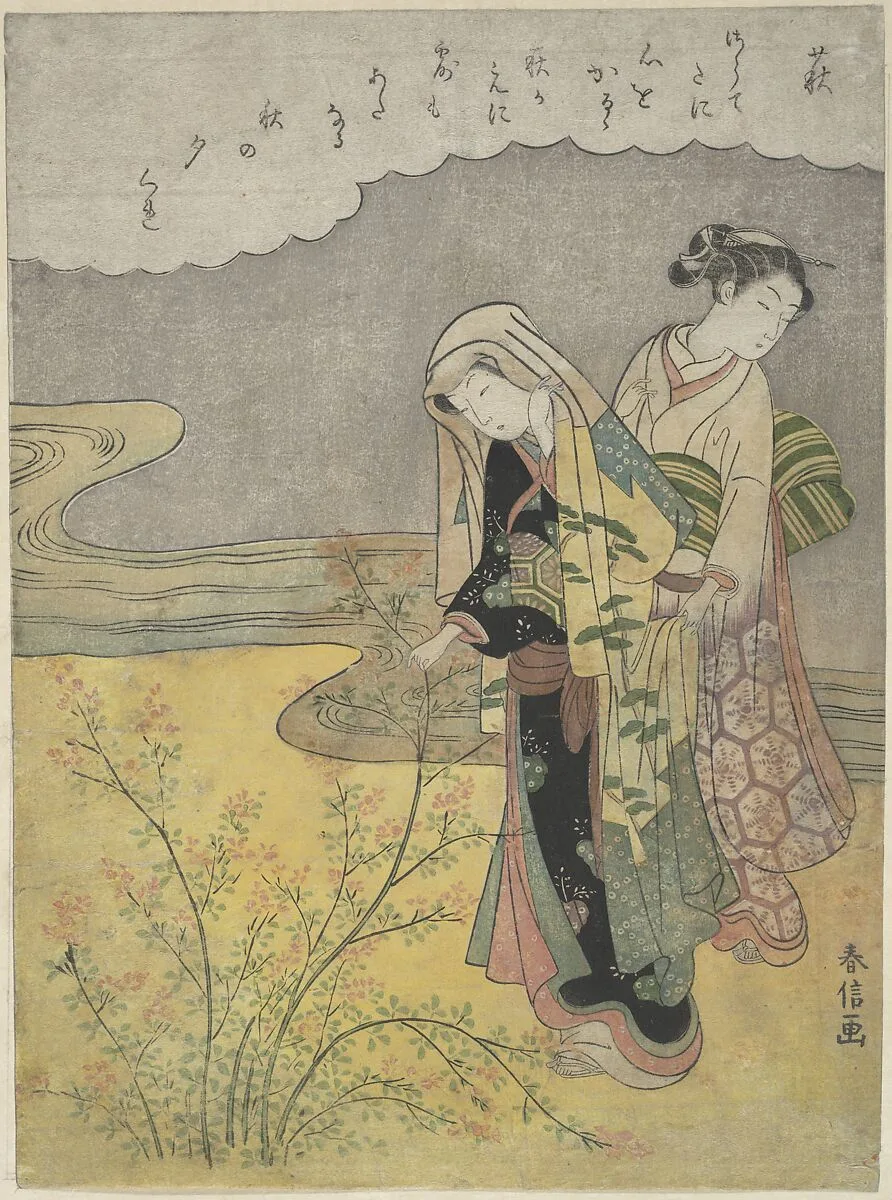
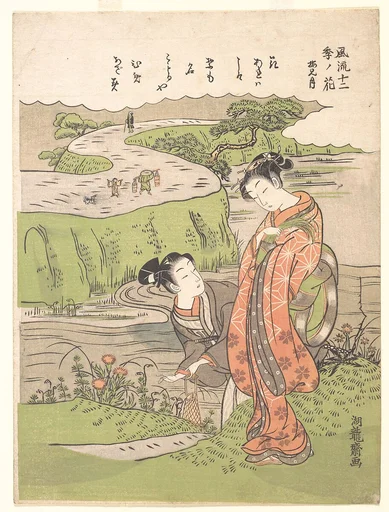
Bush clover (hagi), a popular autumnal symbol, is associated with melancholy and unrequited love. A young woman plucks a branch from the purple-flowering bush. Her black kimono with a tie-dyed paulownia design and obi with a pattern of octagons and squares (shokkō) are covered with a peach-colored outer garment (katsugi). The folds of this garment and the gently curving branches of the hagi bush share the pensive mood. Her maid, holding the katsugi up out of the wet grass, turns away, discreetly avoiding her mistress's pain, a movement that increases the sense of the woman's isolation. A waka poem by the thirteenth-century poet Fujiwara Kinmori appears in the cloud-shaped cartouche above and reads: Bush Clover My heart is withered, even dew on the branches of bush clover is futile in the autumn evening.
- Artist
- Suzuki Harunobu
- Date
- ca. 1766
- Medium
- Woodblock print; ink and color on paper
- Culture
- Japan
- Department
- Asian Art
- Credit line
- The Howard Mansfield Collection, Purchase, Rogers Fund, 1936