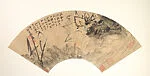
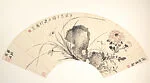
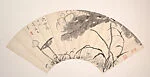
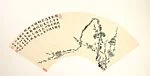
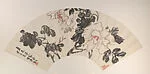
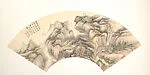
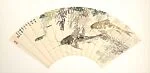
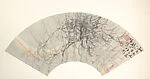
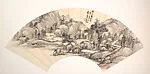
近代 張大千 水仙 扇面|Narcissus
Zhang Daqian
dated 1935 · Folding fan mounted as an album leaf; ink and color on alum paper · Asian Art
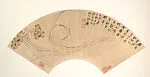
Always something of an adventurer and an outsider, Chang Daqian claimed to have lived as a captive to bandits. He also trained in Japan in textile weaving and dyeing. He spent 1919 and 1920 in the studio of Li Ruiqing and Zeng Xi. This period broadened Zhang's exposure to fine paintings. By the 1930s he was making his name as an artist in Shanghai. In this fan painting dedicated to Chen Sanyuan, the father of the painter, historian and mentor Chen Hengke, Zhang Daqian uses ranging narcissus stems to symbolize the collapse of traditional social structures during this period of civil strife and impending Japanese invasion. The poem reads: It is said there were red narcissus in the Tang Palace. This yellow one I did looks rather pitiful. the socks that bind the family have disintegrated. A thousand tendrils have broken through Their web and are growing haphazardly in the water. [Trans. Ellsworth et al, Later Chinese Painting]
- Artist
- Zhang Daqian
- Date
- dated 1935
- Medium
- Folding fan mounted as an album leaf; ink and color on alum paper
- Culture
- China
- Department
- Asian Art
- Credit line
- Gift of Robert Hatfield Ellsworth, in memory of La Ferne Hatfield Ellsworth, 1986