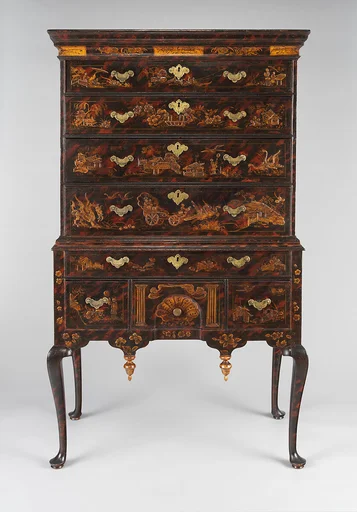
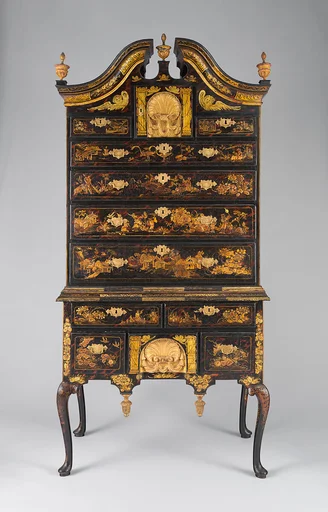
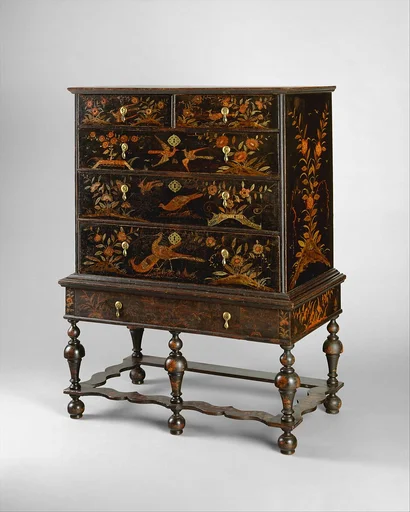
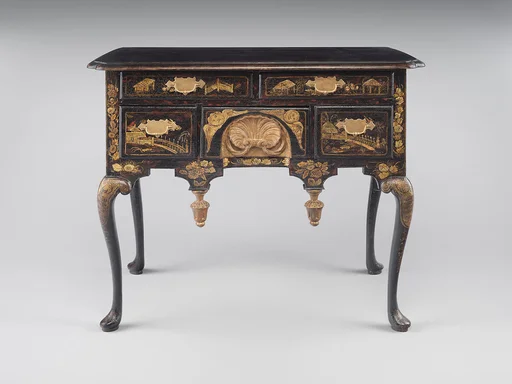
High chest of drawers
Unknown
1710–30 · Japanned soft maple, poplar, white pine · The American Wing
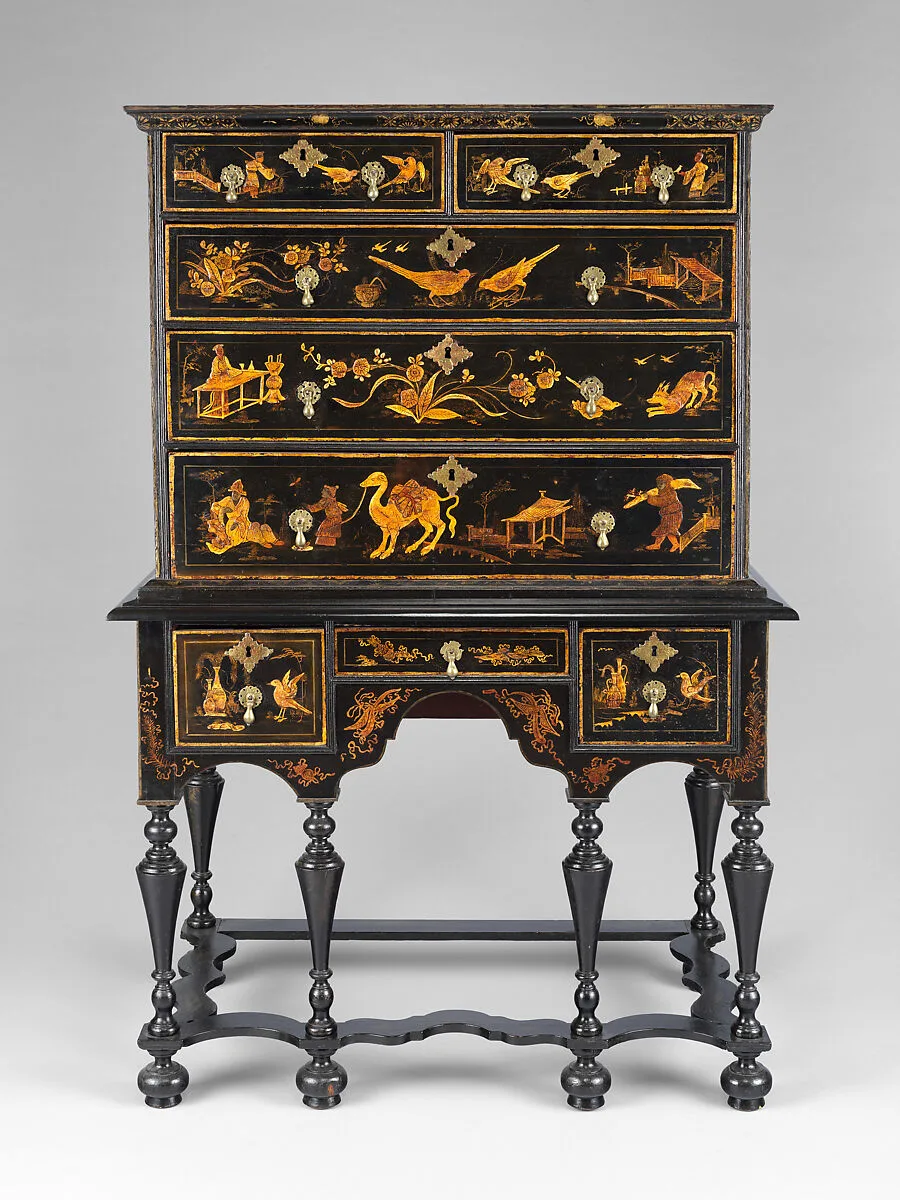
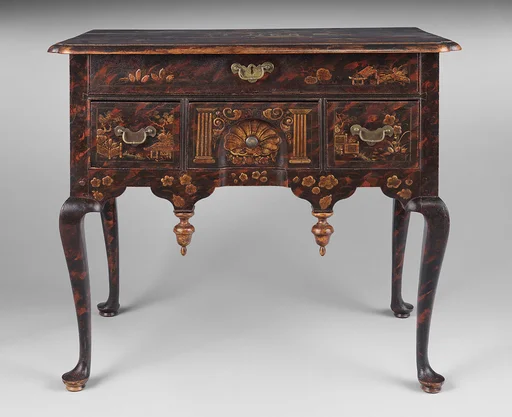
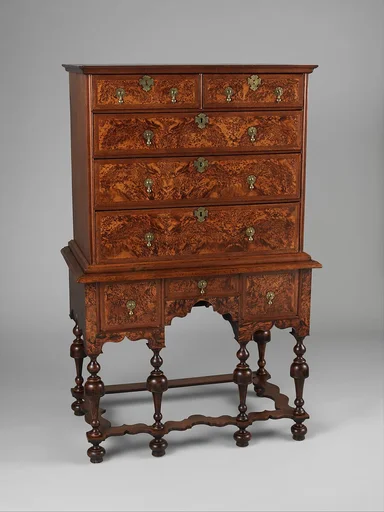
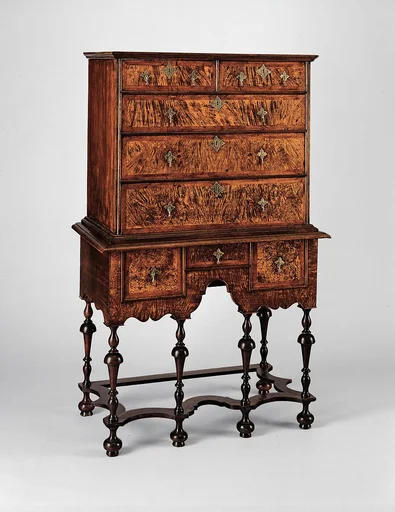
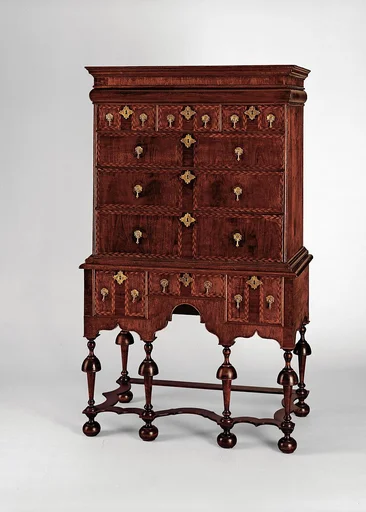
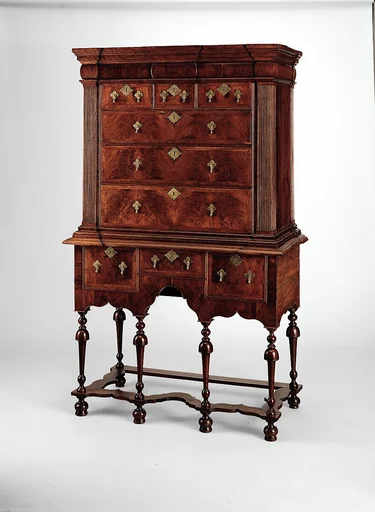
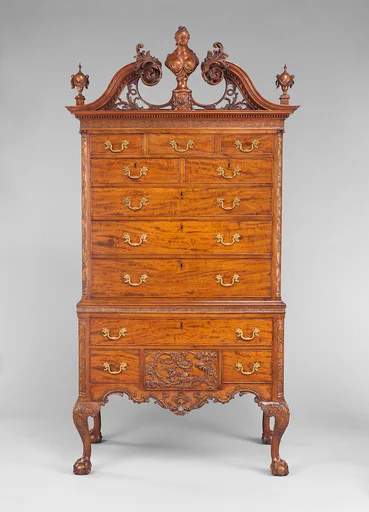
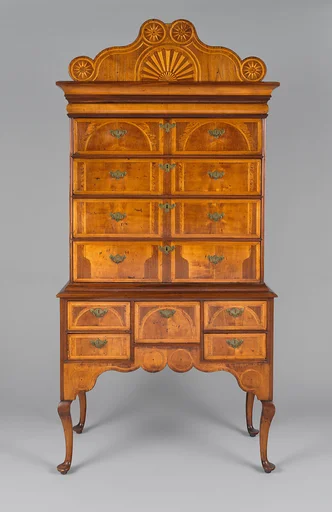
Japanning, a Western imitation of lacquerwork, became fashionable in the colonies after 1700. A stylish surface treatment in which motifs of vaguely Far Eastern origin were raised, gilded, and varnished, japanning was applied to standard furniture forms and, when bright and new, must have produced a dazzling effect. Here the motifs are arranged on a solid black ground in a relaxed, undulating pattern in which people, animals, oversize flowers, and tiny pavilions happily coexist. A new form introduced in the colonies in the 1690s at the same time as the early Baroque style—known in America as the William and Mary style—the high chest of drawers was the most prestigious piece of furniture in the early eighteenth century. Built in separate upper and lower sections, it was characterized in this period by a skirt and stretchers enlivened by curves and turned legs and feet on which bulbous shapes were boldly juxtaposed to narrow tapers. One of the earliest American examples of japanning, this high chest descended in the Pickman family of Boston and Salem.
- Artist
- Unknown
- Date
- 1710–30
- Medium
- Japanned soft maple, poplar, white pine
- Culture
- American
- Department
- The American Wing
- Credit line
- Purchase, Joseph Pulitzer Bequest, 1940