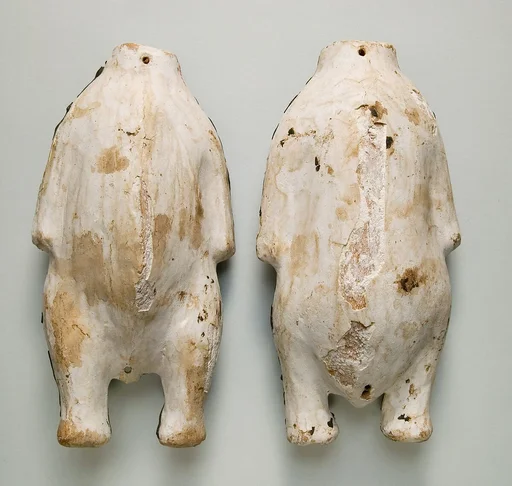
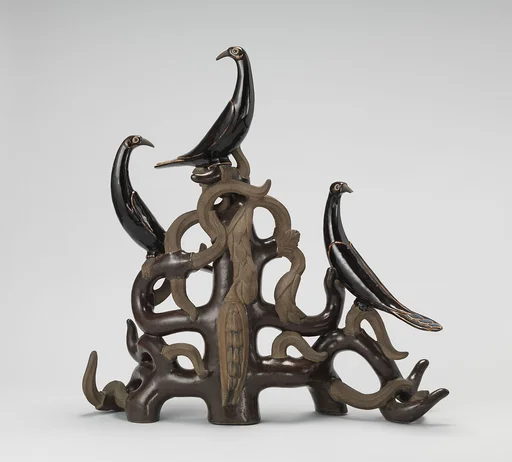
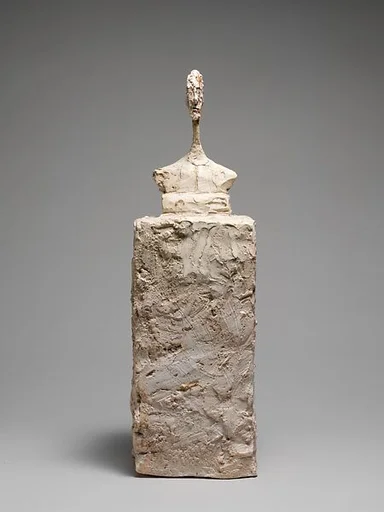
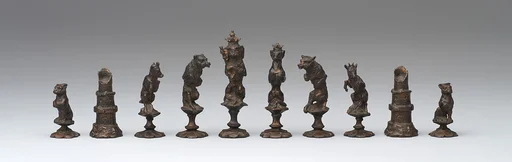
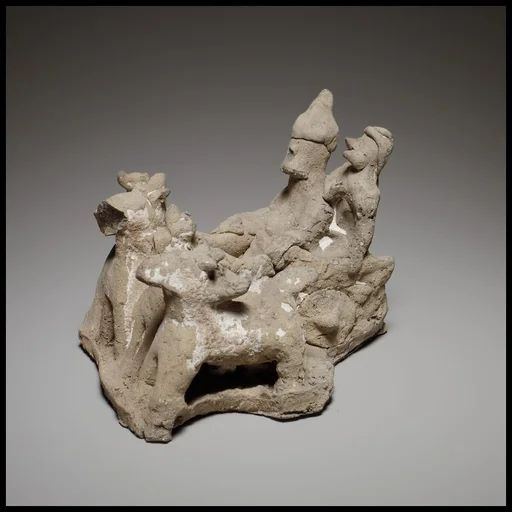
唐 彩繪陶十二生肖俑|Set of twelve zodiac animals
Unknown
8th century · Earthenware with white slip · Asian Art
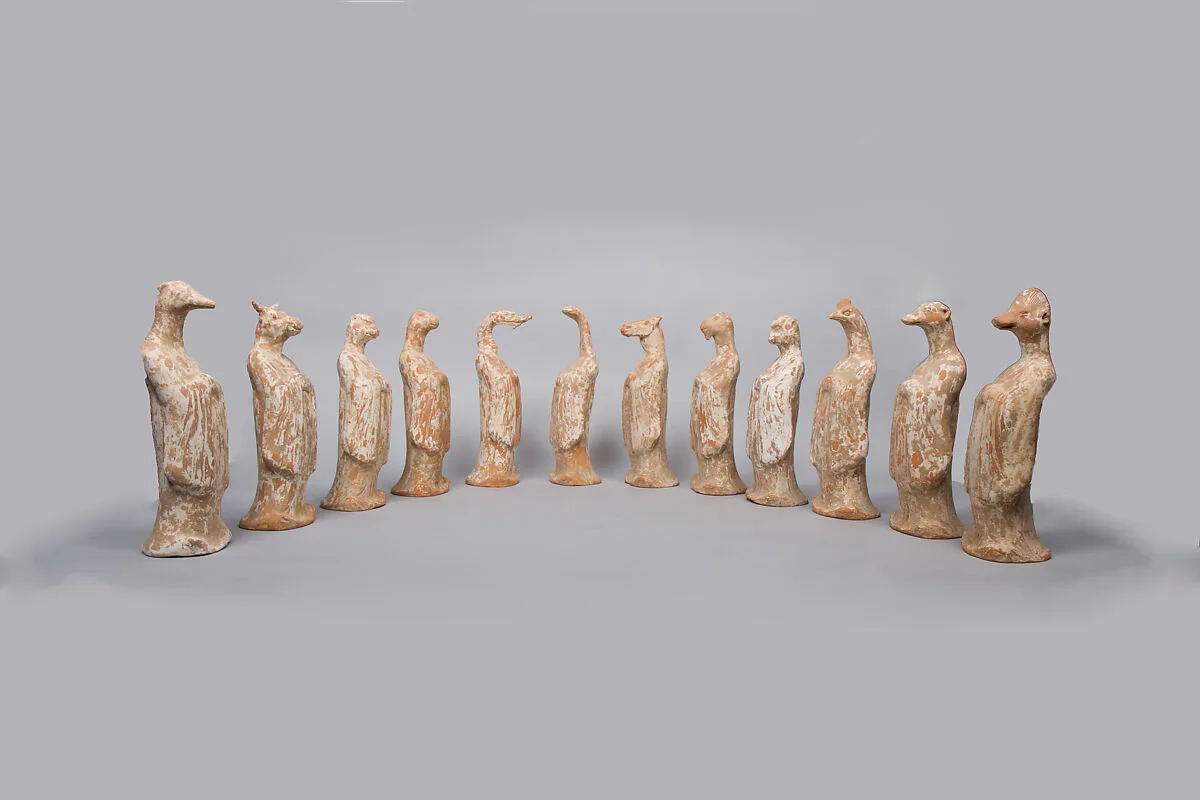
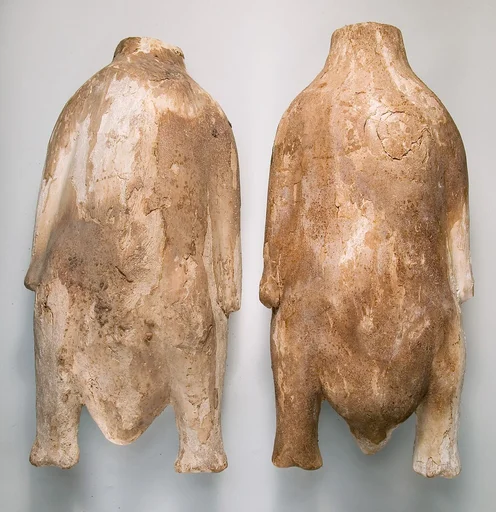
By the Eastern Han dynasty (9–220 CE), the conventional order of the twelve Chinese zodiac animals was well established. Subsequently, they were paired with ten other calendrical elements, forming a rotating cycle of sixty that was used in China to count the years until the twentieth century. The animals, along with this calendrical system, were also adopted by many other East Asian and Southeast Asian countries. As burial practices grew more elaborate, pottery animals wearing official robes became popular tomb offerings, presumably as symbols of renewal and regeneration. These figures were once colorfully painted, but only the white slip, which usually served as a base for decoration, has survived.
- Artist
- Unknown
- Date
- 8th century
- Medium
- Earthenware with white slip
- Culture
- China
- Department
- Asian Art
- Credit line
- Gift of Charlotte C. Weber, 2000