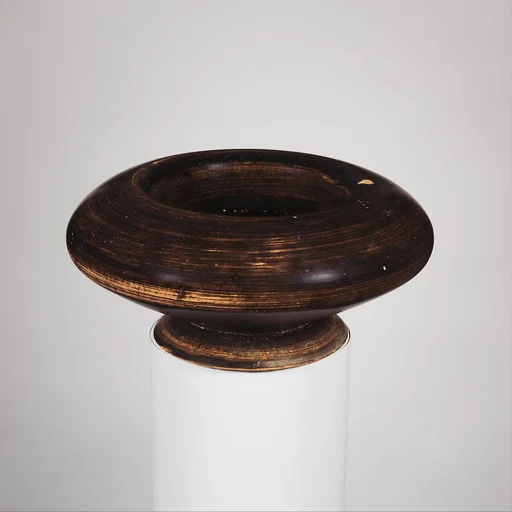
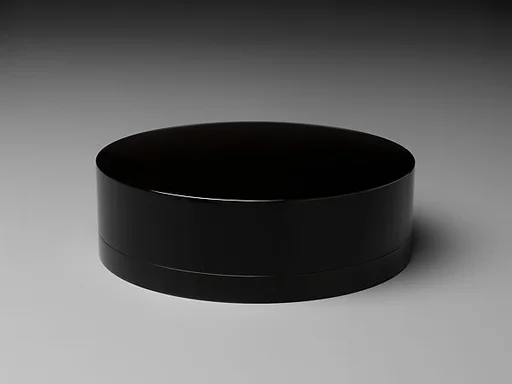
欅水指|Zelkova Freshwater Container (Mizusashi)
Murase Jihei 村瀬治兵衛
2022 · Zelkova wood, lacquered lid · Asian Art
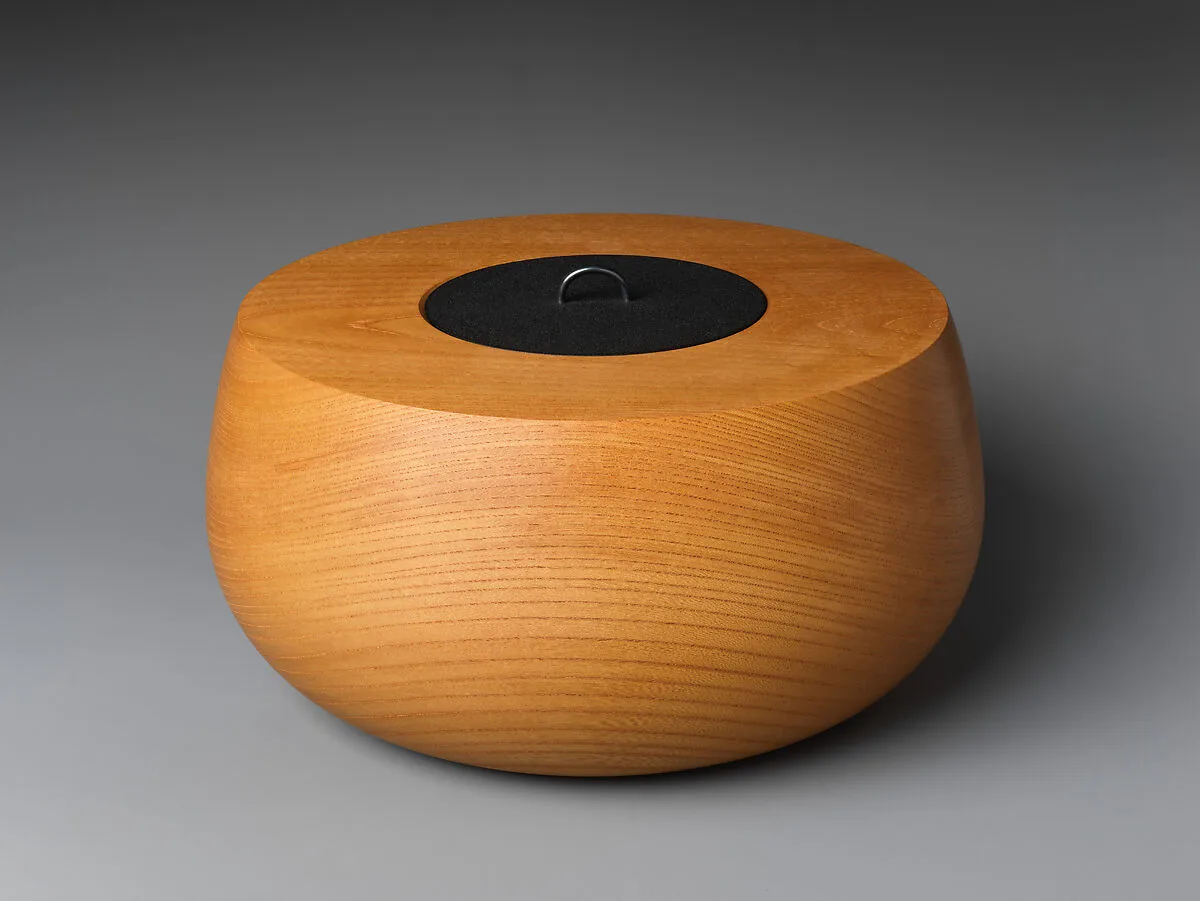
Murase Jihei was born in Tokyo as the grandson of the first generation Jihei, a craftsman working with Kitaōji Rosanjin (1883–1959) to produce Negoro lacquer and wooden vessels mainly for kaiseki meals, in conjunction with tea culture. Murase Jihei graduated from the Sculpture Department of Tokyo Zōkei University in 1980 and joined the long-standing family lacquerware business in the same year. He also trained with Suzuki Sōkan, a well-known tea master of the Urasenke School of Tea. Murase Jihei used a whole, 400-years old zelkova tree trunk to create this freshwater container. The carving required excellent skills as the shape had to be perfectly round and well-balanced. To emphasize the beauty of the natural wood and display the woodgrains, the wooden surface was not lacquered on the outside, only on the inside where the water comes into contact with the vessel. The water jar has a black lacquer lid. It was Isamu Noguchi, Hans Koper, and Brancusi who had a significant influence on Murase Jihei’s modern, sculptural style. Traditionally, water for the tea gathering used to be collected from wells or springs using wooden buckets or wooden pails to fill up the kettle. Sen no Rikyū (1522–1591) was the first tea master to use a wooden pail (tsurube), as a hand bucket for the tea house. Sen no Rikyū transformed the round bucket into a square-shaped wooden freshwater container (mizusashi) for the tea gathering, and even today wooden mizusashi remain popular in tea culture.
- Artist
- Murase Jihei 村瀬治兵衛
- Date
- 2022
- Medium
- Zelkova wood, lacquered lid
- Culture
- Japan
- Department
- Asian Art
- Credit line
- Gift of Shoko Aono and Richard Aeck, 2022