Qur'an Juz' XXVI
Unknown
17th–18th century · Ink, gold, and opaque watercolor on polychrome on paper with leather binding · Islamic Art
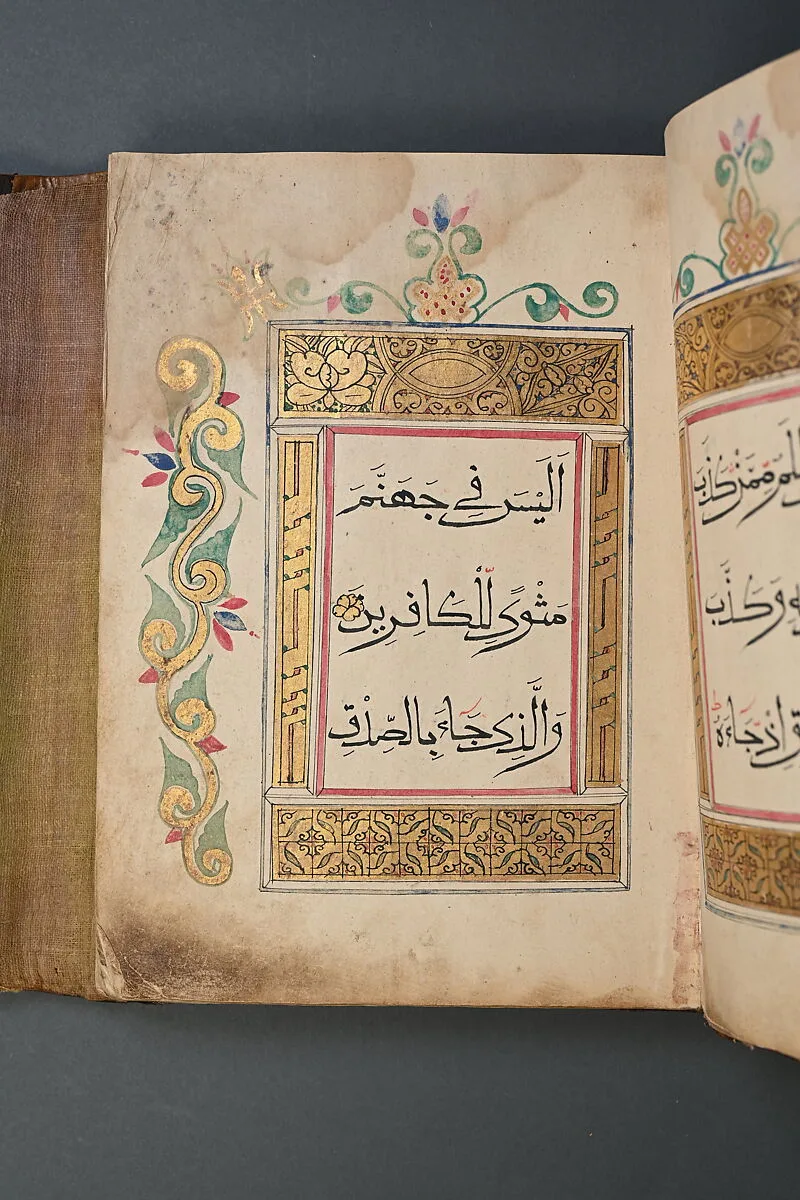
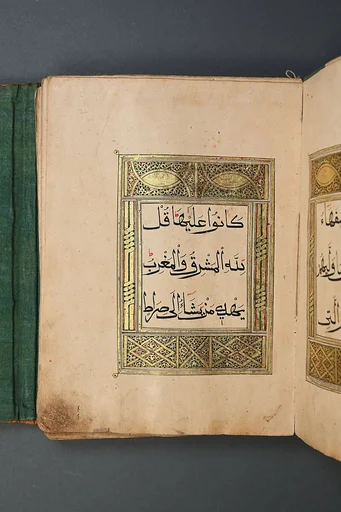
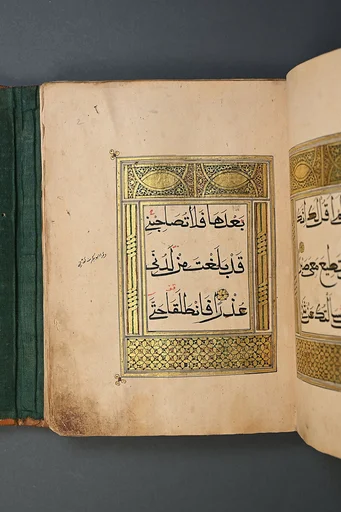
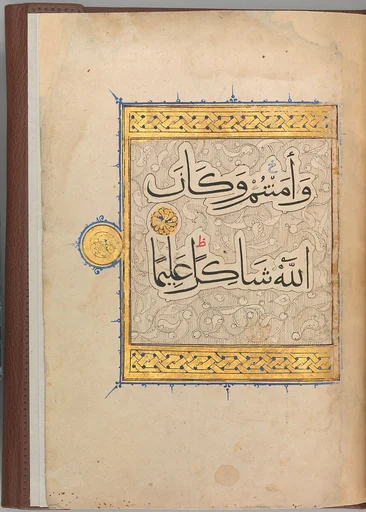
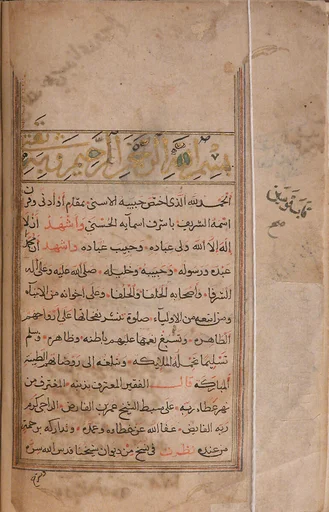
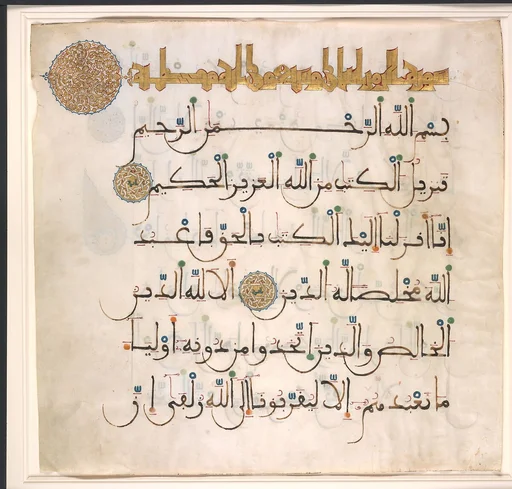
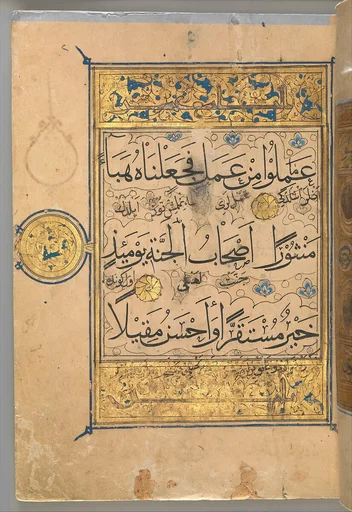
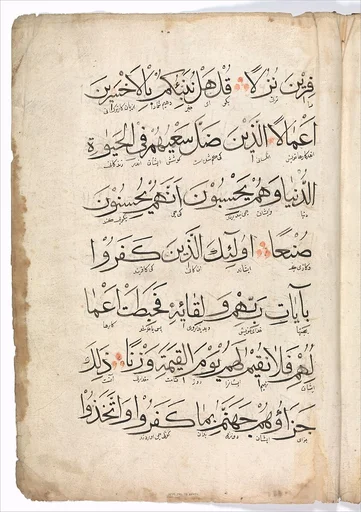
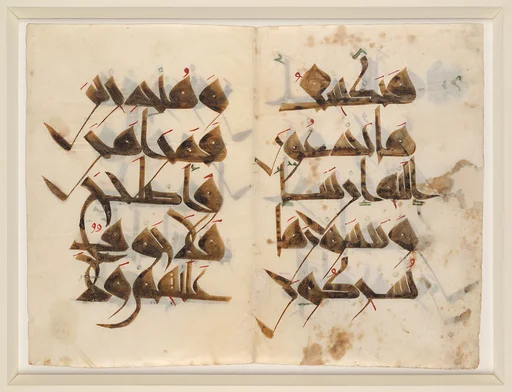
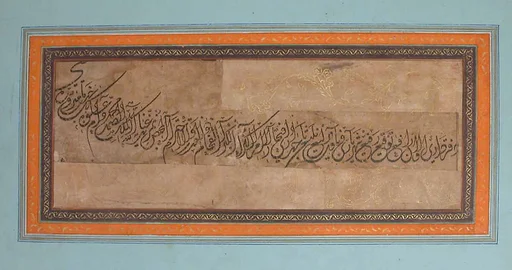
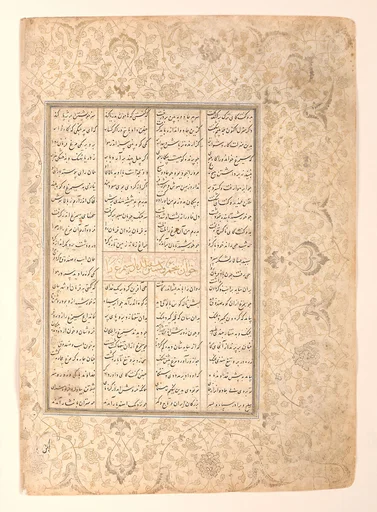
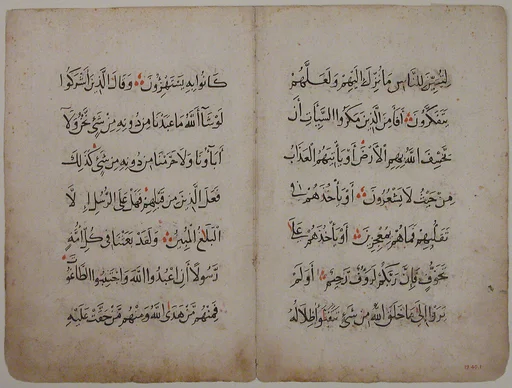
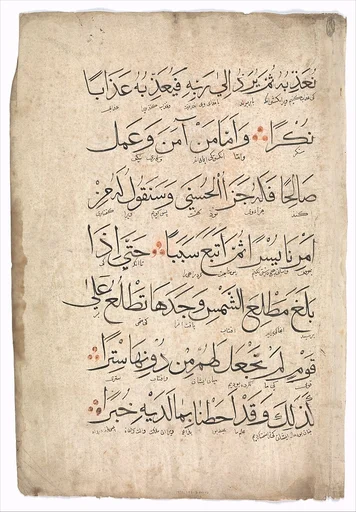
The earliest surviving Chinese Qur'ans date to the fifteenth century and were associated with Chinese Sunni Muslim communities called the Hui. The Qur'ans were divided into juz' (one of thirty parts into which the Qur'an is divided) and followed a standard format that endured throughout the Ming Period (1368–674) and later. This juz' is written in Sini script, a variation of muhaqqaq (one of the six canonical proportional scripts). Several of its folios are illuminated with decorative patterns characteristic of Sini Qur'ans. These are typically executed in gold and outlined in black, green, and red ink. The patterns and motifs found in these Qur'ans include overlapping circles, eye-shaped and lobed cartouches, four-petalled floral diesigns and star-shaped geometric forms, and plaited framing devices. This juz' features ornate swirling vegetal designs in the outside borders and is bound in richly decorated stamped brown leather binding featuring Sini calligrams in teardrop-shaped medallions, sinified cartouches, and medallions.
- Artist
- Unknown
- Date
- 17th–18th century
- Medium
- Ink, gold, and opaque watercolor on polychrome on paper with leather binding
- Department
- Islamic Art
- Credit line
- Purchase, Friends of Islamic Art Gifts, 2022