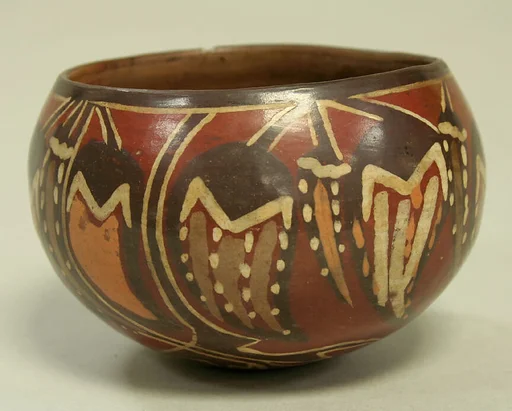
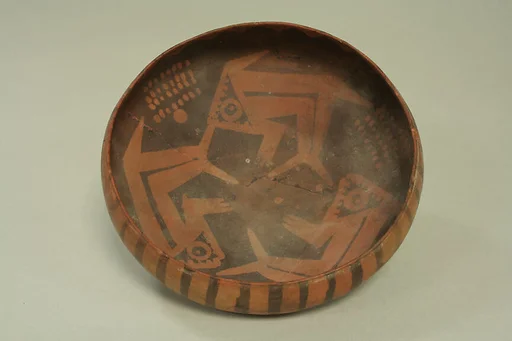
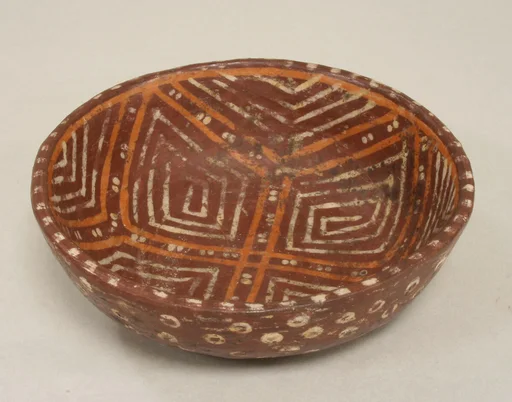
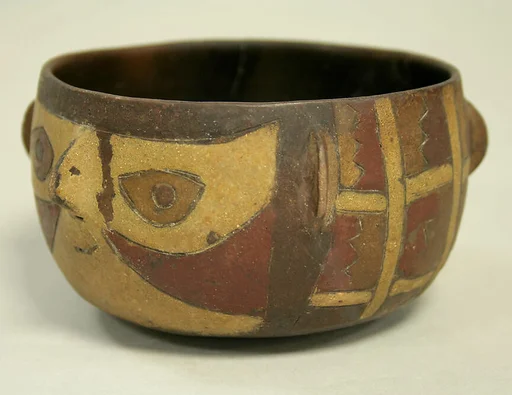
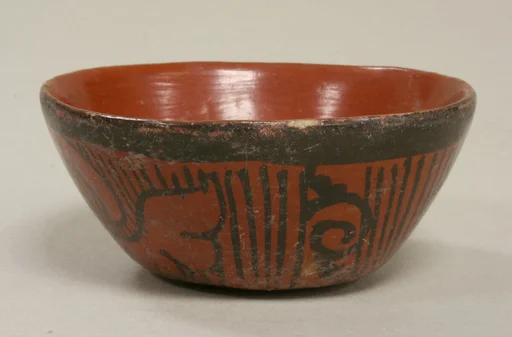
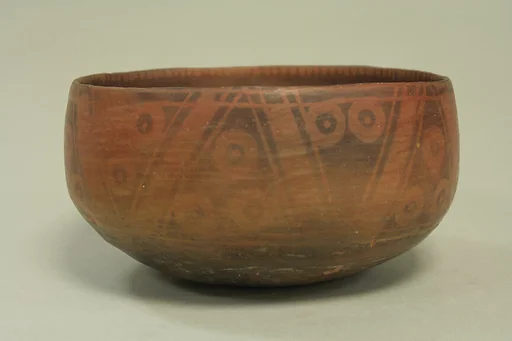
Glazed Ceramic Bowl with a Deer or Fantastic Quadruped
Unknown
10th century · Earthenware; reddish slip with dark-brown, yellow, and white slip decoration, under transparent colorless glaze · Islamic Art
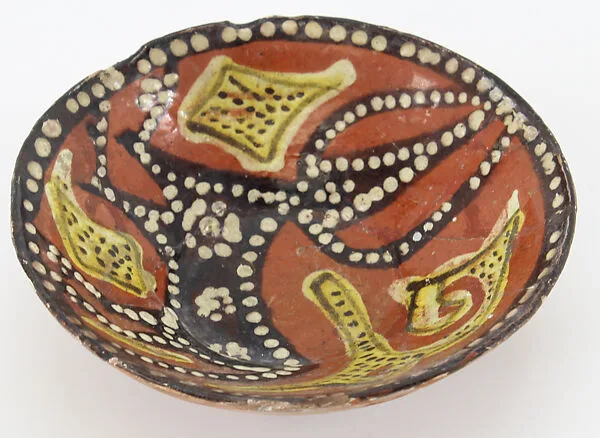
Although coming from the antiquity market, this ceramic bowl is similar to many examples excavated at Nishapur in Iran. The reddish-slipped surface bears a painted decoration of a long-horned and hoofed quadruped, with an elongated lozenge-shaped head, perhaps a ram or a composite creature. White dots made of a thick slip stand out against the dark-brown color of the animal and in the brown band along the rim. Ambiguous animals are often portrayed on the material culture of this region, either on ceramic, glass, or metal vessels, as well as on molds for printing leather. They are perhaps mythical beasts, which may have had apotropaic or talismanic properties, and belong to a wider tradition that includes sometimes elements only of living creatures combined with mineral and vegetal components – as those found on wall paintings excavated in a private dwelling at Tepe Madrasa in Nishapur, today in the Met’s collection.
- Artist
- Unknown
- Date
- 10th century
- Medium
- Earthenware; reddish slip with dark-brown, yellow, and white slip decoration, under transparent colorless glaze
- Department
- Islamic Art
- Credit line
- Gift of M. Feltenstein, 2021