Untitled
Unknown
ca. 18th century · Brass with glass inlay and silver attachments · Asian Art
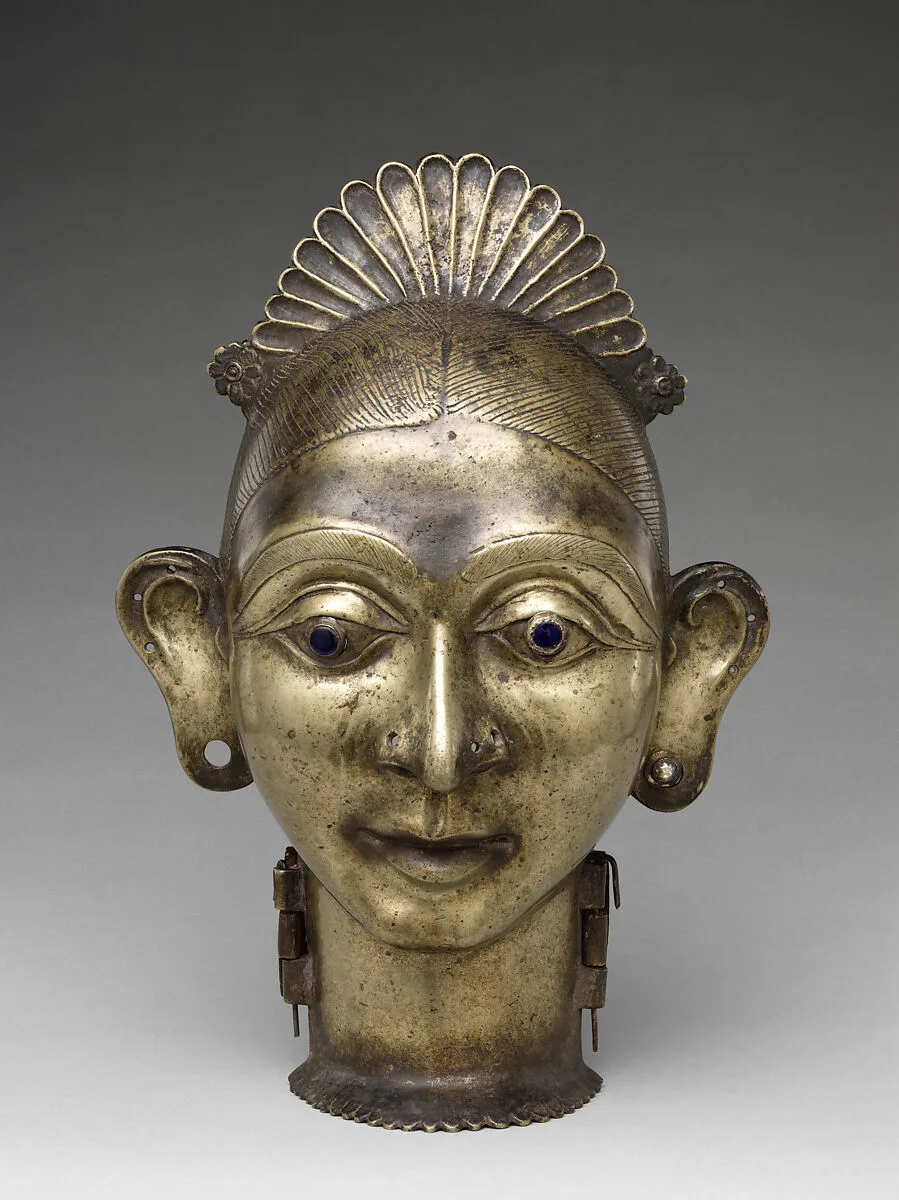
The goddess Gauri is celebrated as a manifestation of the benign aspect of Durga, herself an emanation of Parvati, and is understood by her devotees as the highest expression of female auspiciousness, with the power to fulfill all desires and grant relief from worldly sufferings. Most universal of her forms is that honored on the eighth night of Navaratri (‘nine-nights’), when the most important goddess are celebrated in the autumnal month of Asvina (September-October) in a ten-day festival. But she is widely worshipped in many guises, under local names in villages and small towns as well as in temple establishments and in the homes of devotees. These celebrations assume many regional expressions, as does the representation of the goddess who often assumes a localized form, typically drawing upon myths and legends specific to a given community. These often find expression in indigenous performative traditions. This sculpture is highly accomplished in both its conceptual sophistication and originality of execution, and is a rare example of a little studied devotional sculptural tradition, most probably originating in coastal Karnataka.
- Artist
- Unknown
- Date
- ca. 18th century
- Medium
- Brass with glass inlay and silver attachments
- Culture
- South India, Karnataka
- Department
- Asian Art
- Credit line
- Purchase, Brooke Russell Astor Bequest, 2022