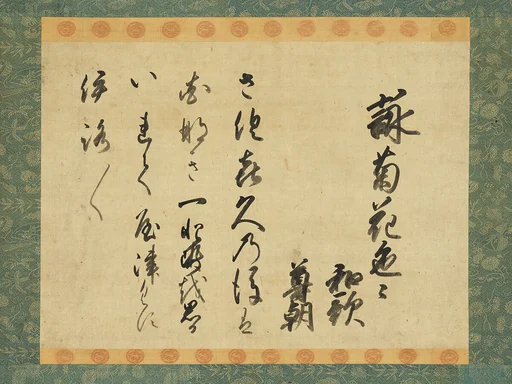
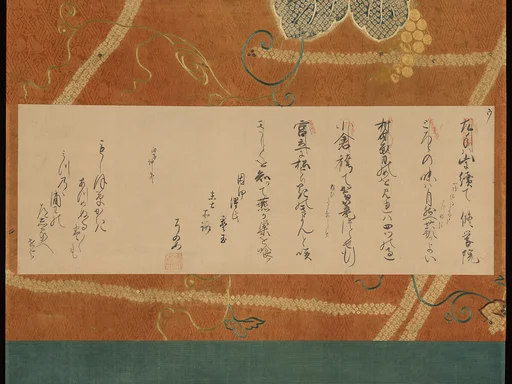
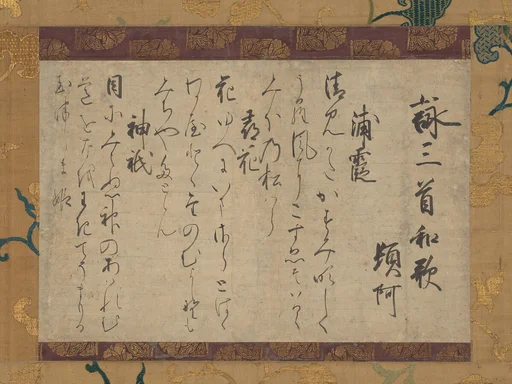
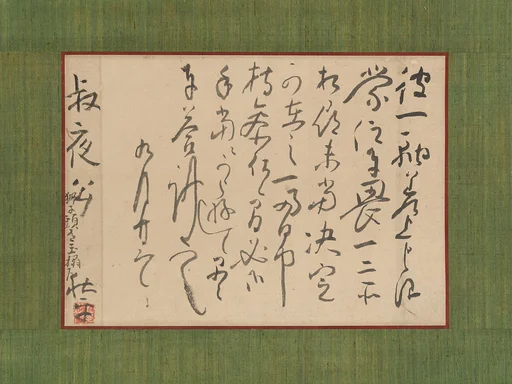
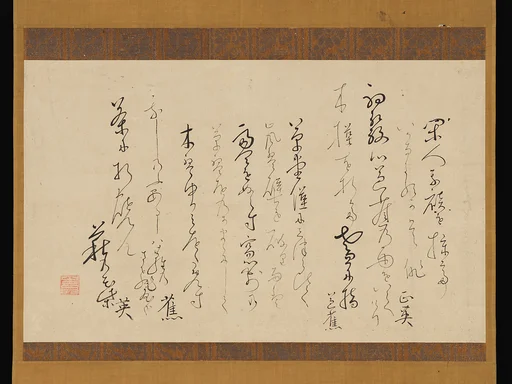
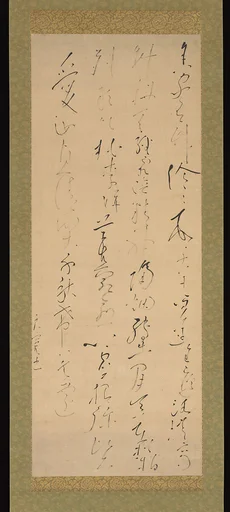
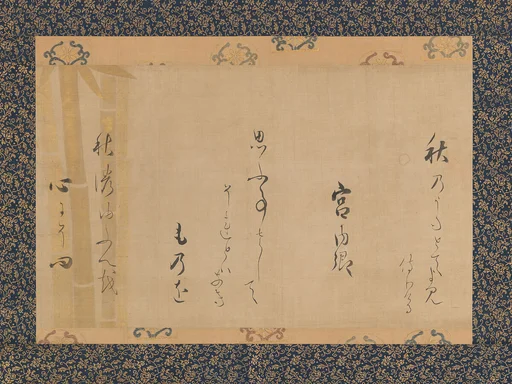
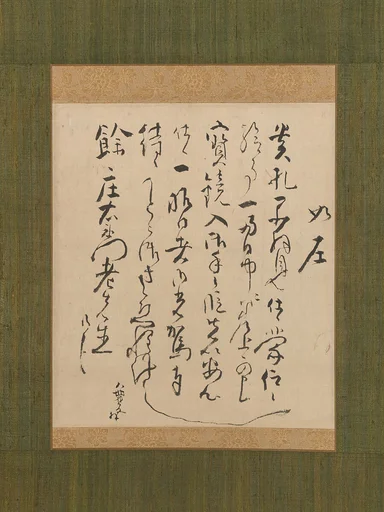
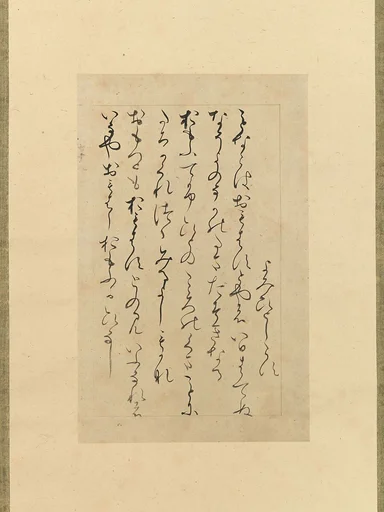
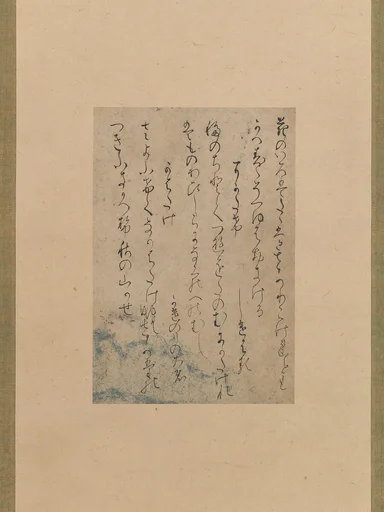
「禅林寺にて」 和歌二首 ("Zenrinji nite" waka nishu)|Two Waka Poems Composed at Zenrinji Temple
Ueda Akinari 上田秋成
ca. 1803–04 (Kyōwa 3–Bunka 1) · Poetry sheet (waka-kaishi) mounted as a hanging scroll; ink on paper · Asian Art
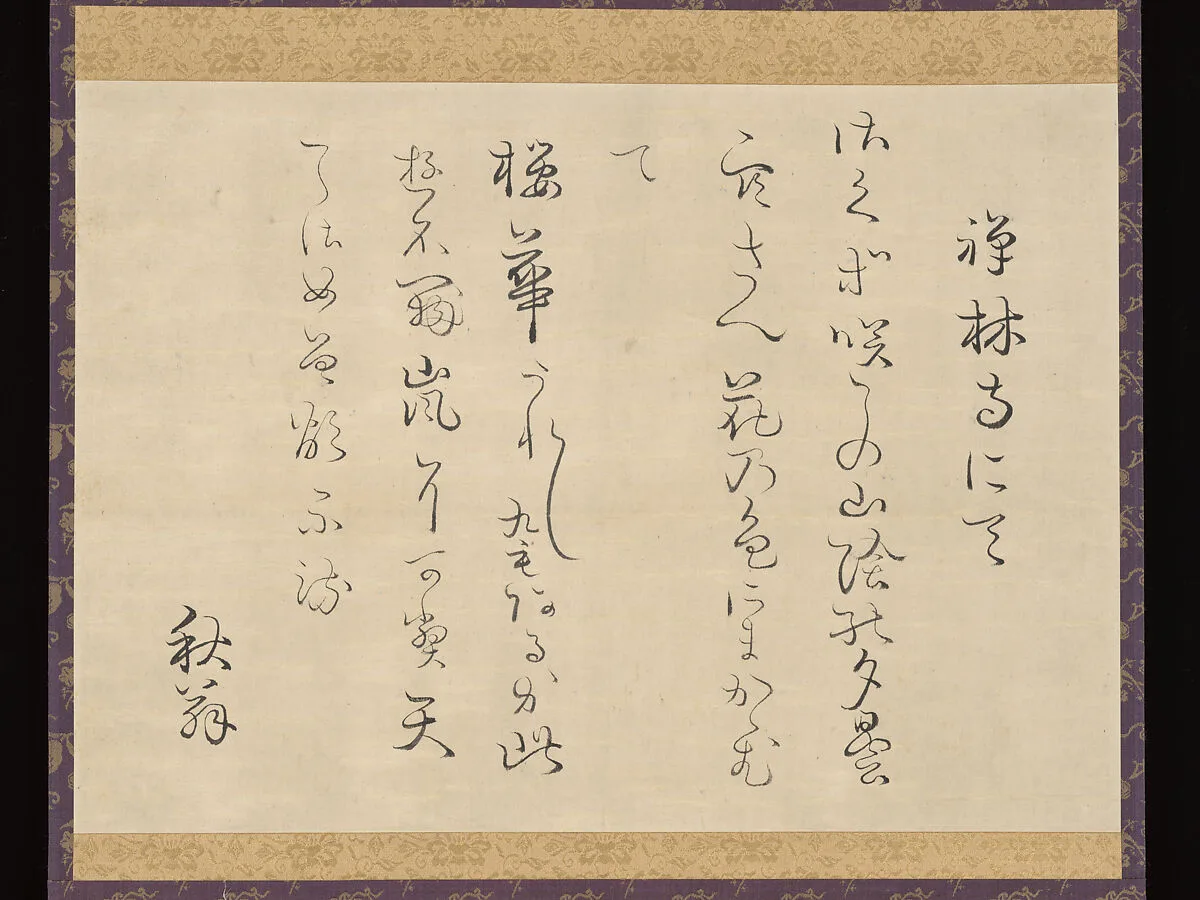
This waka-kaishi (poetry sheet with 31-syllable court verse) records two poems inspired by a visit of the noted writer, poet, and calligrapher Ueda Akinari to Zenrinji, or Eikandō, near Nanzenji in the foothills of the Higashiyama district of Kyoto. Akinari had moved to Kyoto with his wife in 1793, and played an active role in the networks of poets, artists, and scholars of ancient Japanese literature and culture (kokugakusha, including many included on the Imperial Prince Shinnin collective painting and calligraphy composition in the Cowles Collection). Originally, these poems must have been composed around 1801, and then later included in Akinari’s poetry collection and literary miscellany “A Basket of Writings” (Tsuzura bumi 藤簍冊子, 1806–07). Based on the calligraphy style, and the way Akinari signed himself Shūō (Old Man Aki[nari]), the researcher Nagashima Hiroaki dates this transcription to around 1803 or 1804. Akinari’s archaically elegant but limpid kana reveals his indebtedness study of Heian-period (794–1185) models of sōgana (highly cursive kanji used phonetically).
- Artist
- Ueda Akinari 上田秋成
- Date
- ca. 1803–04 (Kyōwa 3–Bunka 1)
- Medium
- Poetry sheet (waka-kaishi) mounted as a hanging scroll; ink on paper
- Culture
- Japan
- Department
- Asian Art
- Credit line
- Mary and Cheney Cowles Collection, Gift of Mary and Cheney Cowles, 2020