Untitled
Matsui Kōsei
1972 · Marbleized stoneware (neriage) · Asian Art
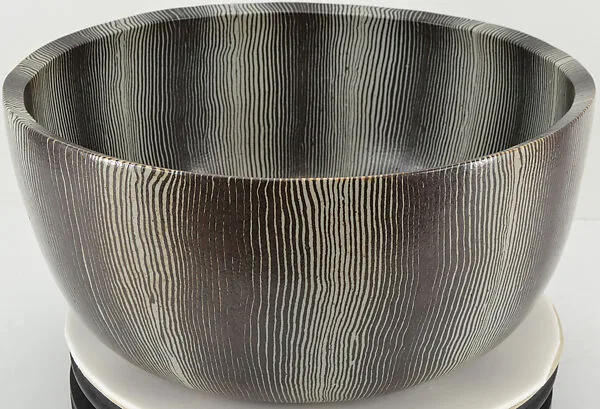
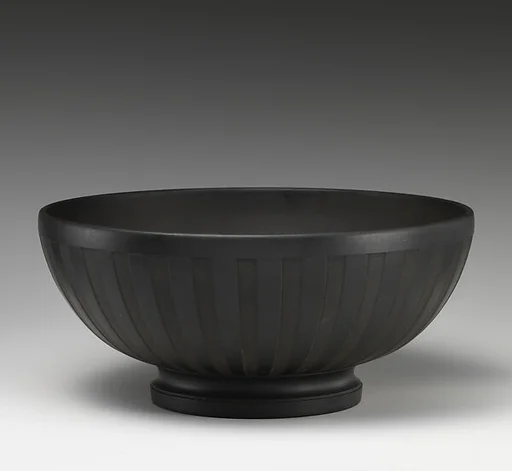
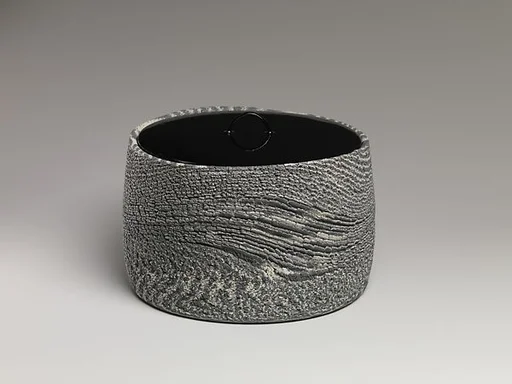
This exceptionally large black and white bowl was created by Matsui Kōsei, a Kasama-based artist. Born in 1927 in Nagano Prefecture, Kōsei graduated from Meiji University and in 1957 was installed as the 24th head priest of the Gessō-ji Temple in Ibaraki Prefecture. He built his kiln on the temple’s precinct. Through his exploration of a wide range of classic ceramics from China, Korea and Japan, he became enchanted with agateware, mixing clays of different colors and throwing the mixture to create varying patterns, a technique known in Japan as neriage. This bowl is relatively restrained in its use of shades of black (and very dark brown), grey, and white, and a refined, rhythmical striped pattern. His signature technique originated in Tang-period China (618–907) and was used extensively at the Cizhou kilns in Hebei Province during the Song period (960–1279). There is little history of its use in Japan until the twentieth century, when artists, primarily Kawai Kanjirō (1890–1966), began to experiment with it. He was encouraged to specialize in this technique by Tamura Kōichi (1918–1987, Living National Treasure), professor of Tokyo University of Arts, with whom he studied in the late 1960s. Matsui himself became designated a Living National Treasure in 1993, in recognition of his achievements in ceramic art.
- Artist
- Matsui Kōsei
- Date
- 1972
- Medium
- Marbleized stoneware (neriage)
- Culture
- Japan
- Department
- Asian Art
- Credit line
- William R. Appleby Fund, in memory of Elinor Appleby, 2020