Untitled
Unidentified
12th century · Fragment; colors and black ink on paper · Asian Art
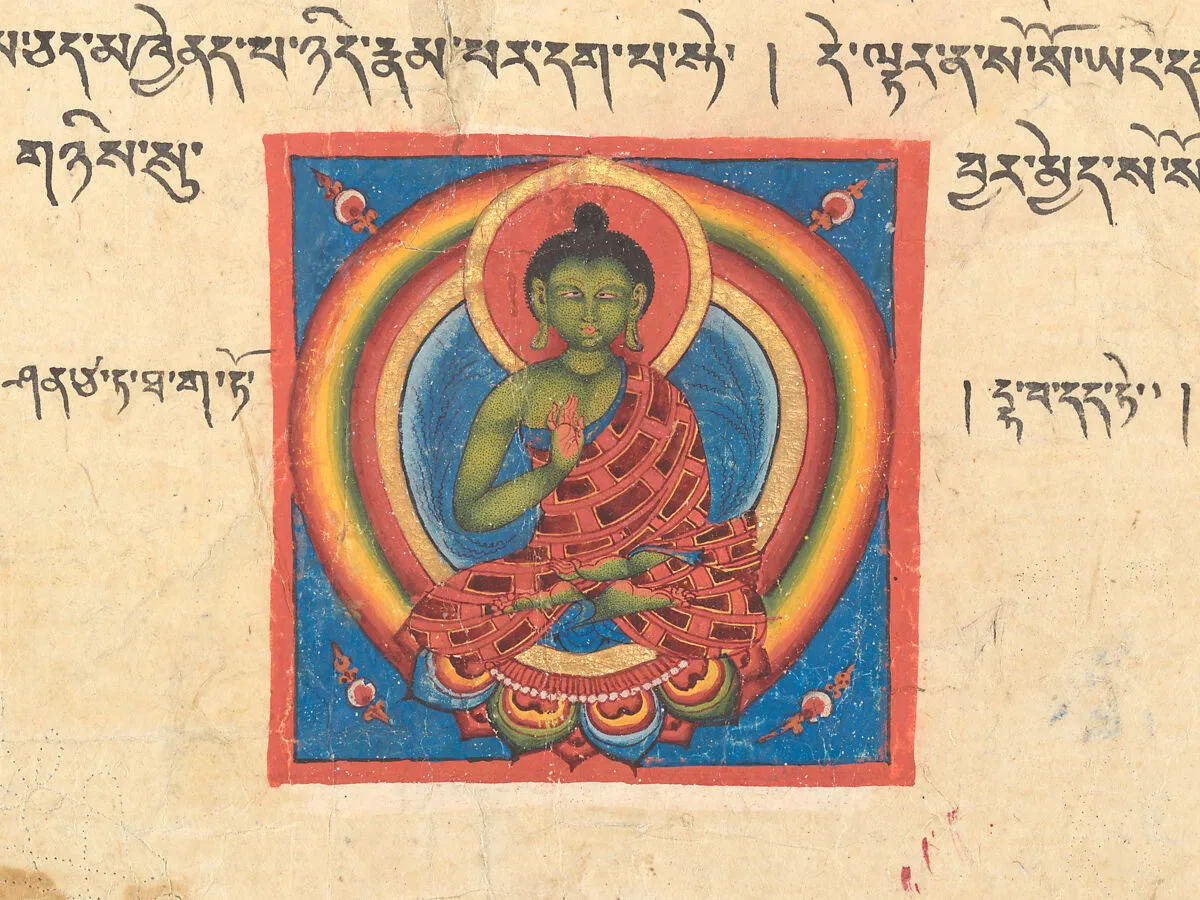
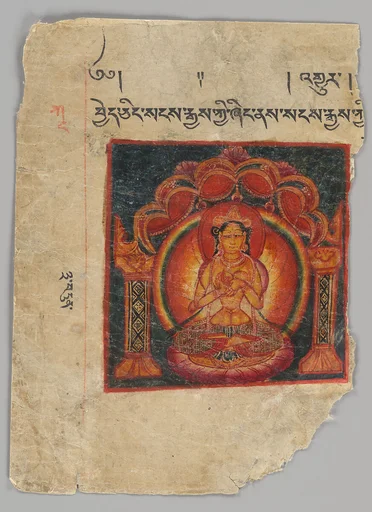
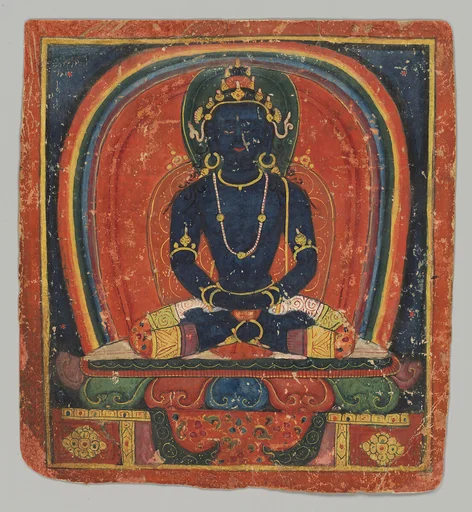
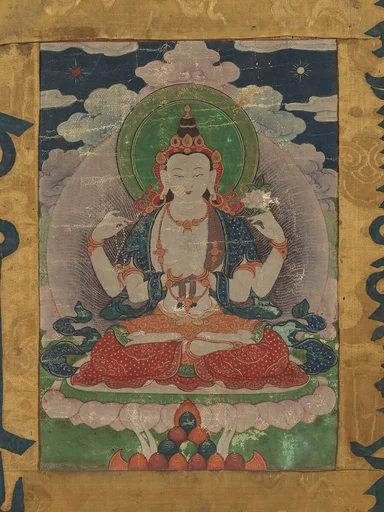
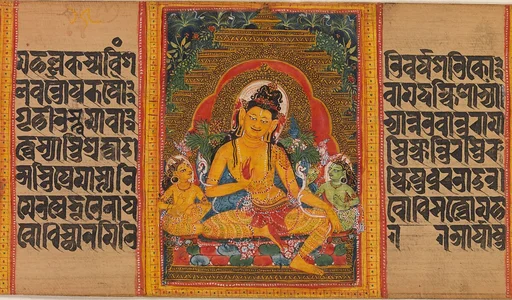
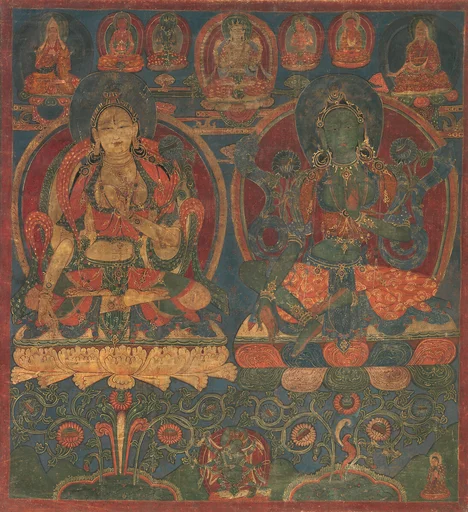
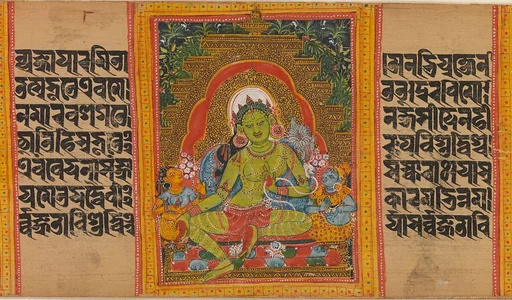
This exquisite example of 12th century western Himalayan manuscript painting embodies the highest qualities of this tradition. Colors are radiant and, thanks to the subtle use of tonal gradation, have a luminosity that enhances the figure’s other-worldliness. It depicts a Buddha with green body seated with folded legs in the lotus pose (padmasana) on a lotus cushion with rainbow colored petals. He may possibly be identified (by his color) as Amoghasiddhi, the Buddha of the North, or as one of the 1000 Buddhas of the present age (Bhadra Kapla). However, he is shown without crown or jewels, dressed only in the patchwork robe of the renunciant Shakyamuni, so his precise identity remains uncertain. Remarkable is the speckled treatment of his body color, and the spiky treatment of hair and ushnisha. Similarly remarkable is the treatment of the monastic robe, textually defined as being made from a patchwork of soiled and discarded robes abandoned by their owners, the true mark of a renunciant’s humility and detachment. These are rendered as patches of maroon on a red ground; a under robe of blue is detectable at the shoulder and feet. Wavy lines radiate from the body as it energy patterns. All is enveloped in a rainbow aureole of gold, red, green, yellow and maroon, set against a blue ground.
- Artist
- Unidentified
- Date
- 12th century
- Medium
- Fragment; colors and black ink on paper
- Culture
- Ancient Kingdom of Kashmir, India
- Department
- Asian Art
- Credit line
- Gift of Chino Franco Roncoroni, in celebration of the Museum’s 150th Anniversary, 2020