Study of a Seated Mannequin with an Arrangement of Drapery, for a Figure of the Virgin
Anonymous, North-Italian, probably Lombard, 15th century
15th century · Pen with two colors of brown ink and wash (warm brown and grayish), highlighted with white gouache, over grayish black chalk, on gray-blue paper · Drawings and Prints
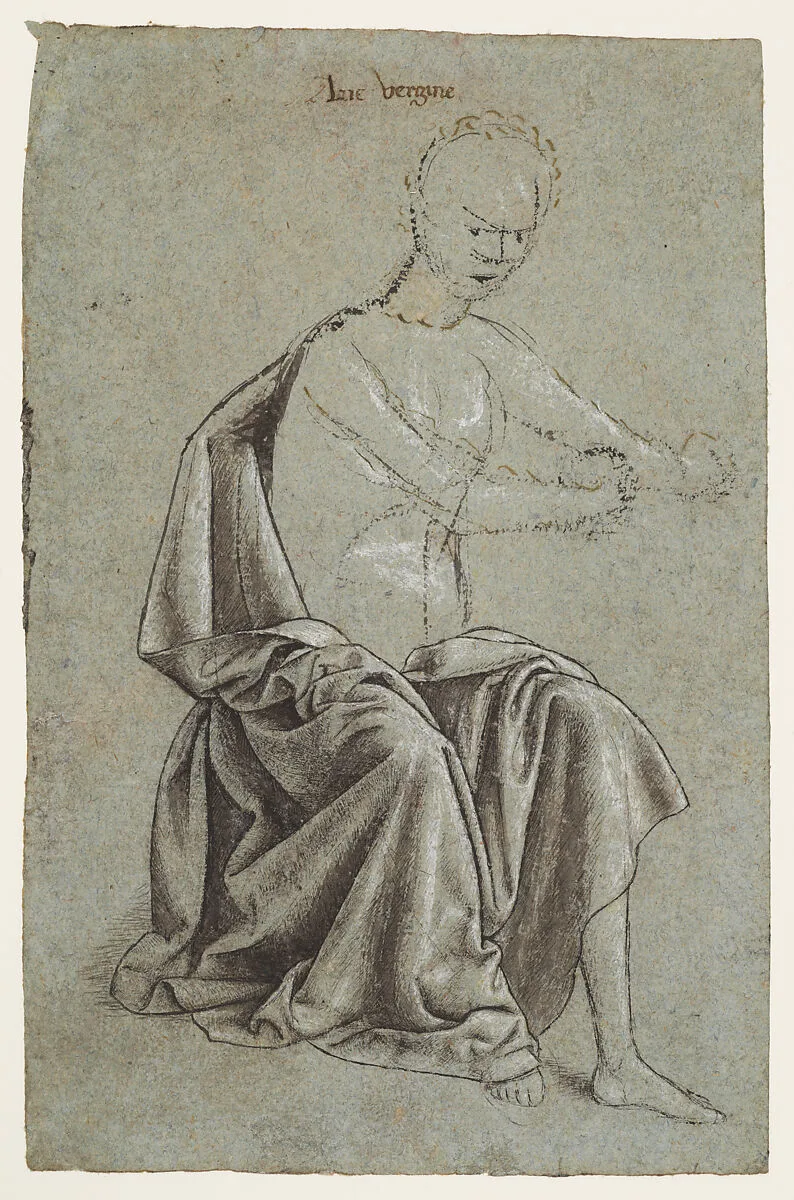
This sheet by a northern Italian draftsman is an extremely rare, early example of a drapery design made with the use of a mannequin, as indicated by the figure’s simplified anatomy, rigid disposition, and clumped hands. In the fifteenth century, the sculptor and theorist Filarete advised artists seeking to render draperies in a natural way to take a small wooden figure with jointed limbs and dress it in real cloth, as if it were a living person. He added that if the linen did not fall as desired, it could be wetted with melted glue and allowed to harden. As this practice became widespread, artists also used clay slip to set the fabric in place. In the present drawing, the ample folds of cloth, built up in layers of black chalk, ink, wash, and white gouache, bear a sculptural heft. The inscription "Ave vergine" (Hail Virgin) reveals that the study was intended for a figure of the Virgin Mary in a scene of the Annunciation.
- Artist
- Anonymous, North-Italian, probably Lombard, 15th century
- Date
- 15th century
- Medium
- Pen with two colors of brown ink and wash (warm brown and grayish), highlighted with white gouache, over grayish black chalk, on gray-blue paper
- Department
- Drawings and Prints
- Credit line
- Harry G. Sperling Fund, 2020