地蔵菩薩|Jizō Bosatsu (Sanskrit: Ksitigharba)
Unidentified
ca. 1350 · Hanging scroll; ink and color on silk · Asian Art
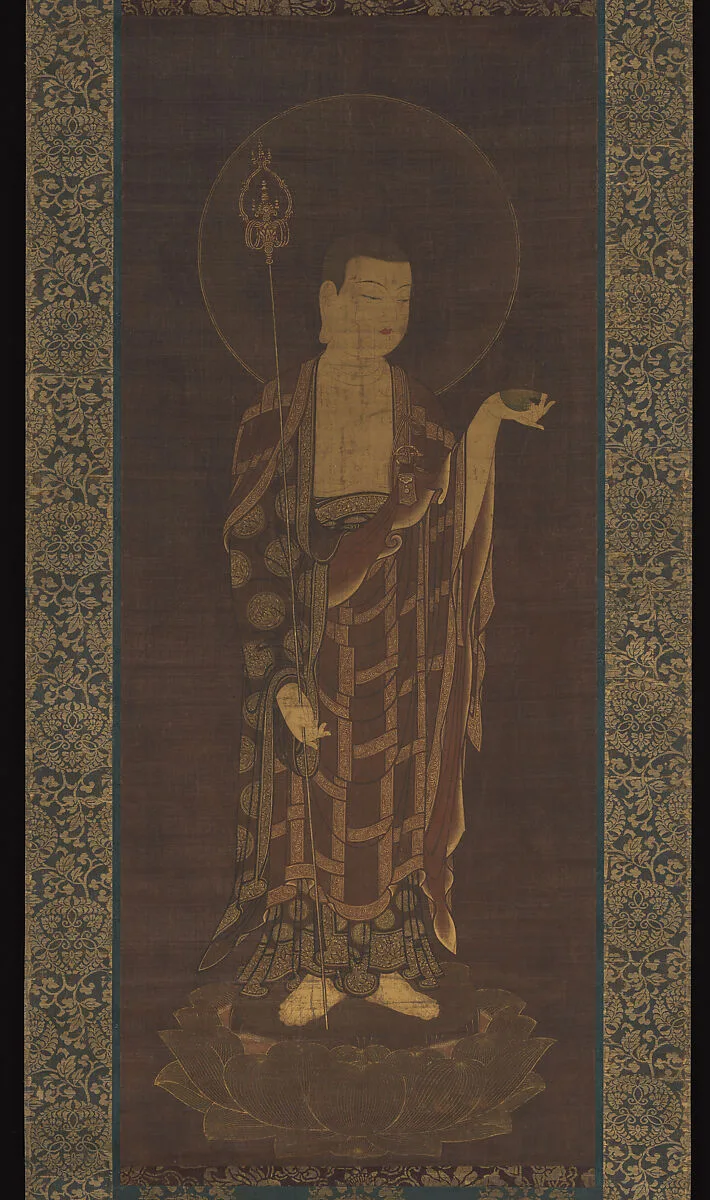
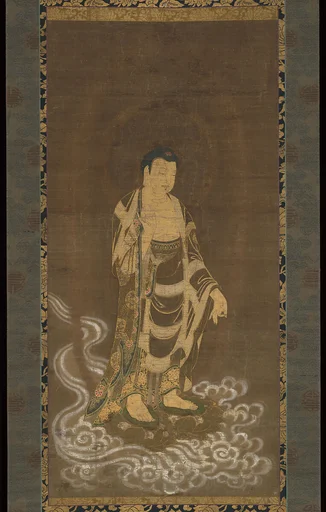
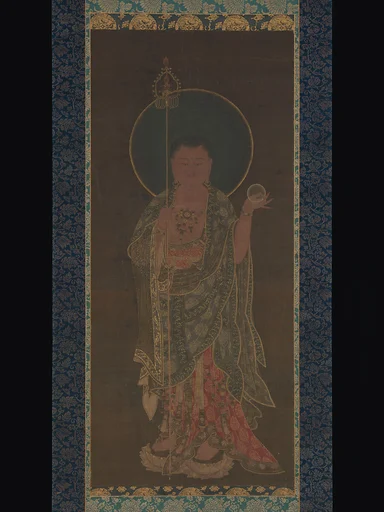
The figure of the compassionate bodhisattva Jizō (Sanskrit: Ksitigarbha) is set against a blank silk background, his head encircled by an aureole with a double outline made from finely cut-gold leaf. The bodhisattva holds his customary attributes: a long, slender staff topped with metal rings, and a wish-granting jewel, now rendered transparent with age. He wears a Buddhist monk’s robe that is richly embellished with designs in cut-gold leaf, and stands upon a lotus pedestal, also delineated with gold. His countenance is serene and peaceful, with pursed rosebud lips and an urna (circular mark on the forehead) between his eyebrows, signifying his status within the Buddhist pantheon of deities. This hanging scroll painting typifies Nanbokuchō-period Buddhist images of single deities, with its blank background and exquisitely detailed rendering of the figure, garment patterns, accoutrements, and lotus pedestal. The application of finely cut strips of gold leaf, known as kirikane, is a method of decoration that was used for both Buddhist paintings and sculpture during this period. Altogether, this work displays the courtly refinement in Buddhist painting that carried on from the late Heian period into the Kamakura and Nanbokuchō years.
- Artist
- Unidentified
- Date
- ca. 1350
- Medium
- Hanging scroll; ink and color on silk
- Culture
- Japan
- Department
- Asian Art
- Credit line
- Mary and Cheney Cowles Collection, Gift of Mary and Cheney Cowles, 2019