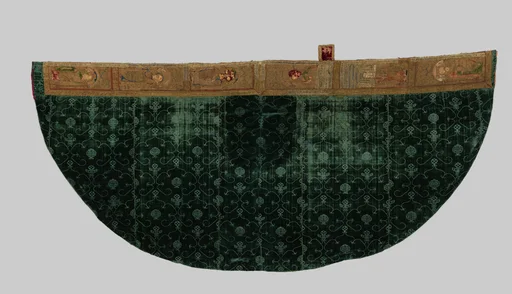
Cope
Unknown
mid- to late 17th century · Silk, metal-wrapped thread, and linen; woven · Islamic Art
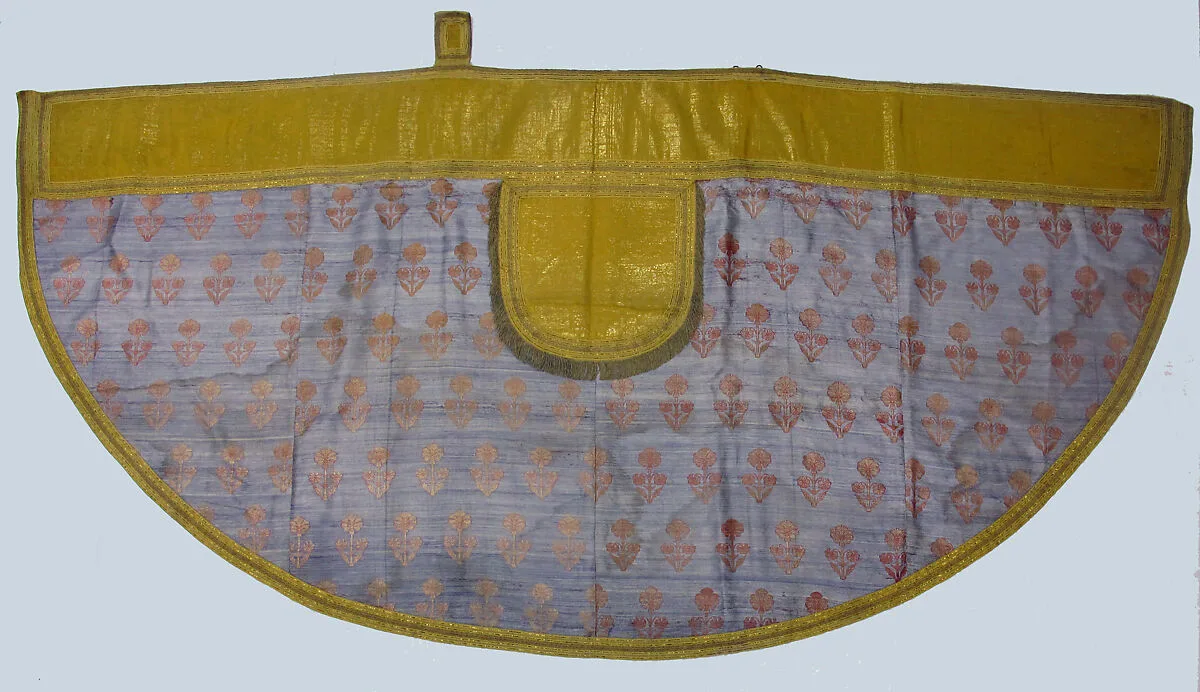
In the 17th century the Armenian community drove the engine of trade in luxury silks made in Safavid Iran and Mughal India. Thanks to their mercantile skills, Christian faith, and dispersed community, the Armenians had a successful network in Europe and Asia. Cloth that was sold in lengths in Europe was then fashioned into church vestments such as this one. The fact that the hood is sewn under the orphrey appears to indicate that the piece was assembled in Rome, where this practice is typical. The regular rows of blossoms on a precious metal ground recall Mughal Indian textiles of the second half of the 17th century, while certain technical details of the weaving and use of metal-wrapped threads is more typical of Iranian textiles. The stylistic closeness of the two point to the popularity of these silks in both Iran and India.
- Artist
- Unknown
- Date
- mid- to late 17th century
- Medium
- Silk, metal-wrapped thread, and linen; woven
- Department
- Islamic Art
- Credit line
- Purchase, Friends of Islamic Art Gifts, in honor of Sheila Canby, 2019
![Shoulder Cloth (Ulos Padang Rusak [?])](https://d2pvxr3eb77vb4.cloudfront.net/assets/v1/7e/7e9446427ed96ca9782bd209de2f3daa7ae92cceca8aff69fca9b5b61a40d64a/graph.webp)