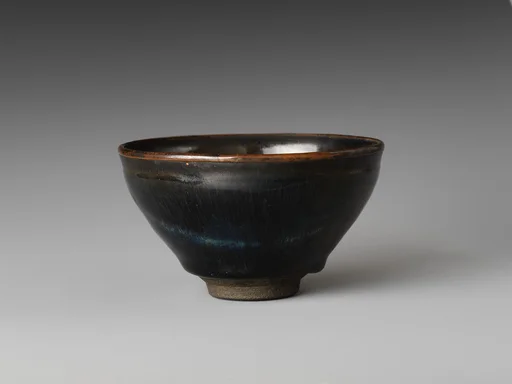
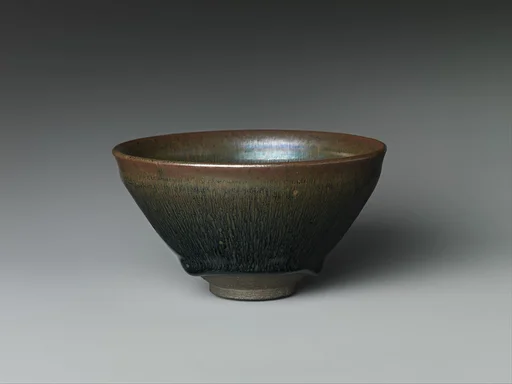
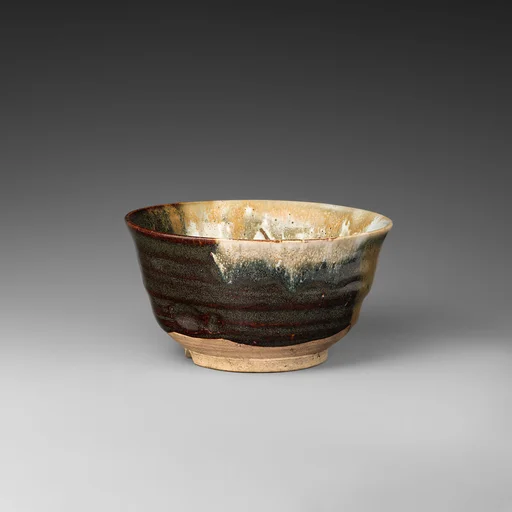
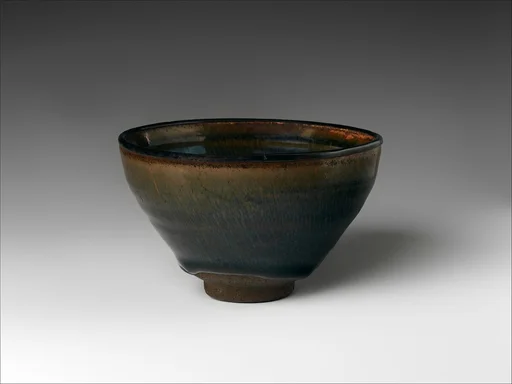
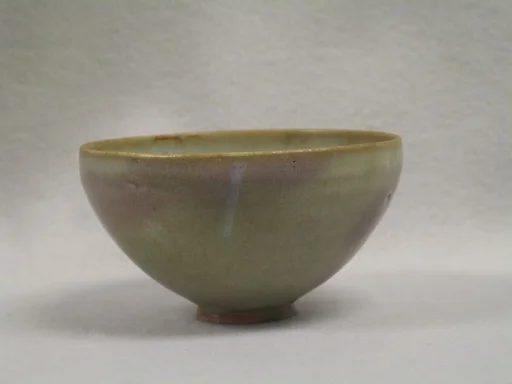
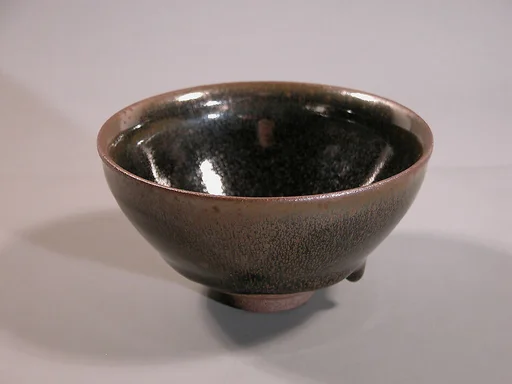
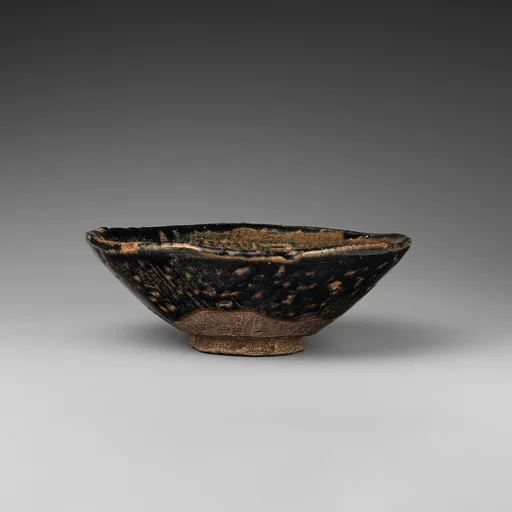
日本 瀬戸天目茶碗 (18世紀)|Teabowl with “Hare’s-Fur” Glaze
Unknown
18th century · Stoneware with iron-oxide glaze (Seto ware) · Asian Art
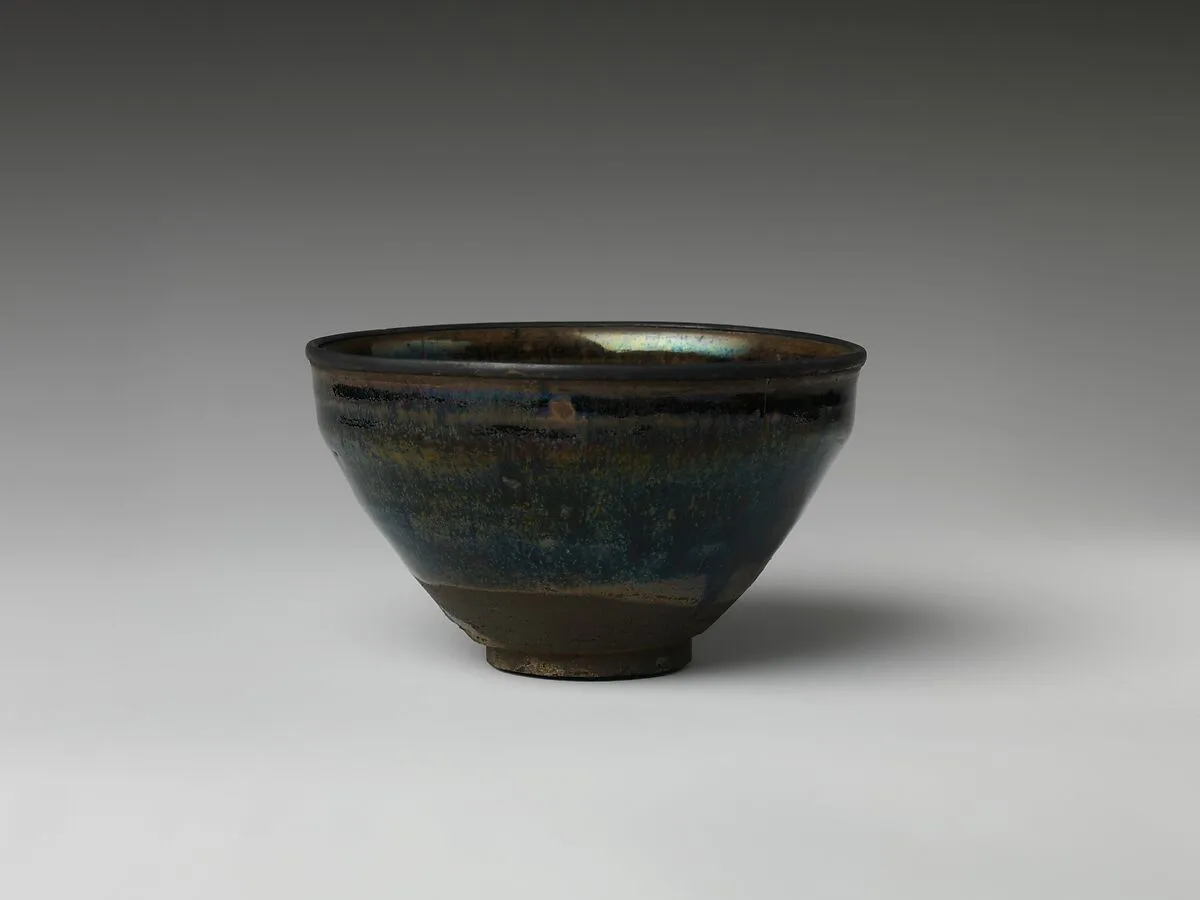
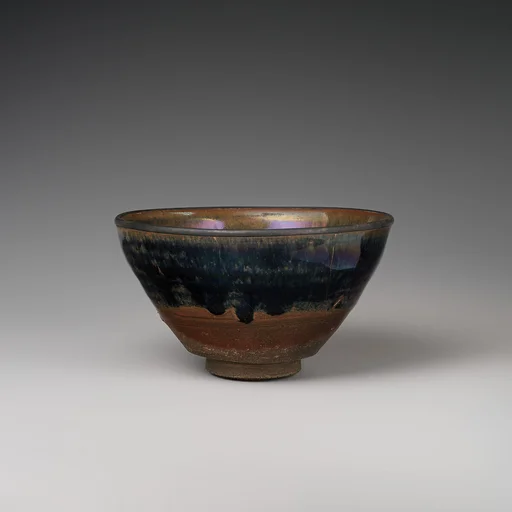
This teabowl represents a classic type that originated in Song-dynasty China and was later produced in Japan. Its most prominent characteristic is the striking “hare’s-fur” glaze, named for the iridescent grayish-brown streaks resembling a thick growth of hair. Chinese teabowls of this type became highly prized in Japan, especially among Buddhist monks, during the twelfth and the thirteenth centuries. Later, similar vessels were produced in Japanese kilns, mainly in Seto.
- Artist
- Unknown
- Date
- 18th century
- Medium
- Stoneware with iron-oxide glaze (Seto ware)
- Culture
- Japan
- Department
- Asian Art
- Credit line
- Edward C. Moore Collection, Bequest of Edward C. Moore, 1891