Length of dress silk
Unknown
1748–52 · Silk · European Sculpture and Decorative Arts
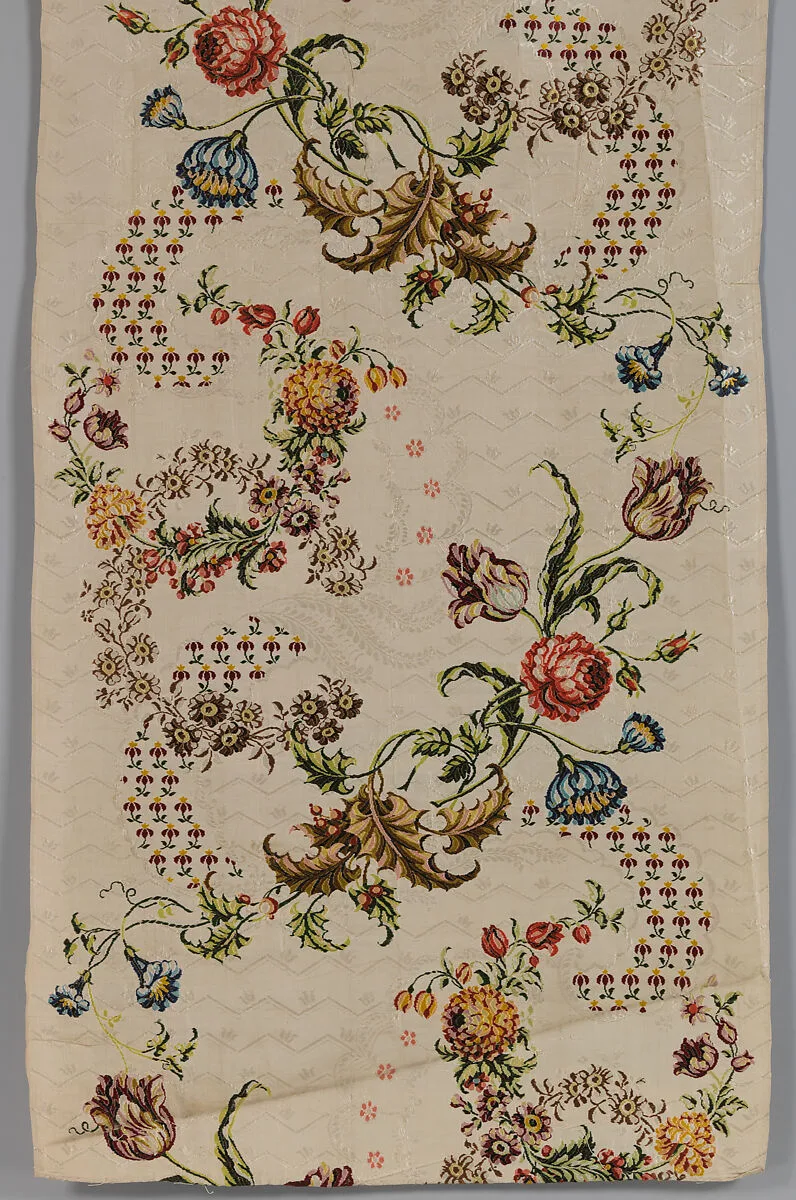
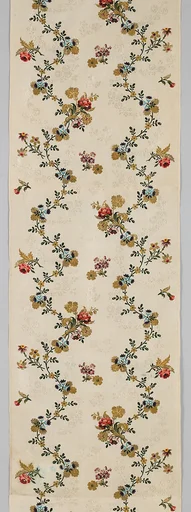
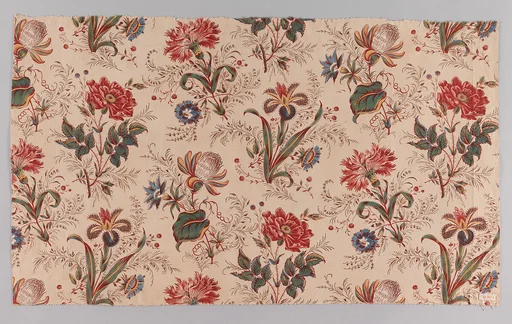
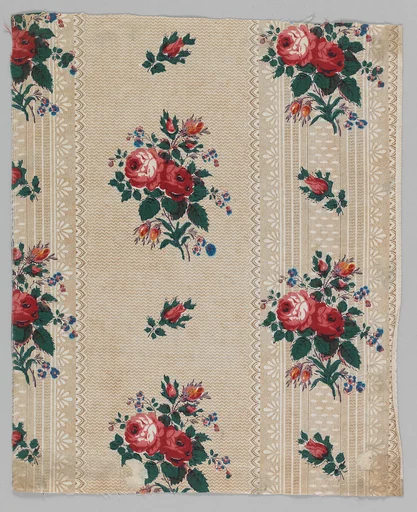
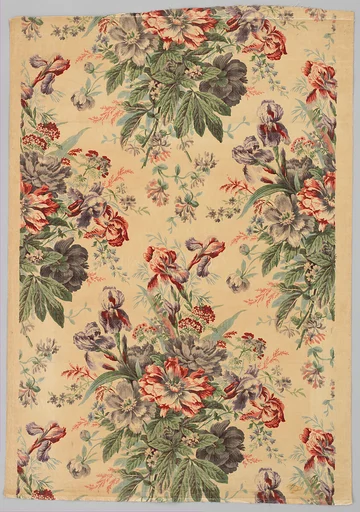
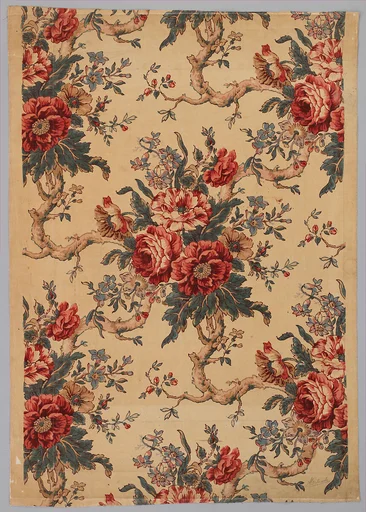
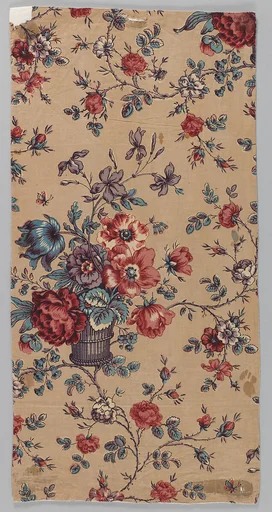
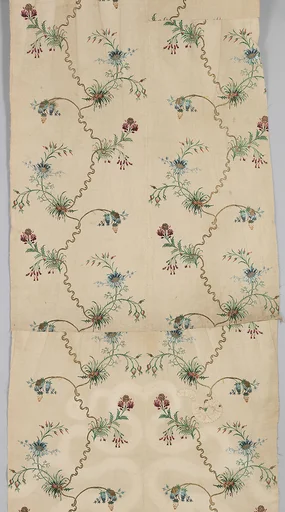
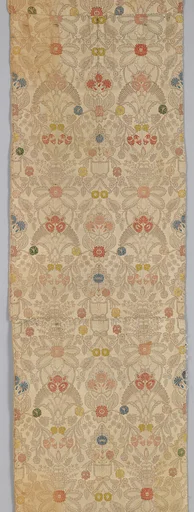
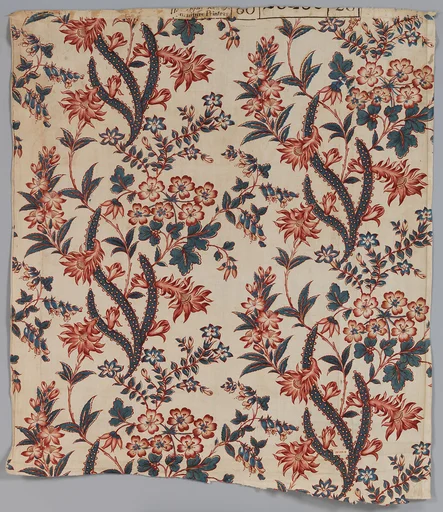
The first part of the 18th century was a particularly fruitful and distinctive period in the history of British design for the silk weaving industry. Anna Maria Garthwaite (1690–1763) is the designer mostly closely associated with this period due to the survival of her design drawings, now in the Victoria and Albert Museum, London. Though this pattern does not match any of the published Garthwaite designs, it has much in common with her compositions of carefully observed flowers and plants arranged on a pale foundation color. The species illustrated on this silk panel include tulips, roses, chrysanthemums and holly. The floral silks produced in the Spitalfields area of east London during this period provide a provocative comparison with British porcelains of the same period. A set of plates made by the Chelsea Porcelain Manufactory in the 1750s (2016.217–.229) display the same interest in contemporary botanical illustration as do the silk designs. Several silk designers of the first half of the 18th century are known to have studied botany or natural history. In this climate of intellectual curiosity, creators of both porcelain and silk designs found inspiration to create works that are uniquely British.
- Artist
- Unknown
- Date
- 1748–52
- Medium
- Silk
- Culture
- British
- Department
- European Sculpture and Decorative Arts
- Credit line
- Purchase, Gift of Mrs. Russell Sage, by exchange and funds from various donors, 2017