Bound Manuscript of Hadith with Persian Translations by Jami
Shah Mahmud Nishapuri
Manuscript dated A.H. 935/1528 CE; binding ca. 1575–1600 · Manuscript: Ink, opaque watercolor, and gold on paper Binding: Leather, opaque watercolor, and gold · Islamic Art
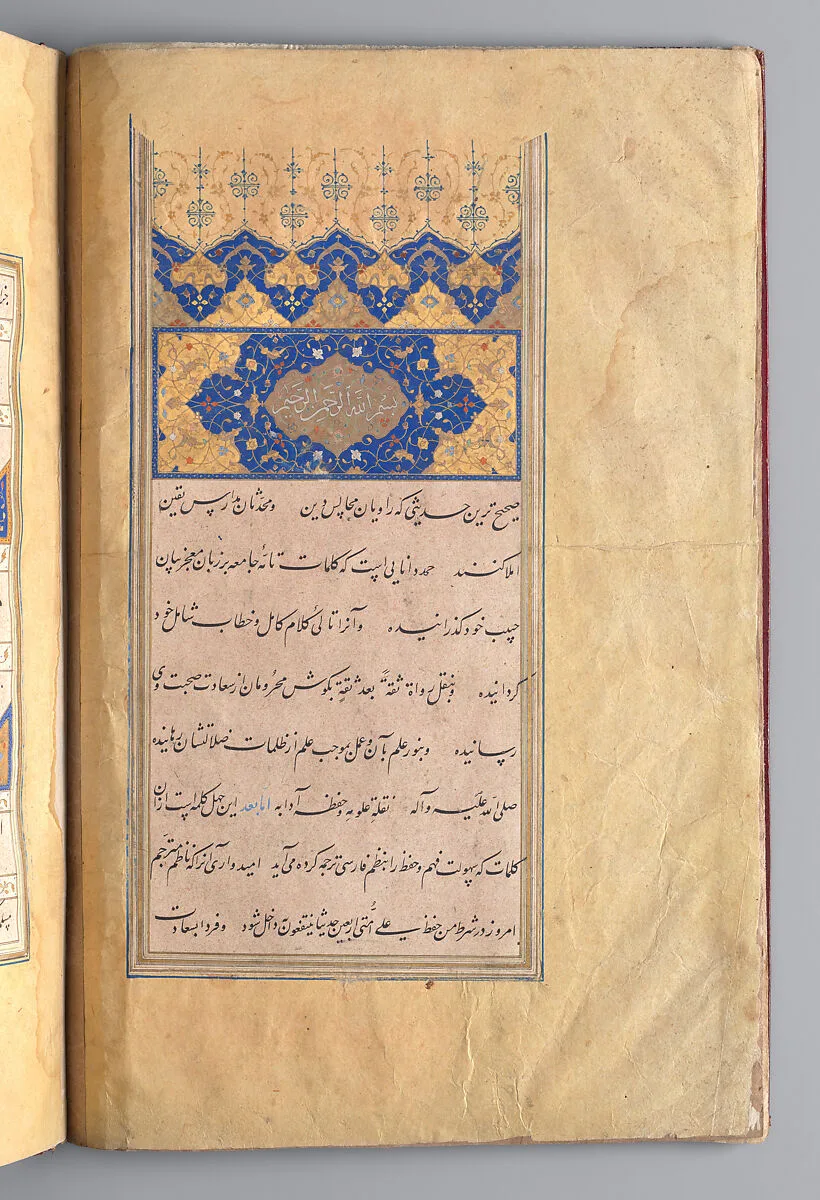
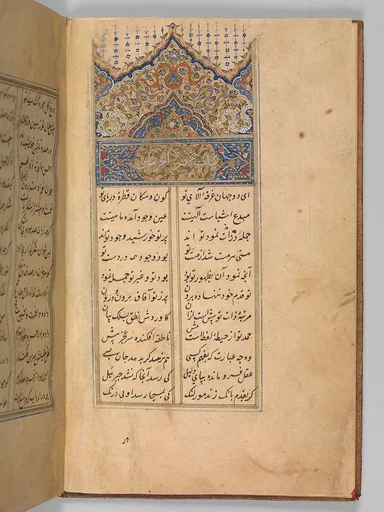
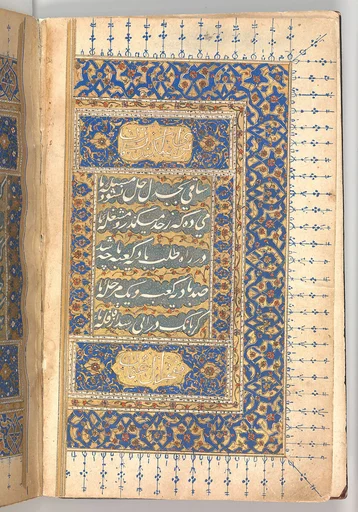
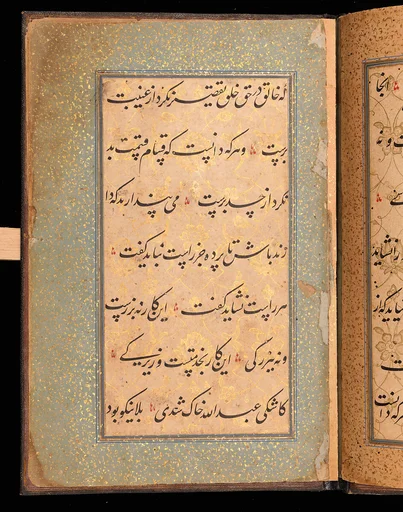
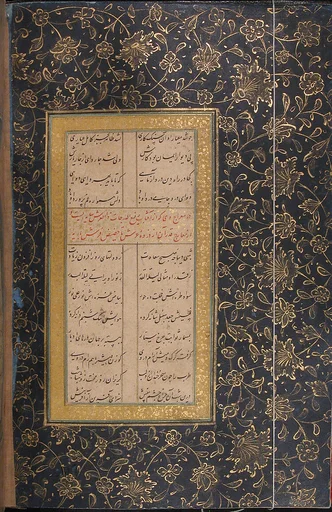
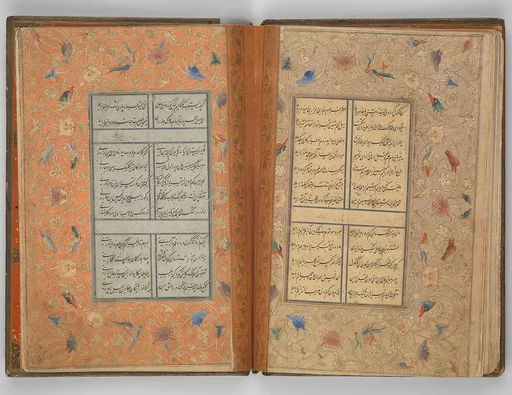
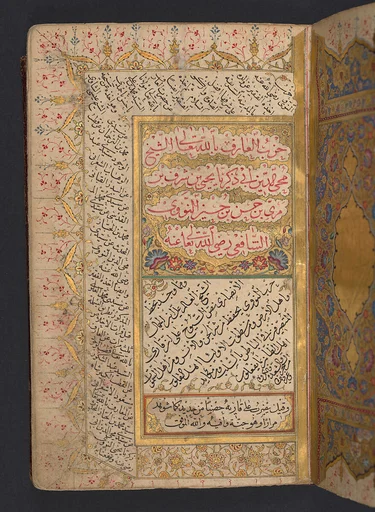
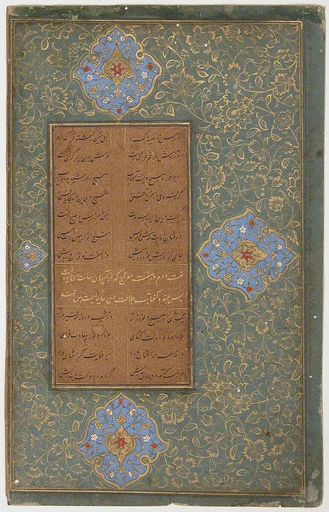
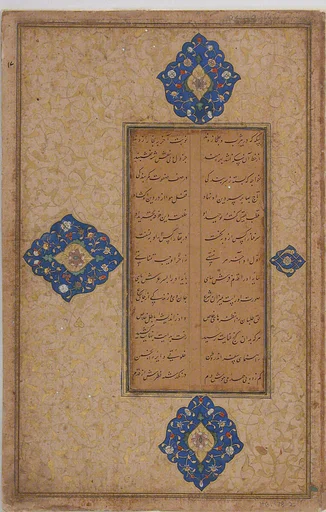
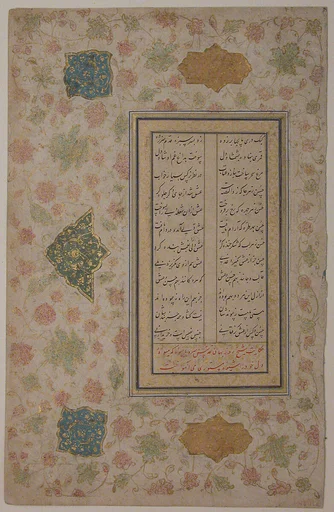
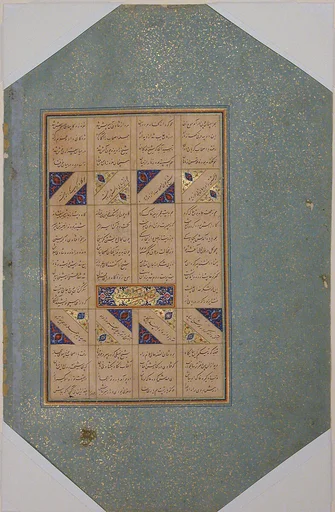
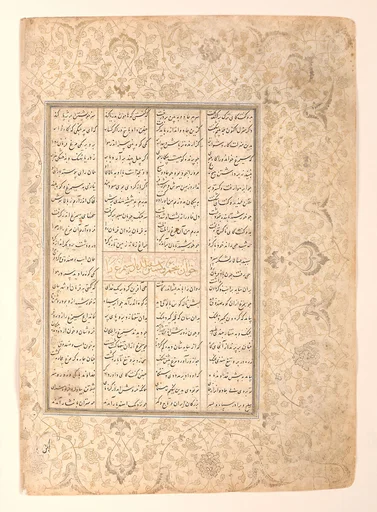
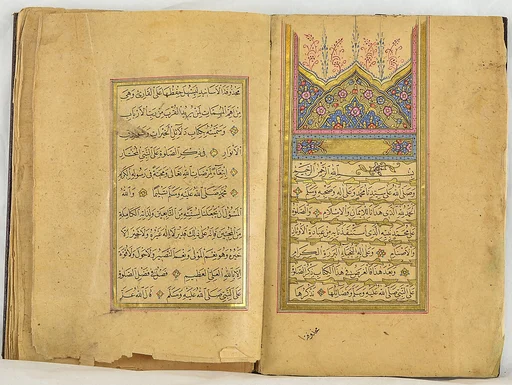
Shah Mahmud Nishapuri, one of the leading calligraphers at the court of Shah Tahmasp (reigned 1524–76), copied this manuscript of Hadith (traditions) of the Prophet Muhammad with a Persian translation by the poet Jami (1414–1492). The manuscript consists of seven folios of nasta'liq writing with an illuminated heading ('unwan) and an introduction in Persian. The body of the text contains illuminated corner pieces and bands of floriated vine scrolls separating lines of Arabic script from lines of Persian translation written diagonally. The colophon states that Shah Mahmud Nishapuri copied the manuscript in "dar al-sultana Tabriz," the Safavid capital in A.H. 935/A.D. 1528. The writing is exquisite, and the care with which the manuscript is laid out and illuminated reflects the high level of patronage in Tahmasp's court. Shah Mahmud Nishapuri, known as Zarinqalam, or "golden pen", served Tahmasp until 1557, when he moved to Mashhad; he remained there until his death, at the age of eighty, in 972/1564–65. The binding, with its design elements in pronounced relief and red-dyed leather, most likely dates to 75 to 100 years later than the manuscript, which would not be unusual because bindings were often reused.
- Artist
- Shah Mahmud Nishapuri
- Date
- Manuscript dated A.H. 935/1528 CE; binding ca. 1575–1600
- Medium
- Manuscript: Ink, opaque watercolor, and gold on paper Binding: Leather, opaque watercolor, and gold
- Department
- Islamic Art
- Credit line
- Purchase, Friends of Islamic Art Gifts, 2017