Terracotta fragments of a neck-amphora (jar)
Unknown
second quarter of the sixth century BCE · Terracotta · Greek and Roman Art
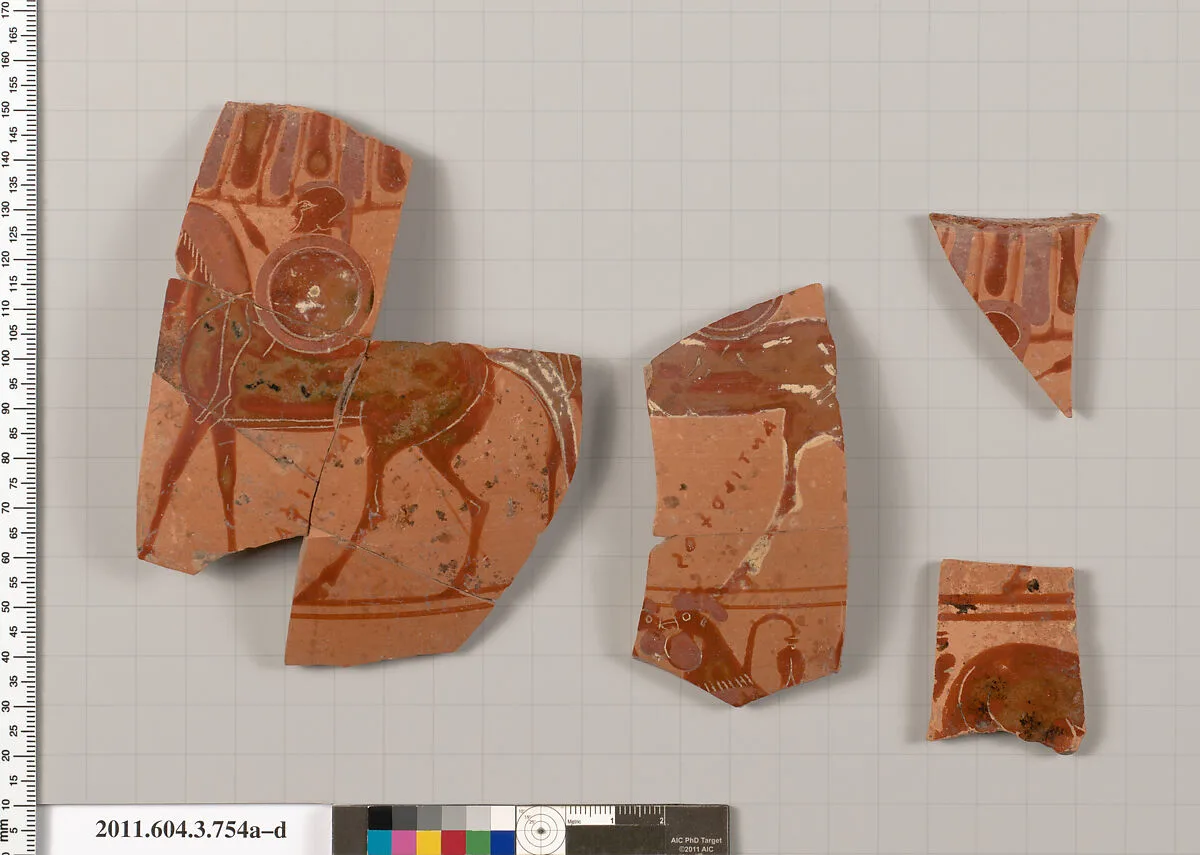
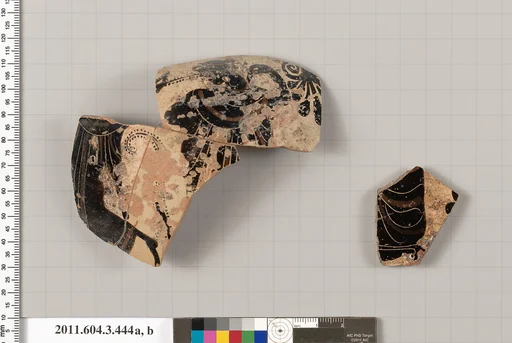
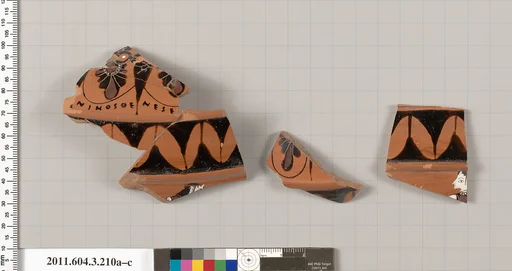
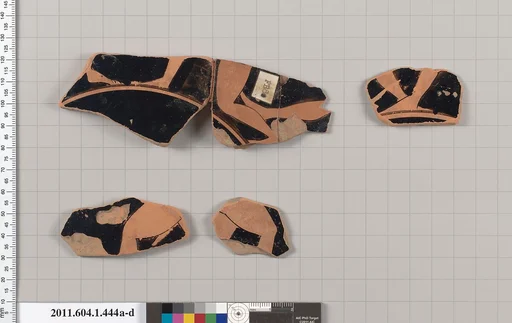
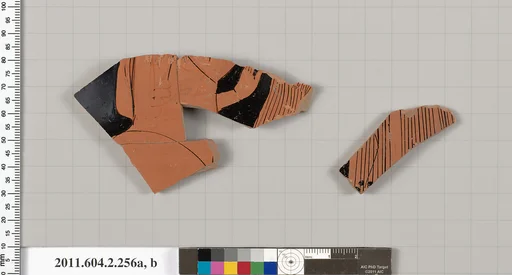
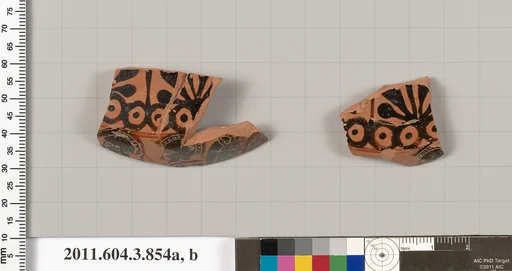
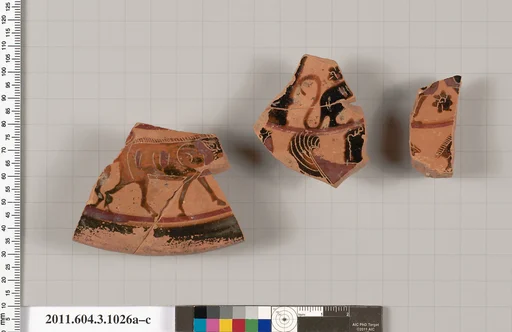
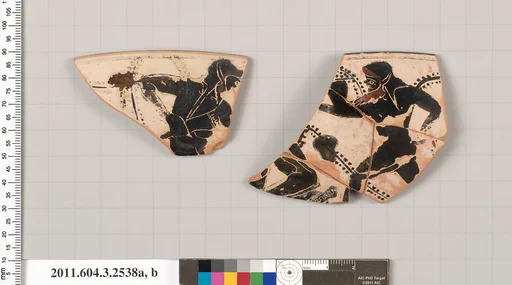
The largest fragment has at the juncture of the neck and shoulder, a band of tongues; warrior mounted on a horse to left; the warrior wears a helmet and has a round shield in his left hand a spear in his right; below the belly of the horse, ANTIPHA[TES]?...; below, double ground line; a second fragment has a band of tongues at the juncture of the neck and shoulder; interrupting the tongues, part of the helmet crest of a warrior to left (mounted warrior?) and tip of a spear?; a third fragment has on the top frieze, part of the shield of a mounted warrior to left and part of the belly, back, and hind legs of a horse to left; below the belly of the horse, ANTILOCHOS, retr.; two glazed lines; below, in the second frieze, parts of two confronted roosters; a fourth fragment has on the top frieze, the hoof of a horse?; two glazed lines; below, in the second frieze, part of the hindquarters of a quadruped to right
- Artist
- Unknown
- Date
- second quarter of the sixth century BCE
- Medium
- Terracotta
- Culture
- Greek, Attic
- Department
- Greek and Roman Art
- Credit line
- Gift of Dietrich von Bothmer, Distinguished Research Curator, Greek and Roman Art, 2011